




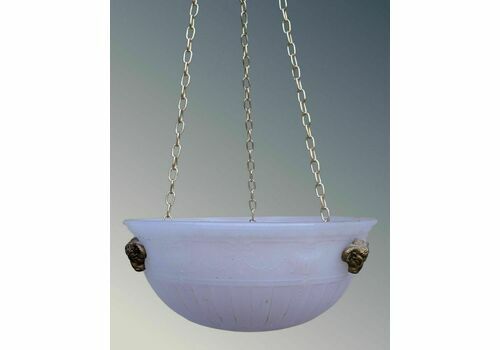

Gilt Bronze Glass Dish
These gilt bronze glass dish pieces combine heavy cast metal mounts with clear or coloured glass, bringing classical elegance and refined sparkle to a room.
Gilt Bronze Glass Dish
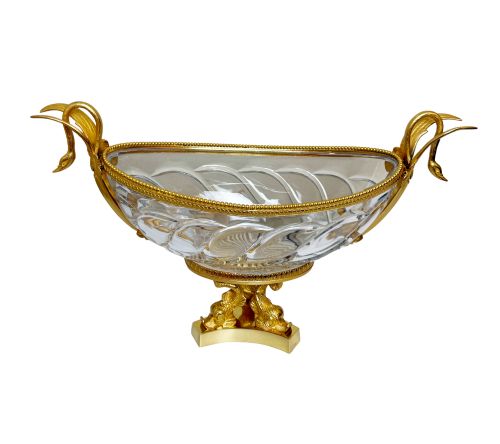
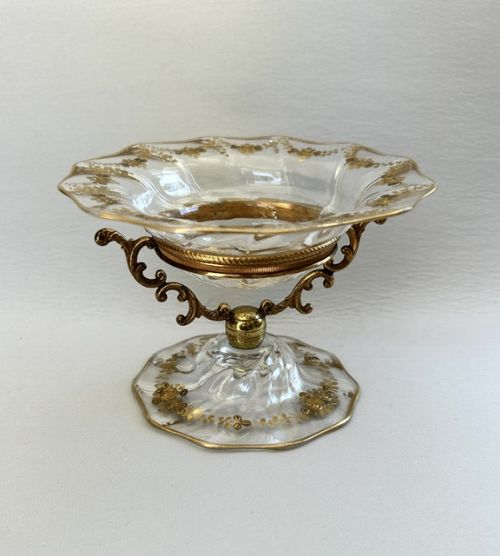
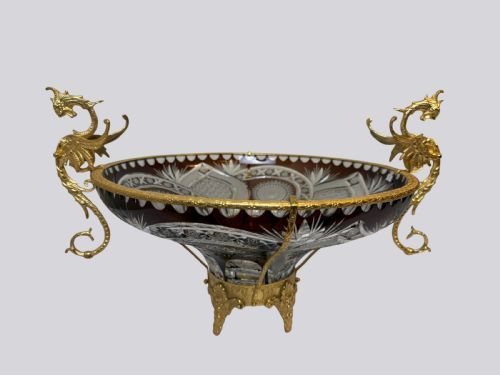
A gilt bronze glass dish unites cast metal work with cut crystal or glass bowls, functioning primarily as a decorative centrepiece, bowl, or lighting fixture. The examples on this page span the late nineteenth century into the early twentieth century, showing influences from the Victorian era, Art Nouveau, and Belle Epoque periods.
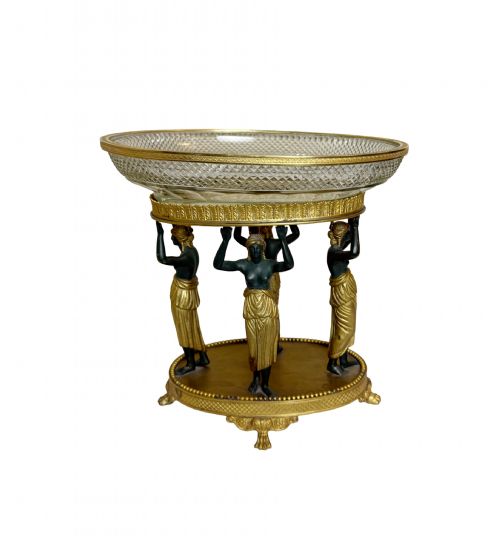
Most items take the form of substantial table centrepieces or serving bowls, supported by elaborate frames of ormolu or gilt bronze. Buyers also encounter trinket boxes and ceiling lights employing the same combination of gilded metal and glass.
French design heavily influences these works, drawing upon Rococo Revival, Empire, and Neoclassical styles. Figures such as cherubs, mermen, rams' heads, and eagles frequently adorn the metalwork, alongside intricate foliate motifs.
How they were made
The metal components rely on bronze casting, which is subsequently gilded or finished as ormolu to achieve a bright, reflective surface. Artisans shaped the frames into classical figures and scrolling vegetal patterns to cradle the glass vessels securely.
Glass elements feature heavy cutting and moulding techniques to create faceted crystal or coloured vessels that catch the light. Craftsmen combined these independent components using threaded fittings and pins to unite the metal stands with their glass bowls.
Gilt Bronze Glass Dish Retail Price Guide 2026
Typical asking prices for gilt bronze glass dish among the pieces listed under this phrase on Sellingantiques today, from the lower quarter to the upper quarter. They describe what is for sale here now, not the wider market.
Mermen and rams' heads frequently stare out from the gilt bronze mounts, watching over the fruit and flowers placed inside.
What varies in quality
The depth and clarity of the glass cutting also define the grade of an object. Heavy, brilliant-cut crystal with precise facets sits at the upper end of the range, offering greater weight and optical refraction than simpler moulded glass.
The Gilt Bronze Glass Dish Glossary
- Gilt bronze
- Metal cast from a copper and tin alloy and coated in a thin layer of gold or gold-coloured finish. It provides a durable base that resists tarnish while retaining a rich, warm metallic lustre.
- Ormolu
- A form of gilding that applies finely ground gold-mercury amalgam to a bronze object, which is then heated to drive off the mercury. This historical technique produces a distinctive golden hue characteristic of luxury French metalwork.
- Centrepiece
- A large decorative vessel or ornament designed for the middle of a dining table or sideboard. These items often incorporate elaborate stands and high-relief figures.
- Plafonnier
- A ceiling-mounted light fixture or bowl flush against the surface. In this context, it pairs metal mounts with glass shades.
- Empire style
- A Neoclassical design movement inspired by the art of ancient Rome and Greece, favouring symmetry, military motifs, and classical symbols.
Gilt Bronze Glass Dish: Frequently Asked Questions
What is the difference between ormolu and gilt bronze?
Ormolu specifically refers to the traditional mercury gilding process used on bronze objects during the eighteenth and nineteenth centuries. Gilt bronze is a broader term that encompasses any bronze object finished with a gold-coloured surface, regardless of the precise plating method used.
Both terms describe the same golden appearance on decorative metal mounts, but collectors often use ormolu to denote finer historical French work.
Where should I place a centrepiece bowl?
These bowls suit placement on dining tables, sideboards, or entrance hall consoles where their reflective glass and gilded mounts catch natural light. Ensure the surface is stable and spacious enough to support the substantial weight of the bronze and crystal.
Keep them away from direct heat sources and areas of heavy vibration to protect both the delicate glass edges and the mounted figures.
How can I tell a Victorian piece from an Edwardian one?
Victorian pieces often display heavier Revivalist influences such as French Rococo, ornate cherubs, and dense floral casting. Edwardian and turn-of-the-century items frequently lighten the aesthetic, incorporating flowing Art Nouveau curves or cleaner Neoclassical lines.
Examining the depth of the metal chasing and the style of the glass cutting helps confirm the period when combined with the specific motifs used.