





French Crystal Centerpiece Dish
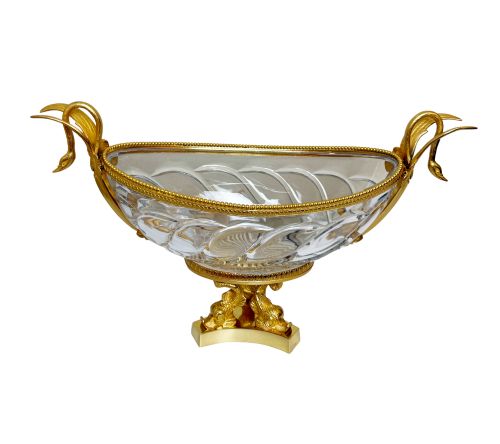
A French crystal centerpiece dish brings dramatic dining table presence, combining heavy cut glass with gilded metal mounts.
French Crystal Centerpiece Dish
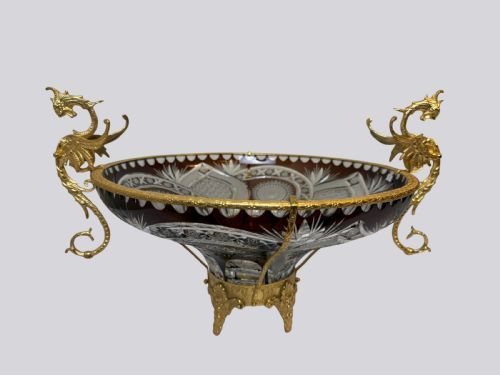
A french crystal centerpiece dish serves as a grand table focal point, combining deep-cut glass bowls with ornate metal mounts. These decorative vessels appear in forms ranging from open bowls and chargers to elaborate footed serving dishes.
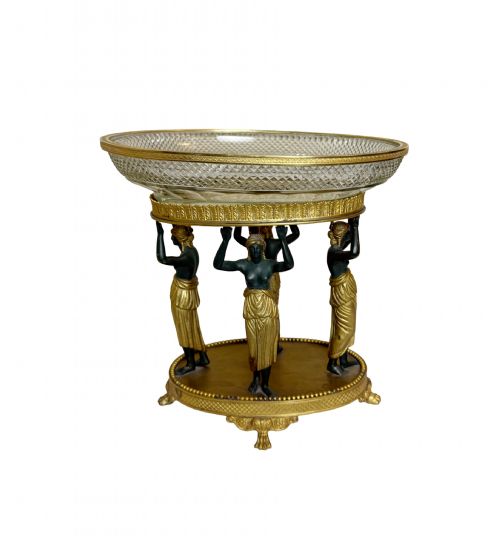
The selections span from the 19th century through the early 20th century, displaying aesthetic shifts from Empire style and Victorian revival to Art Nouveau and Art Deco. Buyers will frequently encounter pieces combining clear or coloured glass with bronze frames, cherub figures, or gilt decoration.
Origins trace directly to French workshops and master glassworks, reflecting periods such as the Belle Epoque and the Grand Tour era. Each item functions primarily as a decorative centrepiece or large display bowl rather than everyday tableware.
How they were made
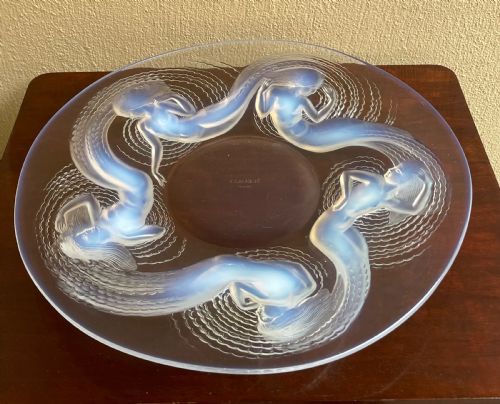
The construction unites glassmaking and metal casting, pairing heavy cut crystal or moulded glass with gilt bronze, ormolu, or brass frames. Glass bodies receive deep facet cutting, opalescent treatments, paste gilding, or enamel decoration.
Metal components utilise casting techniques to produce detailed mounts, handles, and figurative elements such as cherubs. Frames are constructed to securely cradle the heavy glass bowls, often featuring bolted joints or tiered architectural bases.
French Crystal Centerpiece Dish Retail Price Guide 2026
Typical asking prices for french crystal centerpiece dish among the pieces listed under this phrase on Sellingantiques today, from the lower quarter to the upper quarter. They describe what is for sale here now, not the wider market.
Some Victorian dining tables required three footmen just to shift the heavy bronze and crystal centrepiece without spilling the fruit.
What varies in quality
Quality depends upon the crispness of the glass cutting and the weight of the metal mountings. Superior examples demonstrate deep, sharp faceting in the crystal and finely chased detail in the gilt bronze or ormolu frames.
The reputation of the maker also dictates distinction, with signed works from established French glassworks and artists commanding greater attention. The integration between the glass bowl and its metal support reveals the level of bespoke craftsmanship involved.
Daum France·Rene Lalique·St Louis glassworks·François Eugène Rousseau·Baccarat
The French Crystal Centerpiece Dish Glossary
- Ormolu
- A gilded bronze technique used for decorative mounts and frames. This finish provides a rich gold appearance that complements clear crystal.
- Pâte de Verre
- A glass-casting method producing dense, coloured objects with frosted textures. This technique allows for subtle colour gradients within decorative bowls.
- Charger
- A large decorative plate or shallow dish placed beneath other items or displayed on its own. These pieces offer a wide surface area for glass ornamentation.
- Empire Style
- A neoclassical design movement favouring symmetry, military motifs, and classical antiquity. Pieces in this style often incorporate bold gilt bronze detailing.
- Art Nouveau
- A design style characterised by fluid, organic lines inspired by natural forms. Bowls from this period frequently feature floral enamel decoration.
French Crystal Centerpiece Dish: Frequently Asked Questions
Where should a centerpiece dish be displayed?
Place the dish in the centre of a dining table, a heavy sideboard, or a prominent console where natural light can pass through the cut crystal. Ensure the surface is stable and capable of supporting the combined weight of glass and bronze.
Keep pieces away from direct heat sources and edge positions to protect the delicate mounts and glass rims from accidental knocks.
How can I tell the period?
Examine the decorative motifs, mounting styles, and glass techniques to determine the era of manufacture. Heavy gilt bronze cherubs and classical symmetry typically point to 19th-century Victorian or Empire revival periods, while stylised floral motifs suggest Art Nouveau.
Signature marks, acid stamps, or moulded factory signatures on the underside of the glass provide definitive confirmation of origin and date.
Were these dishes used for serving food?
Many of these vessels were designed for formal dining tables to hold fruit, flowers, or sweetmeats during large banquets. Their ornate metal frames and delicate enamel work also meant they served purely as decorative objects.
Today, most owners utilise them as standalone decorative centrepieces rather than functional tableware to preserve their historical condition.