




Cut Crystal Decorative Bowl
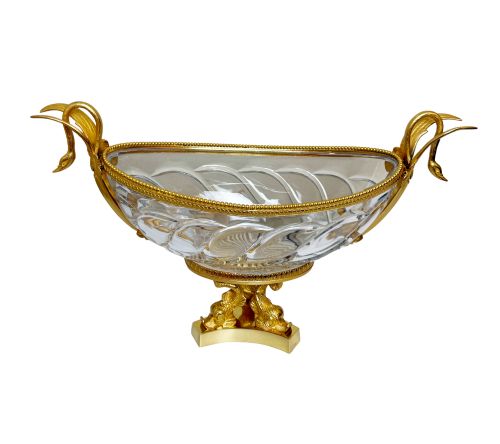
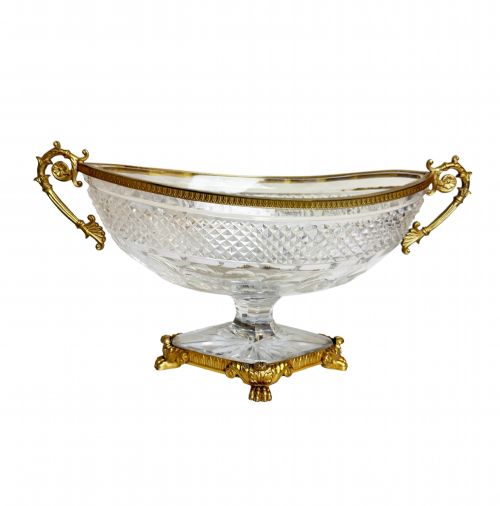
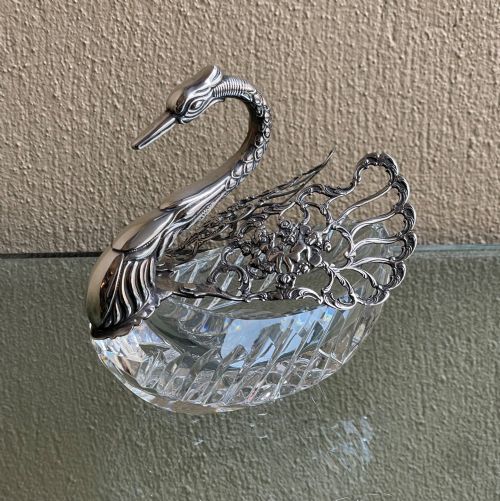
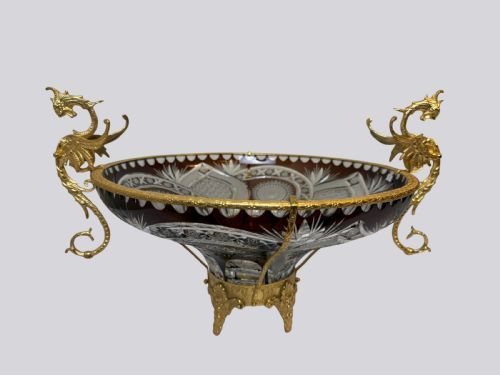
These cut crystal decorative bowls combine heavy faceted glass with gilt bronze, ormolu, and silver plate to anchor a table.
Cut Crystal Decorative Bowl
A cut crystal decorative bowl provides a substantial centrepiece for a room, combining heavy glass with metal mounts. When you search for a cut crystal decorative bowl, you encounter substantial vessels designed to hold fruit, potpourri, or simply to catch the light.
The selections span the Victorian, Edwardian, and Art Deco eras, alongside mid-century pieces. French Empire and Rococo Revival influences appear frequently alongside simpler English forms.
Most examples merge thick cut glass or lead crystal with gilt bronze, ormolu, or silver plate stands. Centrepieces and tazzas dominate the selection, accompanied by specialised dishes and baskets.
How they were made
Glassmakers shaped heavy crystal and coloured glass through blowing and pressing before cutters applied deep facets by hand on a wheel. The resulting glass surfaces refract light sharply across every cut edge.
Metalworkers cast bronze, ormolu, and silver plate to create intricate stands, rims, and swing handles that secured the glass vessels. Mounts were then chased and gilded to frame the crystal bodies.
Cut Crystal Decorative Bowl Retail Price Guide 2026
Typical asking prices for cut crystal decorative bowl among the pieces listed under this phrase on Sellingantiques today, from the lower quarter to the upper quarter. They describe what is for sale here now, not the wider market.
Object forms range from traditional centrepiece bowls and tazzas to swing-handle potpourri baskets and light fittings.
What varies in quality
Depth and crispness of the glass cutting separate standard vessels from superior examples, where facets align precisely. The weight and purity of the lead crystal also dictate how clearly the material rings and reflects light.
The intricacy and casting quality of the metal mounts define the upper tier of these objects. Heavier ormolu, detailed gilt bronze, and solid silver work indicate a higher grade of production than plated alternatives.
Val St. Lambert Belgium·William Comyns
The Cut Crystal Decorative Bowl Glossary
- Ormolu
- Gilded bronze applied to furniture and decorative objects. This technique creates a rich golden finish on metal mounts.
- Tazza
- A shallow bowl mounted on a stem and foot. Such vessels were traditionally used for serving fruit or sweets.
- Lead crystal
- Glass containing lead oxide to increase weight and brilliance. This material allows for deeper and sharper cutting.
- Centrepiece
- A large decorative object placed in the middle of a dining table. These pieces often incorporate elaborate metal stands.
Cut Crystal Decorative Bowl: Frequently Asked Questions
How do I clean a cut crystal bowl?
Wash the glass gently in lukewarm water using mild soap, avoiding harsh scrubbing on any cut surfaces or gilded mounts.
Dry the piece immediately with a soft lint-free cloth to prevent water spots on both the crystal and the metalwork.
Can these bowls hold water?
Many of these vessels can safely hold water for flowers, provided they lack metal mounts that could be damaged by moisture.
Pieces with integrated gilt bronze or silver plate bases require care to ensure water does not sit against vulnerable metal seams.
How do I identify a Victorian piece?
Victorian examples often display heavy cut glass paired with ornate ormolu, silver plate, or bronze mounts following revivalist styles.
Look for deep wheel-cut facets and substantial metal casting characteristic of nineteenth-century manufacturing methods.
What is coloured over crystal glass?
This technique involves casing a layer of coloured glass over a clear crystal core before cutting through the outer layer.
The cutting process exposes the clear crystal beneath, creating a striking contrast between the colour and transparency.