



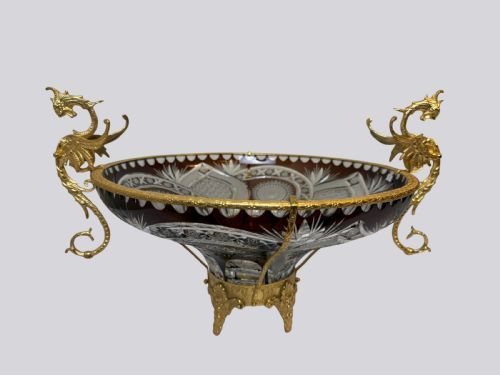


French Cut Crystal Dish
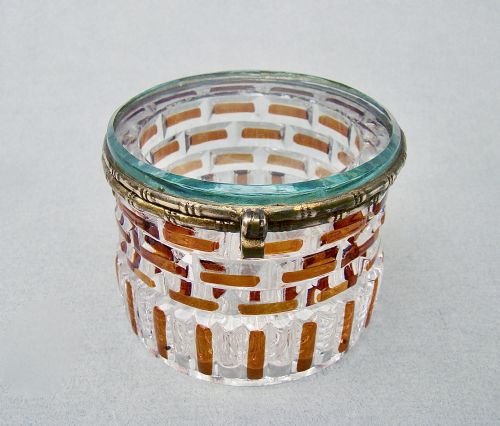
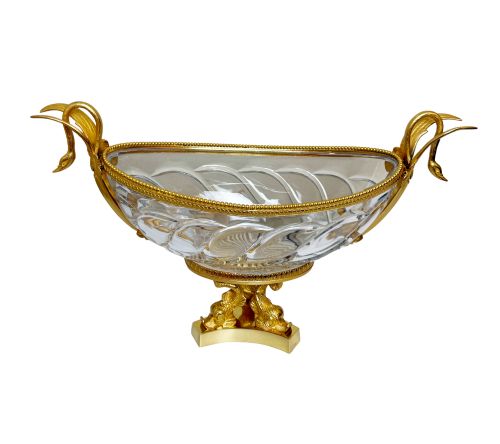
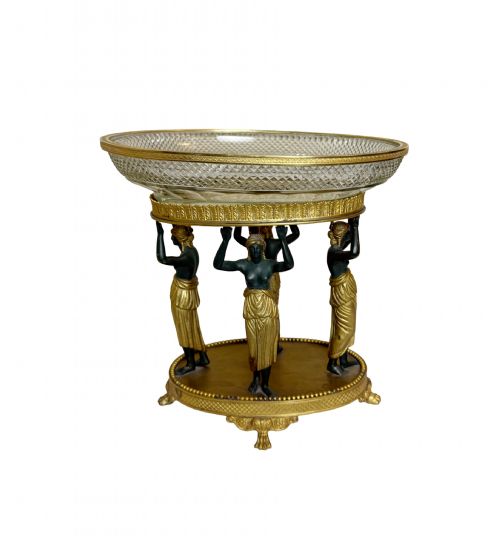
These french cut crystal dish examples combine heavy faceted glass with gilt bronze and ormolu mounts for a brilliant tabletop display.
French Cut Crystal Dish
A french cut crystal dish brings together heavy faceted crystal bowls and elaborate metal mounts, frequently appearing as serving dishes, butter dishes, and trinket boxes. These pieces emerge from the nineteenth and early twentieth centuries, spanning periods from the Victorian era through the Belle Epoque.
The form often takes shape as a centrepiece bowl or decorative vessel supported by gilt bronze, ormolu, or brass frames. Collectors encounter variations featuring cherubs, gilded eagles, and paste gilt decoration alongside simpler amber and clear glass designs.
Materials and construction
Makers shaped the vessels from clear and coloured crystal or glass, applying deep geometric or floral cuts to catch the light. This glass body was then married to metalwork cast in bronze, brass, or ormolu.
Mounts and frames required precise metal casting and gilding to secure the heavy glass bowls and boxes. Artisans integrated structural handles and decorative feet directly into the bronze and gilt framework.
French Cut Crystal Dish Retail Price Guide 2026
Typical asking prices for french cut crystal dish among the pieces listed under this phrase on Sellingantiques today, from the lower quarter to the upper quarter. They describe what is for sale here now, not the wider market.
Listings feature items from the 19th Century, Victorian period, and the 1930s.
Factors of quality
Quality rests in the crispness of the glass cutting and the weight of the crystal body. Sharper facets and heavier metal mounts elevate the presence of the piece.
The refinement of the cast bronze or ormolu mounts distinguishes finer examples. Crisp detailing on figures like cherubs or eagles separates superior decorative work from simpler production.
Baccarat
The French Cut Crystal Dish Glossary
- Ormolu
- Gilded bronze used for decorative mounts and frames. The technique involves applying a finely ground gold-mercury amalgam to a bronze object before heating.
- Cut crystal
- High-clarity glass shaped by grinding and polishing geometric patterns. The lead content in crystal increases its weight and refractive index.
- Belle Epoque
- A period of French design spanning the late nineteenth century and the early twentieth century. It is characterised by ornate styling and optimistic opulence.
- Centrepiece
- A large decorative bowl or dish placed in the middle of a table. These pieces often feature elaborate metal stands and handles.
French Cut Crystal Dish: Frequently Asked Questions
What periods do these dishes come from?
The pieces span the nineteenth and early twentieth centuries. Dates range across Victorian production, the Belle Epoque, and the Art Nouveau era.
Specific periods recorded include the 1880s, 1890s, and the turn of the twentieth century.
How were these dishes used originally?
They served functional roles on dining tables and dressing furniture. Examples include butter dishes, serving bowls, and lidded trinket boxes.
Many large forms functioned as centrepiece bowls for display rather than everyday dining service.
What metal mounts appear on these pieces?
Mounts and frames typically consist of gilt bronze, ormolu, and brass. These metals provide structural support and decorative handles for the glass vessels.
Cast details often incorporate motifs such as cherubs, gilded eagles, and foliate scrollwork.
How do I identify a French piece?
French origin is indicated by the distinctive styling of the metal mounts, such as Empire taste or Rococo Revival motifs. Makers like Baccarat also mark specific crystal productions.
The combination of heavy cut crystal and refined gilt bronze is characteristic of French workshops from this era.