

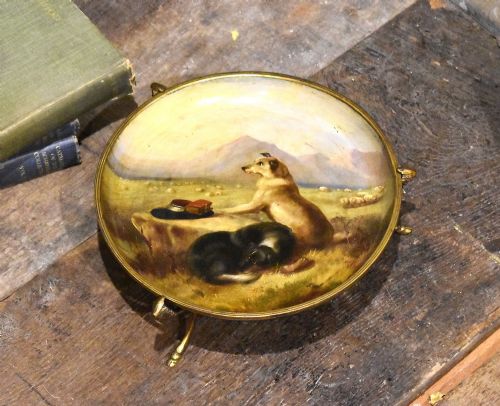
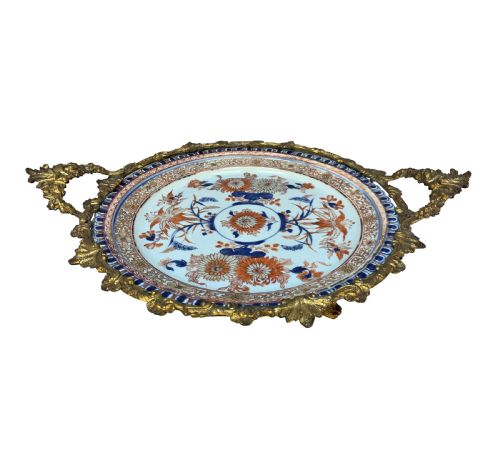
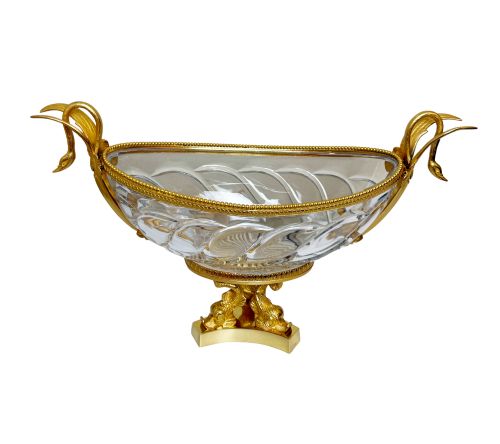
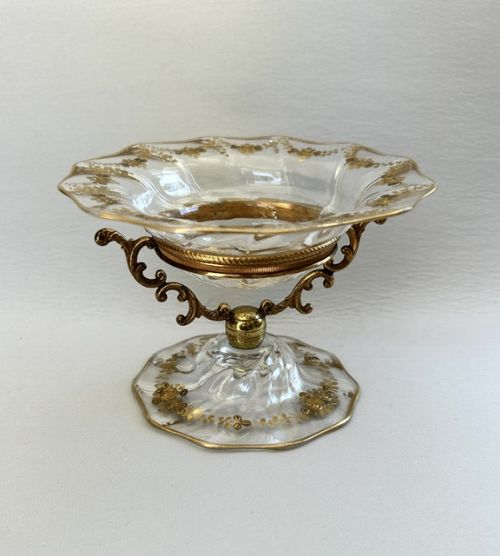


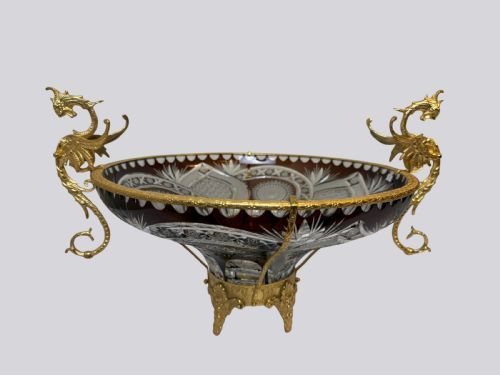


Ormolu Mounted Dish
An ormolu mounted dish brings gilt bronze mounts together with porcelain, crystal, or glass to anchor a table with period weight.
Ormolu Mounted Dish
When you search for an ormolu mounted dish, you are looking at decorative vessels, centrepieces, and comports framed in gilded metal. The pieces most likely to meet you on this page are French Rococo Revival and Empire style works originating from the nineteenth century.
The form typically takes the shape of decorative bowls or plates held by cast frames of gilt bronze. These items often function as centrepieces or serving dishes, drawing on nineteenth century and turn of the century aesthetics.
How they were made
The construction relies on combining cast bronze mounts with porcelain, cut glass, or crystal bowls. Artisans applied mercury gilding or fire gilding to the bronze to create the distinct ormolu finish before securing the vessel within the metal frame.
Ceramic elements utilise Chinese Imari or Sevres porcelain, sometimes enhanced with champleve enamel details. Glass and crystal components feature deep cutting and coloured glass techniques set against the gilded metal mounts.
Ormolu Mounted Dish Retail Price Guide 2026
Typical asking prices for ormolu mounted dish among the pieces listed under this phrase on Sellingantiques today, from the lower quarter to the upper quarter. They describe what is for sale here now, not the wider market.
Listings feature items from the eighteenth century, the Victorian era, and the early twentieth century, utilising porcelain, cut glass, and gilt bronze.
What varies in quality
The refinement of the bronze casting separates the finer examples from standard work. Crisp chiselling in the ormolu mounts shows the hand of a skilled artisan, whereas softer details suggest mass production.
The quality of the central vessel matters just as much as the metalwork. Intricate porcelain painting, deep glass cutting, and heavy crystal elevate the overall piece beyond simpler ceramic or glass bodies.
Sevres·Louis Pierre Malpass·Derby Porcelain
The Ormolu Mounted Dish Glossary
- Ormolu
- Gilt bronze, created by applying a mercury and gold amalgam to cast bronze and firing it. This technique produces a durable, warm golden surface found on nineteenth century decorative mounts.
- Centrepiece
- A large decorative bowl or comport placed in the middle of a dining table or sideboard. These objects dominate the visual weight of a room.
- Comport
- A raised dish on a stem used for serving fruit or sweets. They often feature elaborate metal mounts.
- Champleve
- An enamelling technique where troughs are carved into the metal surface and filled with vitreous enamel. These coloured areas contrast with the surrounding ormolu.
- Plaffonier
- A ceiling light bowl suspended by mounts. This form adapts the standard dish design for overhead illumination.
Ormolu Mounted Dish: Frequently Asked Questions
What is an ormolu mounted dish?
An ormolu mounted dish is a decorative bowl or plate held within a cast and gilded bronze frame. These items range from nineteenth century French centrepieces to serving dishes.
They combine materials like crystal, porcelain, and glass with metallic mounts to create ornamental display pieces for tables and sideboards.
How were these dishes used originally?
These pieces served as decorative centrepieces on dining tables or as presentation dishes for fruit and sweets. Their ornate appearance meant they were display objects rather than everyday tableware.
Wealthy households placed them in reception rooms to showcase fine porcelain, cut glass, and skilled metalwork.
How do I clean ormolu mounts?
Ormolu requires gentle dusting with a soft dry brush to prevent damage to the delicate gold layer. Avoid abrasive cleaners and chemical polishes that strip the historic gilding away.
Professional conservation advice is recommended if the metalwork requires deeper cleaning or restoration.
How can I tell nineteenth century pieces apart?
Nineteenth century pieces often display specific stylistic markers such as French Rococo Revival scrolls or Empire style symmetry. The weight of the bronze and the depth of the glass cutting help indicate the period.
Examining the underside of the porcelain or ceramic body can also reveal factory marks that date the item.
Are all these dishes French?
Many examples originate from France, particularly nineteenth century Sevres style works and Empire pieces. However, the selection also includes English porcelain and other European manufactories.
Makers from various regions adopted the fashion for gilt bronze mounts during the Victorian era and the turn of the century.