


Ormolu Credenza
An ormolu credenza brings grand Victorian and French design into a room, combining rich timber with gleaming gilt bronze mounts.
Ormolu Credenza
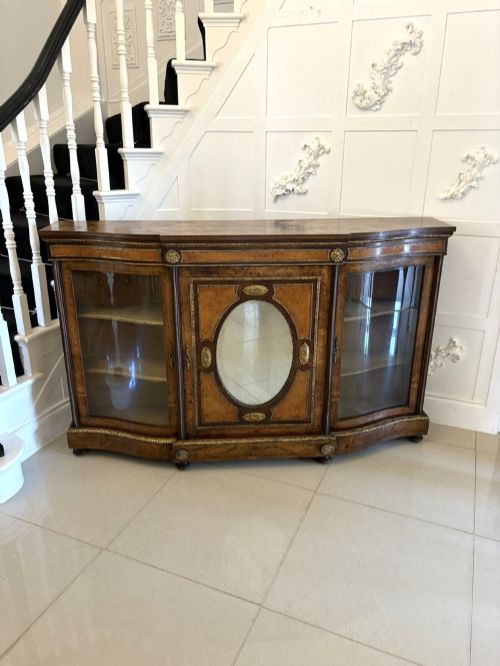
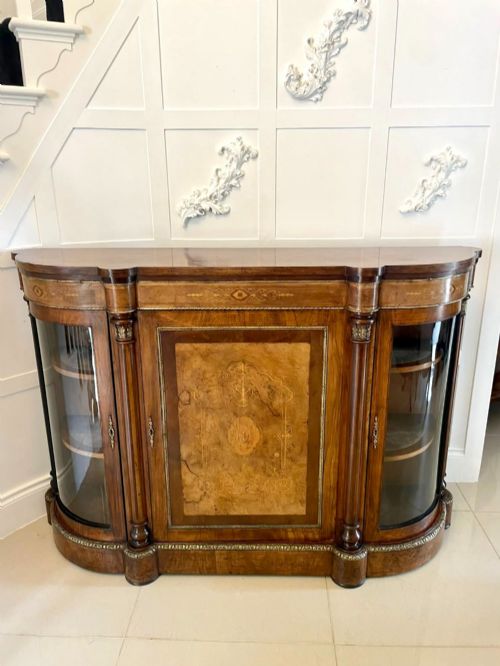
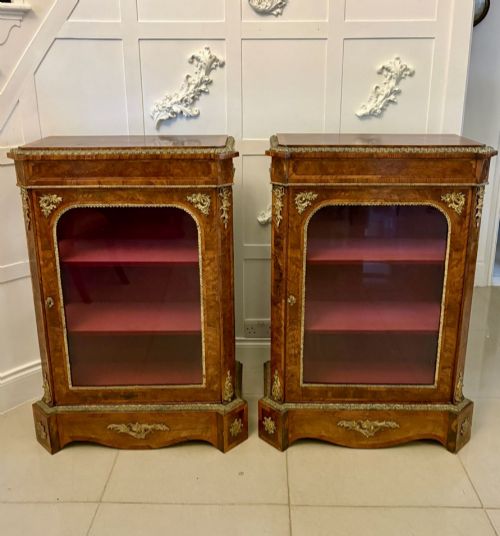
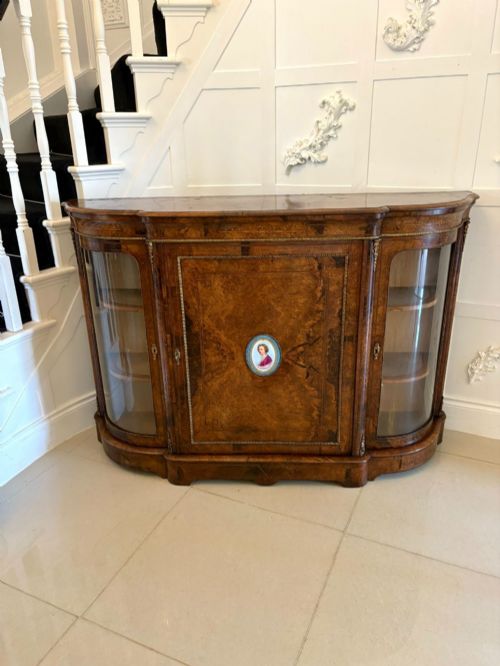
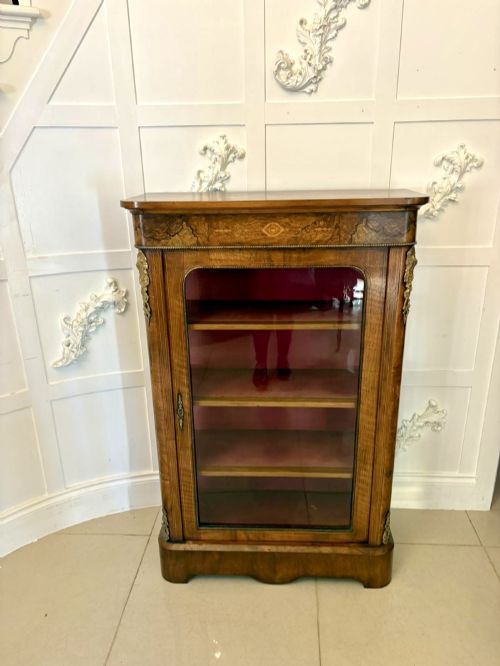
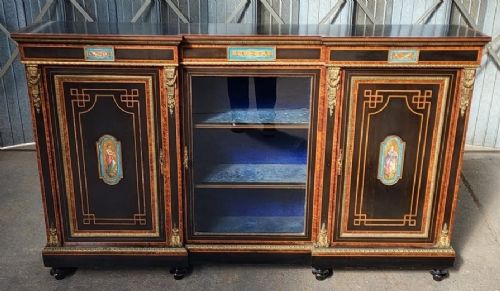
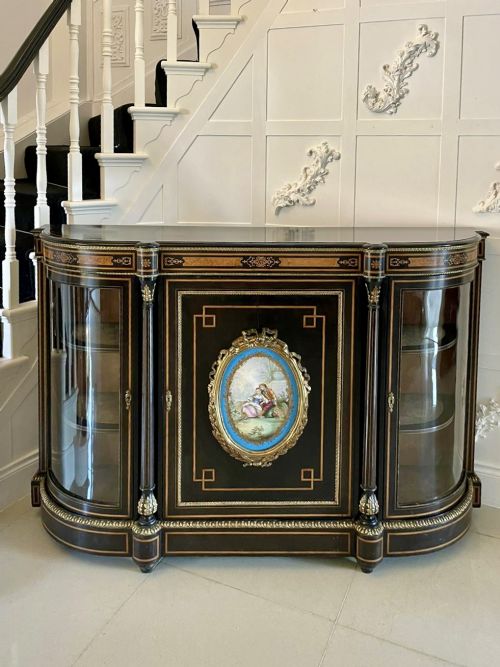
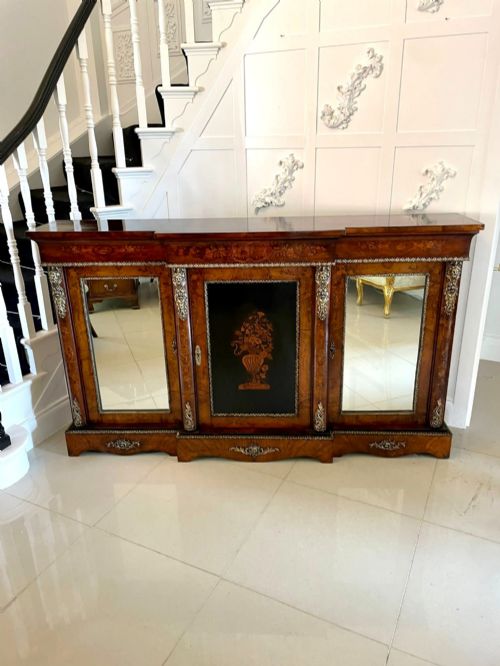
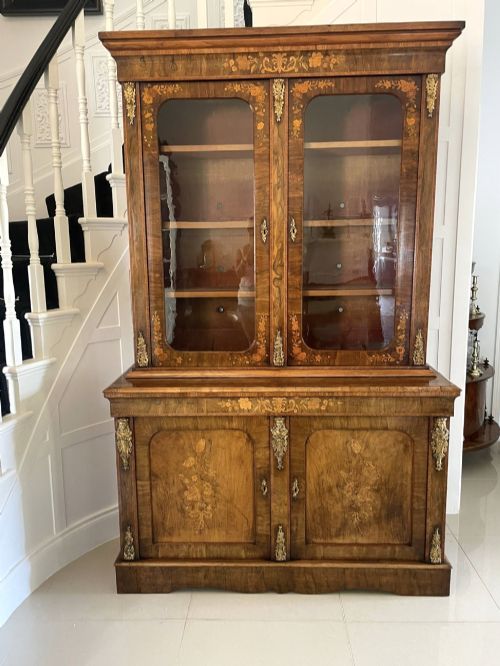
An ormolu credenza is a low cabinet designed for display and storage, heavily represented here by 19th century Victorian examples in burr walnut. These pieces typically feature enclosed central cupboards flanked by curved glass doors, sitting low to the ground with substantial surface space on top. Alongside standard credenzas, buyers frequently encounter related forms such as pier cabinets, sideboards, and display cabinets sharing the same decorative vocabulary.
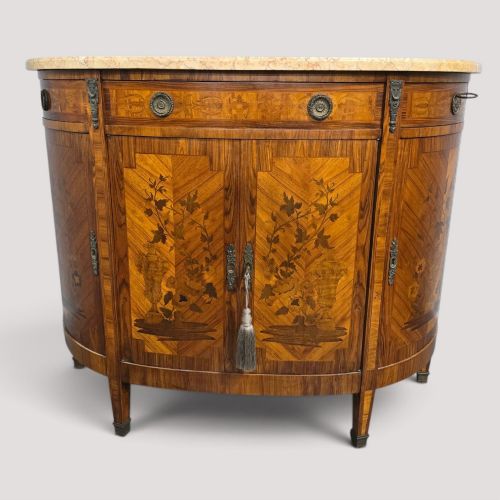
The aesthetic draws heavily from French Revival and Louis styles, incorporating marquetry, porcelain plaques, and mirror backs into the architectural framework. Makers of the period utilised walnut, ebonised wood, and exotic veneers as a dark canvas for intricate floral inlays and glittering gilt metal. This combination of timber and metal creates a commanding focal point in a dining room or drawing room.
How They Were Made
Cabinet makers built these pieces using solid pine or oak carcases heavily veneered in burr walnut, rosewood, amboyna, or kingwood to create rich grain patterns across the front doors and top surfaces. Marquetry panels incorporated contrasting woods cut into floral or geometric motifs, often accented with hand-painted porcelain plaques set directly into the timber. Ebonised finishes were achieved by staining and polishing fruitwoods to mimic expensive ebony.
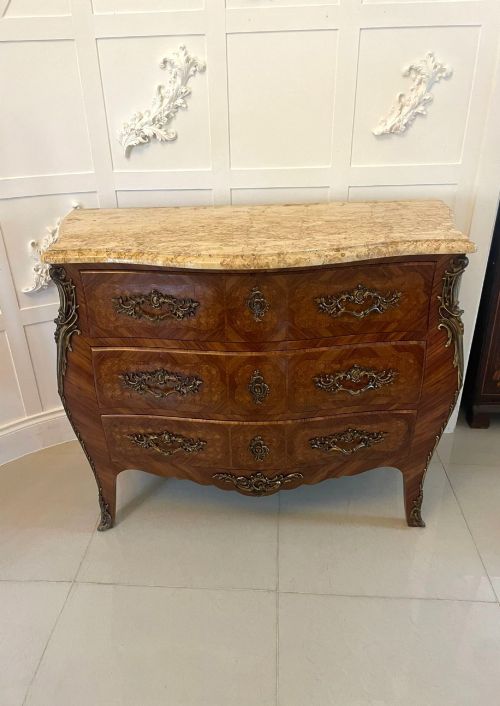
The defining ormolu mounts are cast bronze pieces finished with mercury or electroplated gold gilt, screwed meticulously to corners, feet, and door borders. Glass doors were curved or flat, housed in wooden frames and sometimes paired with mirrored interior backs to reflect light through the cabinet. Marble tops appear on several variants, requiring precise stone-cutting to fit the serpentine or breakfront contours of the cabinet base.
Listings feature 19th Century, Victorian, Regency, and 1880 periods, utilising burr walnut, mahogany, satinwood, and ormolu.
What Varies in Quality
The standard of an ormolu credenza rests largely on the crispness of the gilt bronze mounts and the depth of the timber veneer. Finer pieces display heavily chased ormolu with sharp, deep relief rather than smooth, mass-produced casting, alongside thick burr walnut veneers with symmetrical grain matching across the doors. Lesser examples rely on thinner veneers that lift at the edges and simpler, flatter metal fittings.
Marquetry and secondary detailing also dictate value, distinguishing standard production items from exhibition pieces. Superior cabinets feature elaborate multi-wood floral inlay with engraved shading, hand-painted porcelain inserts, and secondary woods like mahogany inside the drawers. Simpler construction involves printed or transfer-printed ceramic elements and plain interior carcases lacking refined secondary timber framing.
Henry Dasson·Gillows·Edward Holmes Baldock·Maison Gagneau
The Ormolu Credenza Glossary
- Ormolu
- Gilt-bronze mounts applied as decorative highlights to furniture. The technique involves applying a gold amalgam to cast bronze before heating to vaporise the mercury, leaving a durable golden finish.
- Credenza
- A low dining or drawing room cabinet for storage and display, originating in Italy and popularized in Britain during the Victorian era. These pieces often feature glass-fronted side sections flanking a central cupboard.
- Marquetry
- The art of applying small pieces of veneer to a structure to form decorative patterns or pictures. Craftsmen cut contrasting woods like satinwood and walnut to create floral or geometric designs.
- Burr Walnut
- Timber taken from a walnut tree growth or burl, yielding swirling, highly figured grain patterns. This wood was prized by 19th-century cabinet makers for veneering large flat surfaces.
- Pier Cabinet
- A narrow upright display cabinet designed to fit the wall space between windows. These tall pieces frequently incorporate glass doors and gilt mounts to match larger credenzas.
- Boulle
- A form of marquetry using tortoiseshed and brass inlay developed in France. The technique creates a striking metallic pattern against a dark background.
Ormolu Credenza: Frequently Asked Questions
What is an ormolu credenza used for?
These cabinets served historically for storing silverware and displaying porcelain or glassware in formal dining rooms and drawing rooms. The flat top surface also provided an ideal staging area for lamps, clocks, and decorative ornaments during gatherings.
Today, they function well as credenzas for media storage or as statement display pieces in large living spaces. The glass-fronted side compartments remain practical for showing books and collectibles while keeping them dust-free.
How do I tell a Victorian credenza from a French one?
Victorian credenzas made in Britain typically rely on burr walnut with heavy proportions, substantial columns, and floral marquetry panels. They often feature a breakfront or serpentine shape with three doors and gilt bronze mounts.
French pieces from the same era, such as those in the Napoleon III or Louis styles, often utilise ebonised wood, boulle marquetry, or elaborate ormolu caryatids. They tend to lean towards lighter, more overtly classical symmetry and frequently incorporate marble tops.
How do I care for ormolu mounts?
Gilt-bronze mounts require gentle dusting with a soft, dry brush to prevent dirt accumulation in the recessed cast details. Avoid commercial metal polishes entirely, as abrasive liquids will strip away the historic gold gilt layer.
Maintain stable room humidity to protect the underlying timber and veneer from expanding or contracting against the fixed metal mounts. If wax builds up around the edges of the bronze, remove it carefully with a wooden toothpick and a clean cloth.
Where should I place a credenza at home?
A credenza requires a substantial wall space, such as a long dining room wall or an expansive hallway, to balance its visual weight. Positioning it away from direct sunlight protects the delicate wood veneers and historic lacquers from fading.
Ensure the floor is level so the heavy doors and curved glass panels hang correctly without binding on the frame. Because many pieces feature mirrored backs or glass sides, ambient room lighting positioned nearby will illuminate the interior display.