




Tortoiseshell Brass Inlay Cabinet
A tortoiseshell brass inlay cabinet brings dramatic contrast and metallic warmth to a room through intricate tortoiseshell and brass work.
Tortoiseshell Brass Inlay Cabinet
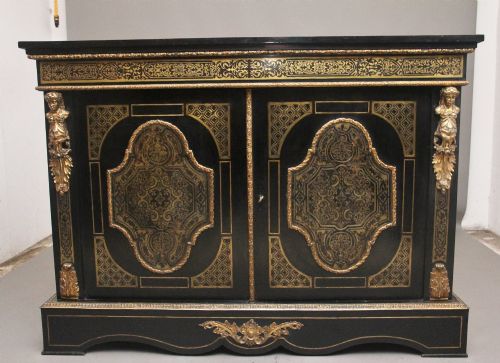
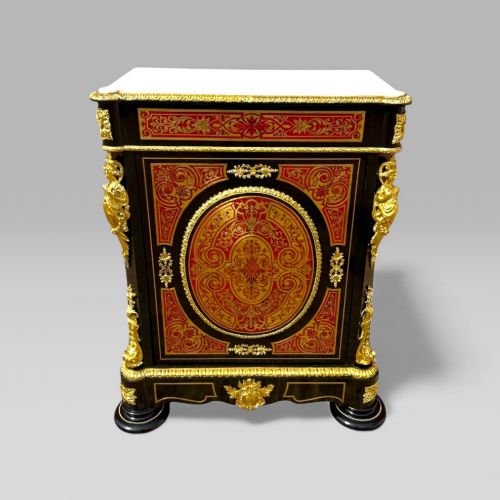
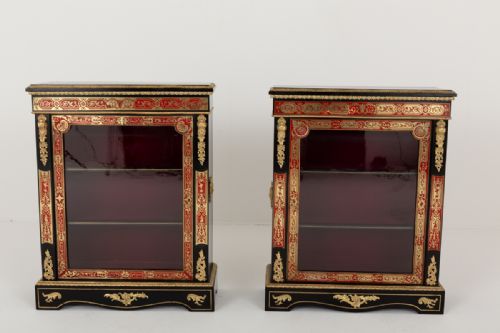
A tortoiseshell brass inlay cabinet is typically a French Napoleon III or Victorian piece finished in ebonised wood or rosewood, designed to function as a display cabinet, pier cabinet, or credenza.
The form relies on elaborate marquetry known as boulle work, combining dark tortoiseshell with shimmering brass inlay across side cabinets and writing desks.
Most examples originate from the nineteenth century, reflecting French revival styles and Louis XVI influences that prioritize ornamental impact.
Materials and construction
Craftsmen built the core structure using ebonised wood, rosewood, and timber frames, then applied layers of brass and tortoiseshell inlay to the surface.
Ormolu mounts, gilt bronze details, and marble tops were added to accentuate the geometric and floral marquetry patterns.
Listings feature nineteenth-century ebonised wood, rosewood, and marble-topped forms spanning French Napoleon III and Victorian revival styles.
Assessing quality and craftsmanship
Quality rests on the precision of the brass and tortoiseshell cutting, where tight joints and crisp botanical or scroll motifs distinguish finer work.
The richness of the cast ormolu mounts and the depth of the ebonised wood finish signal the level of care invested in the piece.
The Tortoiseshell Brass Inlay Cabinet Glossary
- Boulle
- A form of marquetry using contrasting slices of brass and tortoiseshell inlaid into wood, named after the cabinetmaker André-Charles Boulle.
- Ormolu
- Gilded bronze used for decorative mounts, feet, and edging on nineteenth-century furniture.
- Pier cabinet
- A tall, narrow cabinet designed to fit against the wall space between windows.
- Bonheur du jour
- A light nineteenth-century lady's writing desk featuring a small cabinet or shelving superstructure above the main desk surface.
- Credenza
- A low cabinet or sideboard often fitted with glass doors and elaborate mounts for display and storage.
Tortoiseshell Brass Inlay Cabinet: Frequently Asked Questions
Where should I place a boulle cabinet?
These cabinets work best against a solid wall where natural light can catch the reflective brass inlay and polished tortoiseshell surfaces.
Keep them away from direct sunlight and strong heat sources to protect the delicate inlays and wood finishes.
How do I clean tortoiseshell and brass?
Dust the surfaces gently with a soft, dry cloth without applying harsh commercial furniture polishes or abrasive cleaners.
Professional care is recommended if the brass or tortoiseshell shows signs of loosening from the wooden substrate.
What is the difference between pier cabinets and credenzas?
Pier cabinets are typically tall and narrow, built to occupy specific wall sections between architectural openings.
Credenzas are wider, low-profile storage pieces that often incorporate glass panel doors for displaying collections.
Are these cabinets purely decorative?
While highly ornamental, they provide functional shelving and surface space behind enclosed doors for storing and displaying objects.
Writing variations like the bonheur du jour also include integrated desks with small drawers for correspondence.