
Ormolu Chest of Drawers
When you seek an ormolu chest of drawers, you choose heavy timber and bright bronze mounts that anchor a room with continental weight.
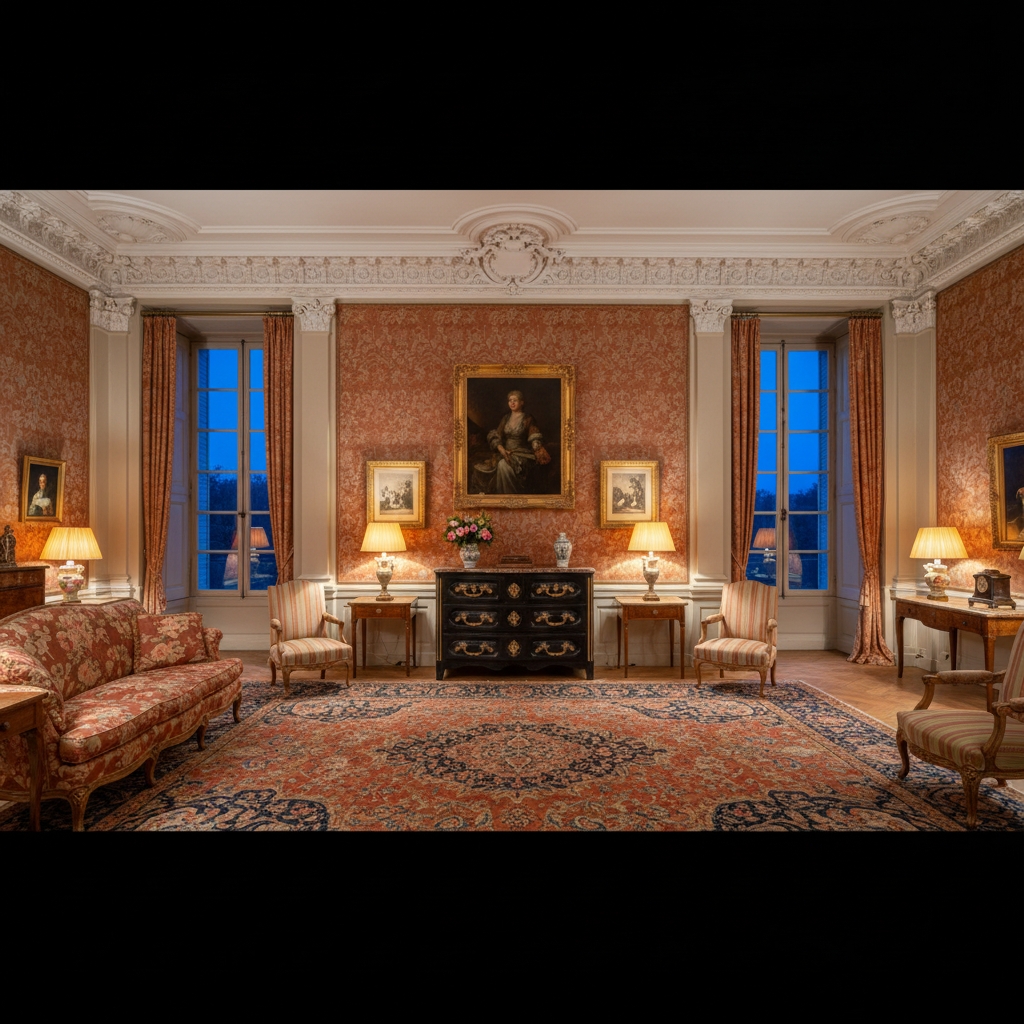
Ormolu Chest of Drawers
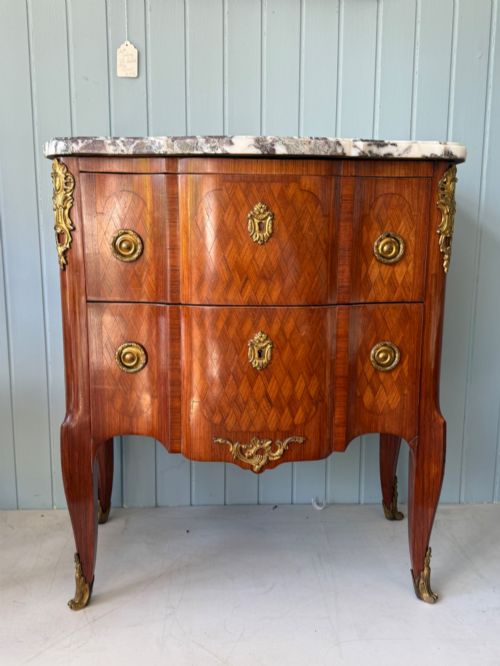
An ormolu chest of drawers brings together timber carcasses and cast, gilded bronze mounts in forms that stem chiefly from French cabinet-making traditions. Buyers search for this phrase to find commodes, bedside tables, and tall chests shaped by Louis XV, Louis XVI, and Empire styles.
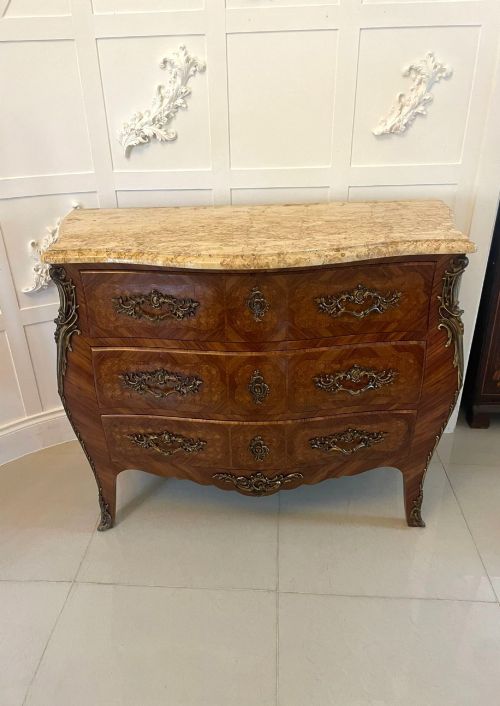
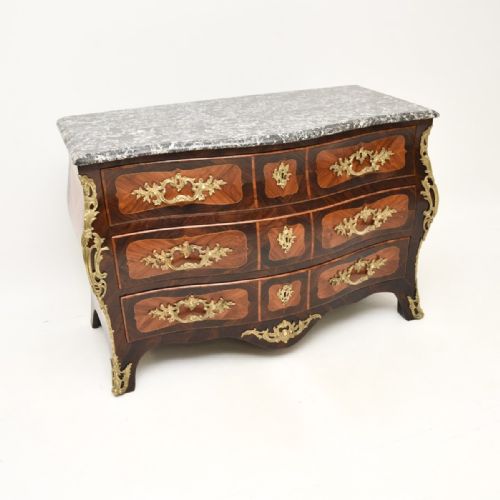
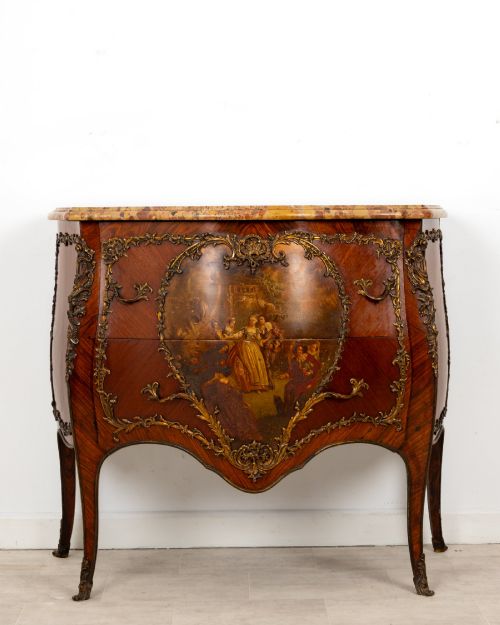
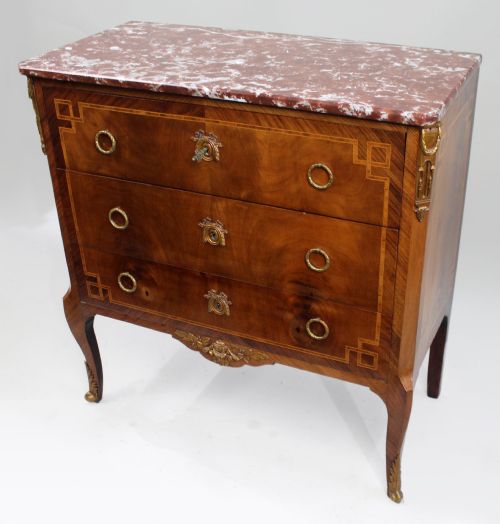
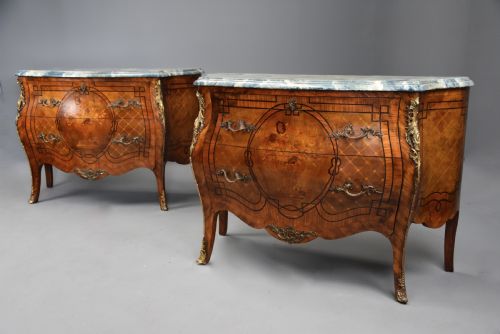
The version you meet most often on this page is the 19th-century revival commode, built in walnut, kingwood, or mahogany with serpentine fronts and heavy marble tops. These pieces carry the decorative vocabulary of earlier royal workshops into later Victorian and Edwardian drawing rooms.
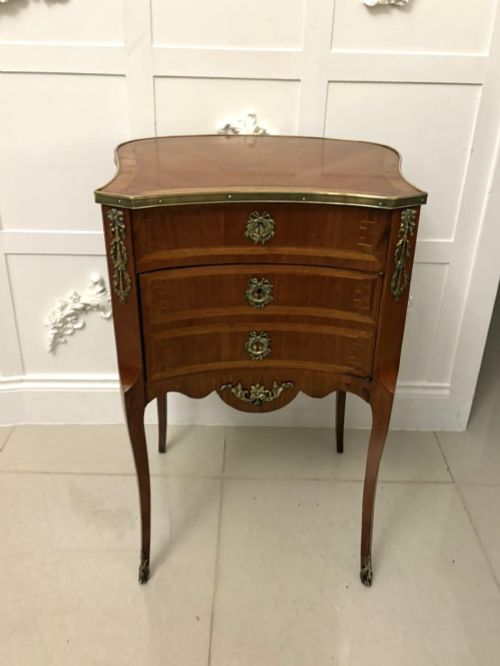
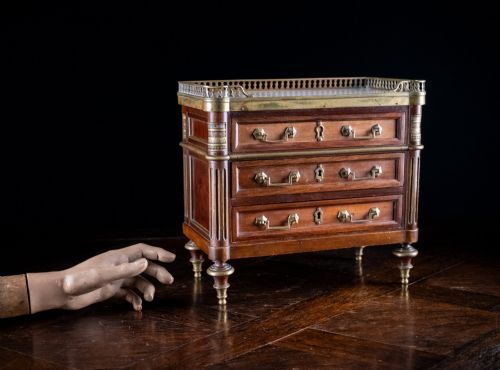
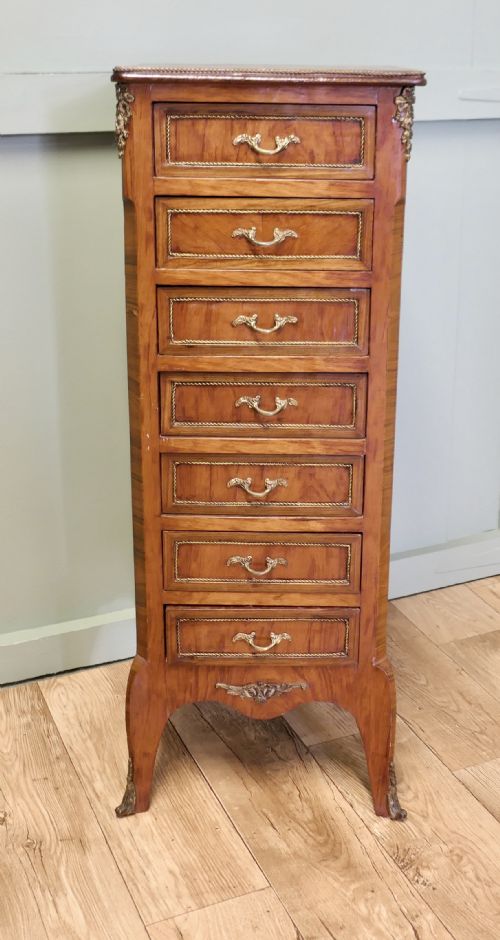
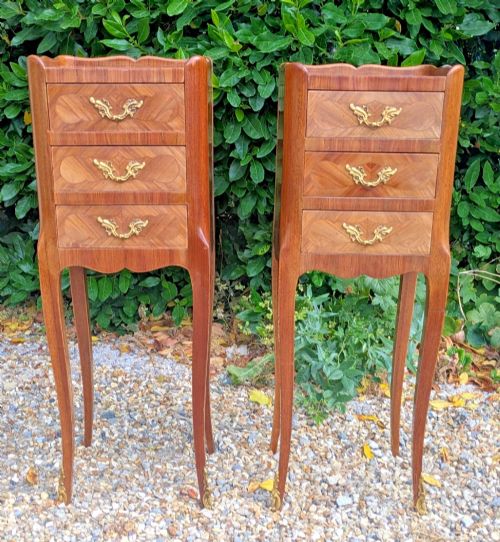
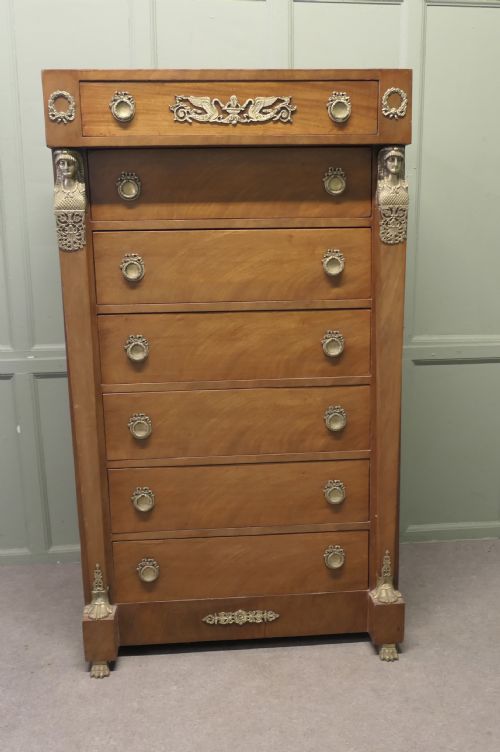
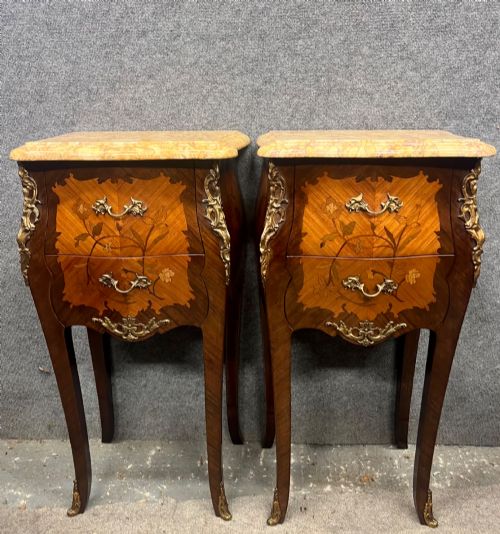
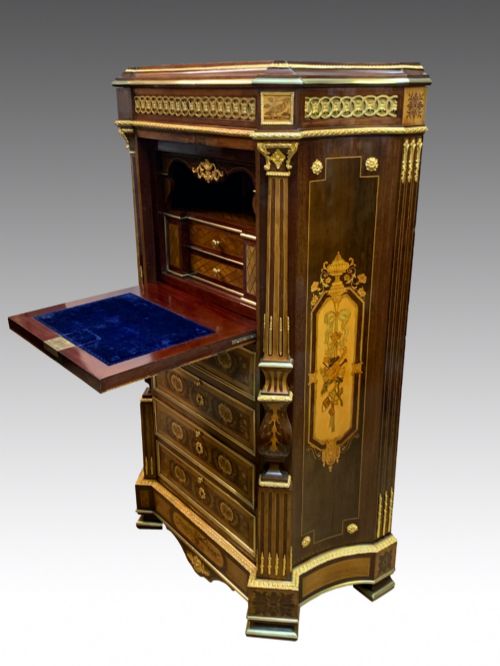
Alongside standard commodes, the selection includes miniature chests, side cabinets, and semainiers, offering diverse proportions while retaining the signature metal mounts and inlaid veneers. Each object represents a continental storage form adapted for high-status European interiors.
Materials and construction methods
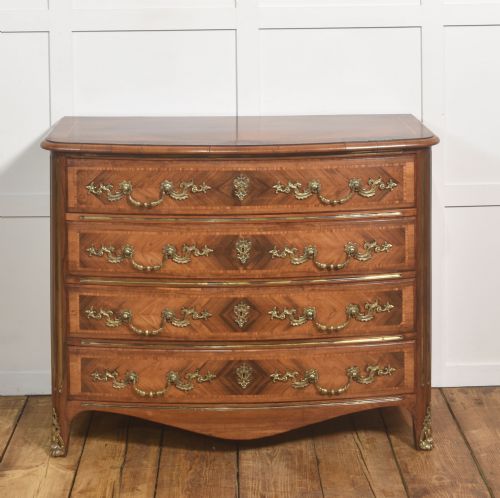
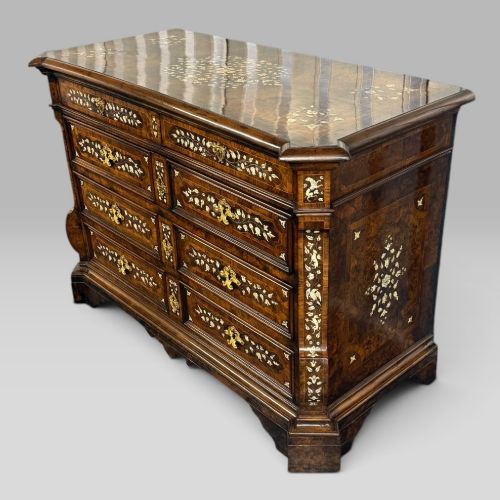
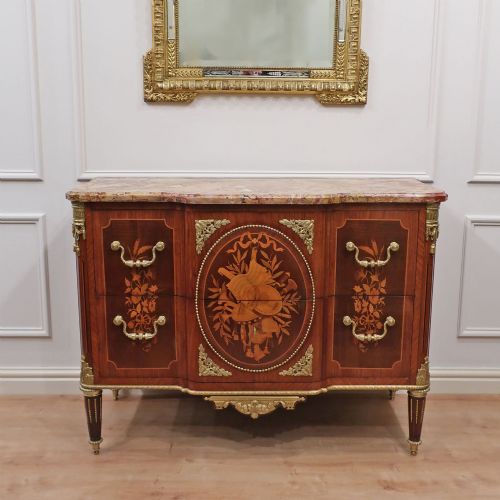
Cabinet-makers built these carcasses from native and exotic timbers including walnut, mahogany, kingwood, rosewood, and tulipwood, often laid as parquetry or floral marquetry across the drawer fronts. These wood veneers provide contrasting grain patterns that frame the gilt bronze elements.
The characteristic ormolu mount, or gilt bronze, is cast and chased by hand before receiving its gold finish, then pinned or screwed directly to the corners, handles, and aprons of the commode. Heavy slabs of rouge or white marble sit flush on the top surface, acting as both a functional counter and a weighty visual cap.
Some tall chests provide seven narrow drawers, one for every day of the week.
Distinctions in execution and finish
The crispness of the bronze chasing separates standard production from exceptional work, as sharper metal detailing reveals the hand of a skilled founder. Finer pieces display deeply sculpted acanthus leaves, rococo scrolls, and figures that retain their fire-gilt lustre rather than looking flat or brassy.
Veneer selection and joinery precision dictate the upper tier of the range, where continuous grain matching across serpentine drawers shows patient benchwork. The weight and thickness of the original marble slab, alongside the integration of the bronze mounts into the timber chassis, signal the grade of the original workshop.
Jacques Bircklé·Grand Ducal Workshops·Maison Krieger·Thomas Hache of Grenoble
The Ormolu Chest of Drawers Glossary
- Ormolu
- Gilded bronze used for decorative mounts and handles on furniture. The technique involves applying a gold amalgam to cast bronze before heating to drive off the mercury.
- Marquetry
- Patterns formed by inserting pieces of coloured veneer into a wood foundation. Craftsmen use various timber species to create floral or geometric pictures.
- Parquetry
- Geometric mosaic woodwork used for cabinet floors and drawer fronts. It relies on repeating shapes like squares, cubes, and chevrons.
- Bombe
- A swollen or bulging convex shape found on the sides and fronts of commodes. This curved silhouette is characteristic of mid-eighteenth-century rococo design.
Ormolu Chest of Drawers: Frequently Asked Questions
What is an ormolu chest of drawers?
It is a wooden storage cabinet embellished with cast and gilded bronze mounts, following continental design traditions.
Most examples on the market take the form of French commodes with marble tops and patterned wood veneers.
How do I care for marble top commodes?
Wipe the stone surface with a soft, damp cloth and avoid acidic liquids that can etch the polish. Lift objects rather than dragging them across the stone.
Dust the timber and bronze mounts gently with a dry cloth without using harsh commercial polishes.
Where were these pieces used originally?
These cabinets stood in high-status salons, formal bedrooms, and drawing rooms of European townhouses and country estates. They served to store linens, documents, and personal valuables while displaying the owner's taste.
Their decorative backs and finished sides often allowed them to sit away from the wall in grand spaces.
How do I distinguish Louis XV from Louis XVI style?
Louis XV pieces feature asymmetrical curves, serpentine lines, and exuberant rococo scrollwork in the bronze mounts. The overall silhouette is fluid and swelling.
Louis XVI furniture introduces straight tapering legs, symmetrical neoclassical geometry, and crisp architectural detailing inspired by antiquity.