
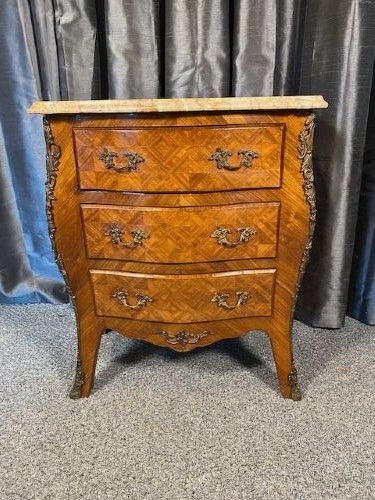
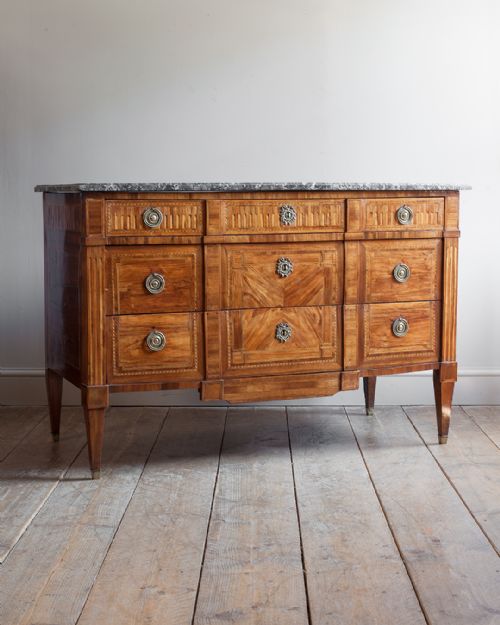
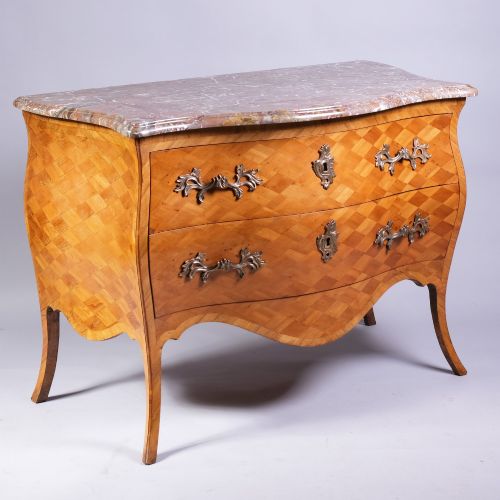
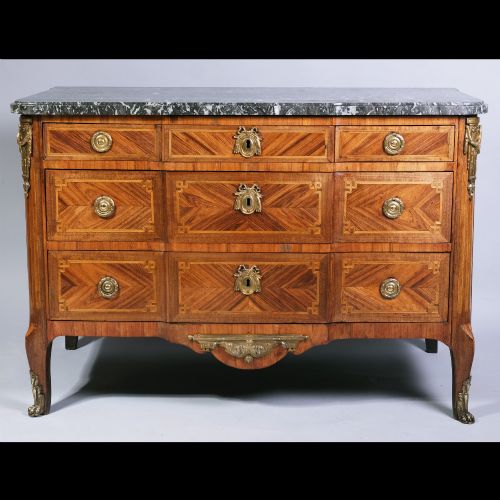
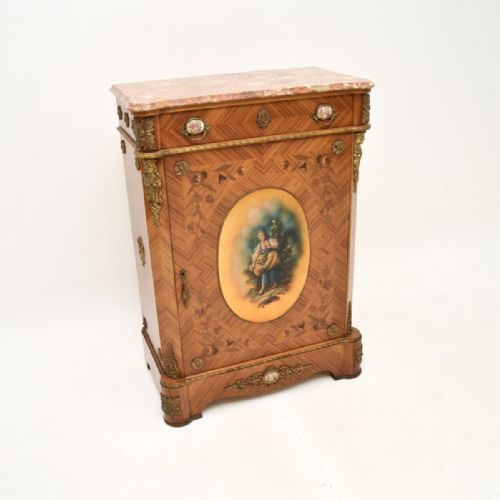
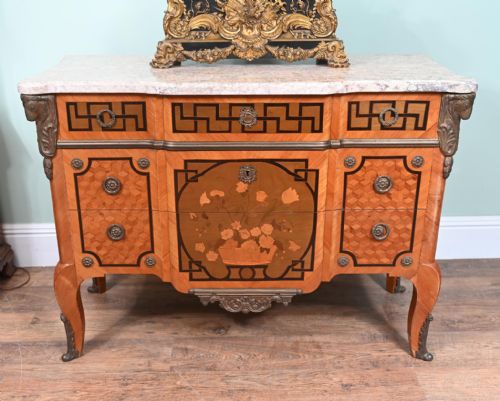
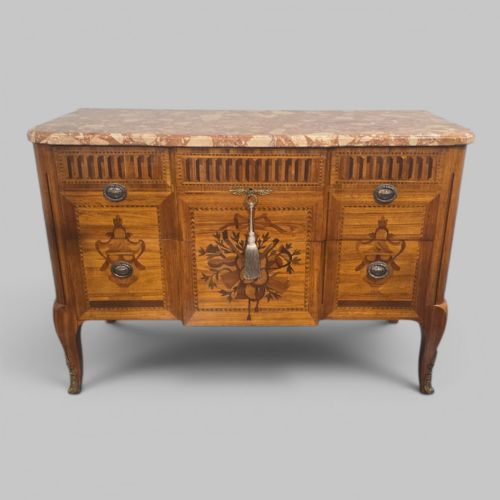
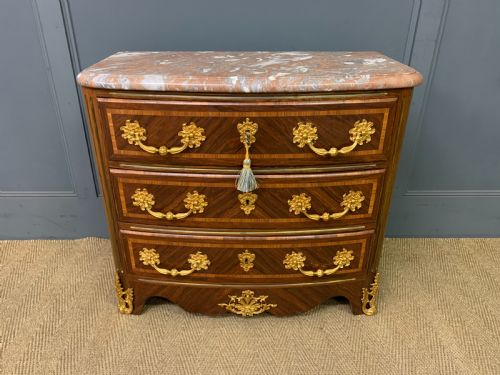
French Parquetry Marble Commode
A french parquetry marble commode brings architectural weight and precise geometric wood patterns to a room, topped with cool stone.
French Parquetry Marble Commode
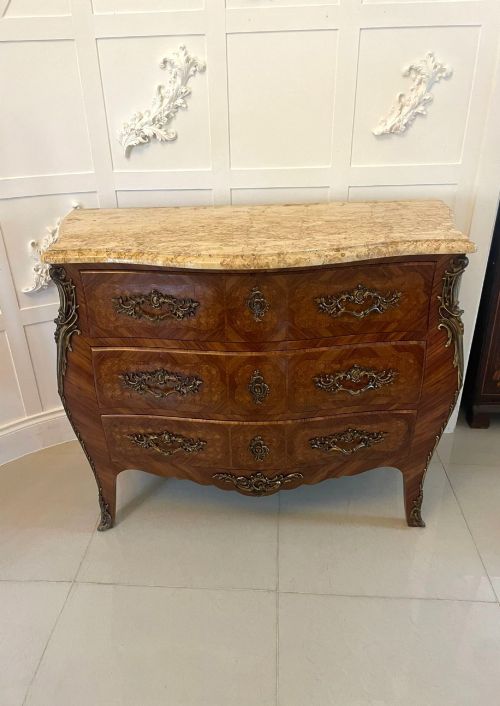
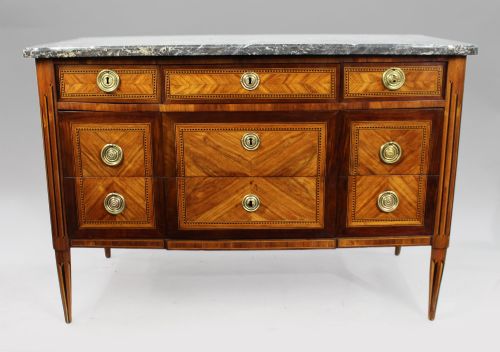
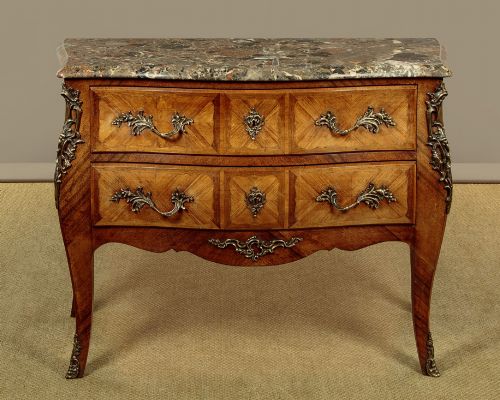
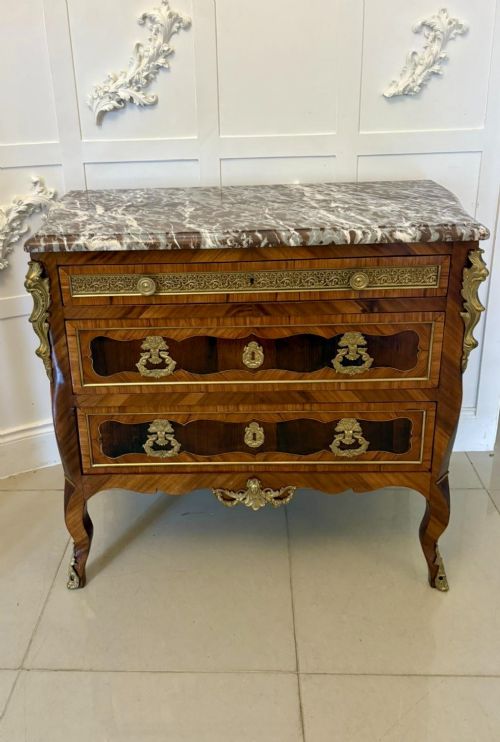
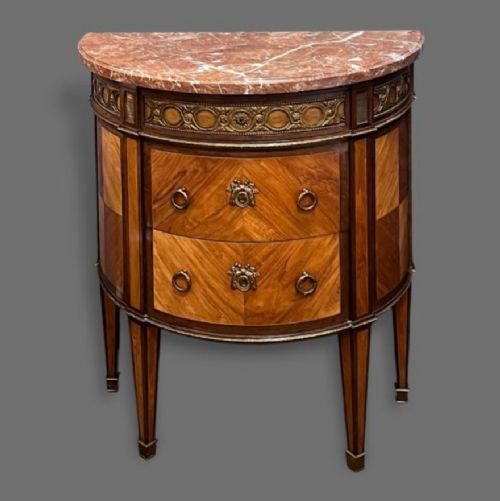
A french parquetry marble commode is a low chest of drawers or cabinet built to sit flush against a wall, combining fitted timber storage with a heavy stone surface. These pieces span from eighteenth-century originals to later nineteenth-century revivals, taking forms from serpentine fronts to straight breaks.
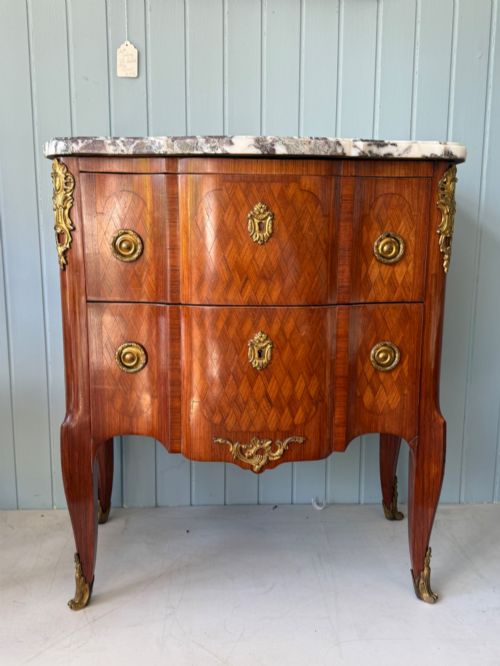
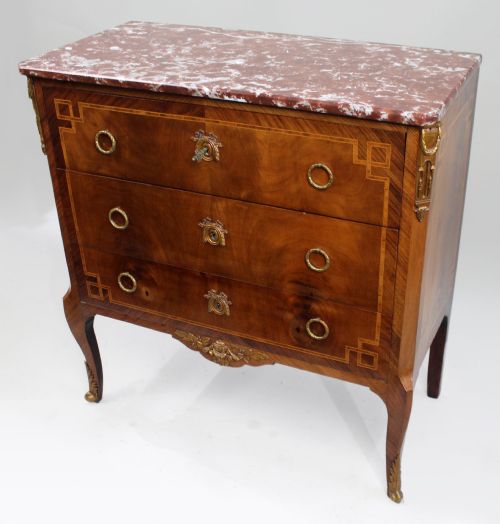
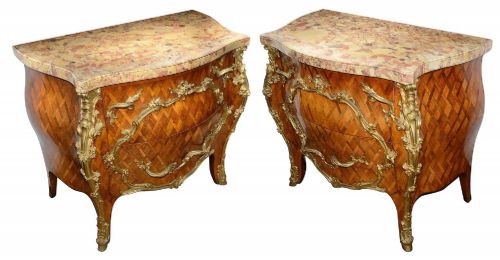
The layout typically involves two or three long drawers, occasionally paired with smaller bedside cabinets or pairs of side chests. Makers drew on Louis styles, applying decorative parquetry across the drawer fronts and carcass sides.
Originating in France, these items appear in walnut, kingwood, and tulipwood, reflecting the cabinetmaker's art across successive monarchical periods and later revivals.
Materials and Construction
Construction relies on carcases of oak or pine that receive thin veneers of exotic and native timbers arranged in geometric parquetry patterns. Craftsmen laid out squares, diamonds, and herringbone arrangements to play with the natural grain directions of walnut, kingwood, and tulipwood.
Cast ormolu and gilt bronze mounts frame the corners, drawer edges, and aprons, fixed through the timber to accent the silhouette. Heavy marble slabs, shaped to match the serpentine or breakfront profiles, rest on top without permanent fixings.
Listings feature woods such as walnut, kingwood, and tulipwood paired with marble and ormolu mounts.
Assessing Quality
Quality shows in the precision of the parquetry joints and the weight of the cast metal mounts. Finer pieces display seamless wood matching across drawer divides and crisp chasing on the bronze work.
The thickness and selection of the marble top also dictate grade, with matched edge profiles and dense veining separating standard examples from exceptional ones.
Maison Millet
The French Parquetry Marble Commode Glossary
- Parquetry
- Geometric wood mosaic work formed by small veneer pieces applied to a carcase. It creates repeating patterns like cubes or herringbone across flat surfaces.
- Ormolu
- Gilt bronze mounts applied to furniture edges and corners. The technique involves gilding a copper alloy with mercury and gold.
- Serpentine
- A curved furniture front that undulates outward in the centre and inward at the sides. This shape requires specialised cutting of both timber and marble.
- Kingwood
- A dense, heavy timber with dark violet-brown grain patterns used extensively in French cabinetmaking. It takes a high polish and contrasts sharply with lighter woods.
French Parquetry Marble Commode: Frequently Asked Questions
How do I clean the marble top?
Wipe the surface with a soft, damp cloth using neutral soap, avoiding acidic cleaners that etch stone.
Dry thoroughly with a clean lint-free cloth to maintain the natural sheen.
Are the marble tops original?
Many retain their original stone slabs, which sit unattached on top of the timber frame.
Matching the stone thickness and edge profile to the period helps verify authenticity.
Can I use these in a hallway?
These cabinets suit hallways and reception rooms as surface display points with enclosed storage underneath.
Ensure clearance for drawers and doors in narrow circulation spaces.
What is the difference between parquetry and marquetry?
Parquetry uses geometric wood tiles to form repeating patterns like squares or herringbone.
Marquetry creates pictorial or floral scenes using varied veneer species.