
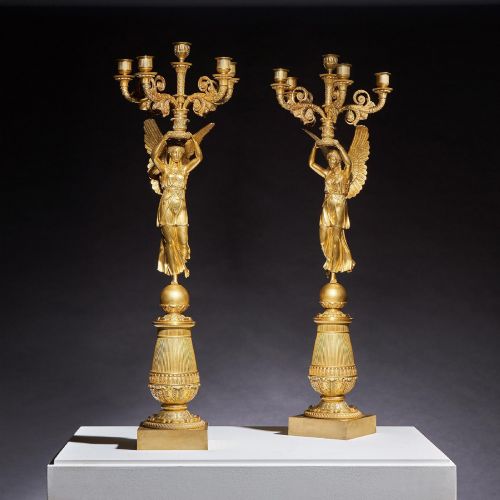
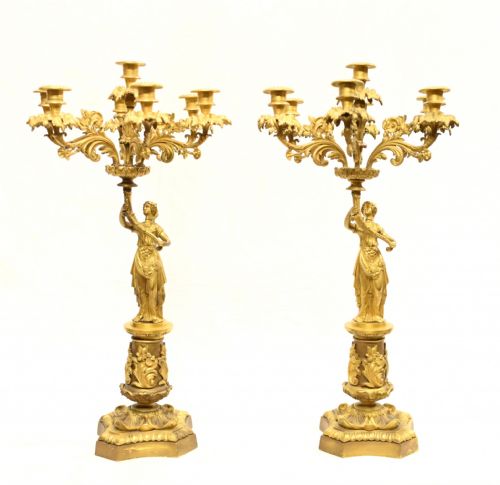


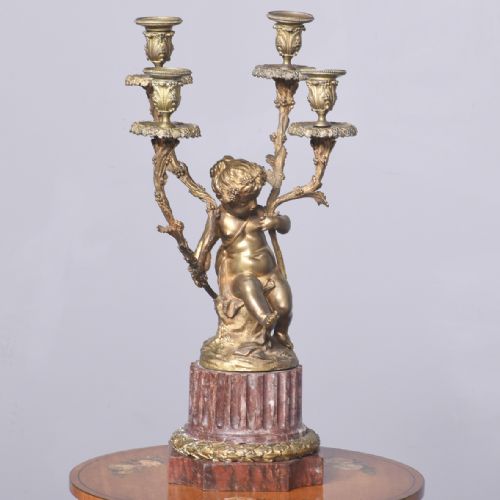


Ormolu Candelabra Centrepiece
These ormolu candelabra centrepiece designs combine gilded bronze with marble, glass, and patinated metal to anchor a dining table or mantelpiece with formal French presence.
Ormolu Candelabra Centrepiece
When you search for an ormolu candelabra centrepiece, you encounter grand table lighting and decorative centrepieces primarily originating from the nineteenth century. These pieces emerge in distinct French revival aesthetics, drawing heavily on Rococo, Empire, Régence, and Louis XVI styles.
The objects on this page range from standard pairs of branch candelabras to elaborate combinations featuring porcelain birds, cherubs, putti, and hanging cut glass drops. Most examples rely on heavy cast bronze or brass frames finished with fire gilding or ormolu, frequently paired with white marble bases.
Materials and construction
Construction relies on the combination of cast bronze, brass, and gilt ormolu, often contrasted with dark patinated bronze elements. Makers employed mercury gilding or modern electroplating to achieve the characteristic rich golden surface on the bronze components.
Many of the nineteenth-century examples incorporate natural white marble plinths and bases to add weight and formal contrast to the metallic lustre. Detailed secondary elements such as cut glass drops, porcelain figures, and cast putti or cherubs are mechanically pinned or screwed into the primary bronze armature.
Materials appearing across the inventory include gilt bronze, ormolu, bronze, marble, patinated bronze, brass, gilt brass, and cut glass.
Assessing quality and execution
The weight of the bronze and the quality of the supporting marble plinth also distinguish better examples from simpler production. Superior objects retain their original patination and possess balanced, stable proportions across all arms and candle nozzles.
Pierre Philippe Thomire
The Ormolu Candelabra Centrepiece Glossary
- Ormolu
- A technique of applying finely ground high-carat gold to an object of bronze, also known as gilt bronze. It provides a durable, warm metallic finish characteristic of French decorative arts.
- Patinated Bronze
- Bronze that has been chemically treated to produce a dark brown, green, or near-black surface. This dark tone creates visual contrast against bright ormolu highlights.
- Chasing
- The manual finishing of a cast metal object using small punches and chisels to sharpen details and remove casting flaws. High-end pieces show extensive, precise hand chasing.
- Table Lustre
- A decorative tabletop lighting form hung with cut glass prisms or drops to refract candle flame. These fixtures combine candelabra branches with glass ornamentation.
- Putti
- Depictions of chubby male toddlers, often winged, used as decorative supports or sculptural elements in classical and Rococo design. They frequently appear clambering up the stems of nineteenth-century candelabras.
Ormolu Candelabra Centrepiece: Frequently Asked Questions
What periods do these pieces come from?
The pieces listed span the nineteenth century, encompassing the Regency period, the Victorian era, and various decades up to nineteen ten. The dominant design languages draw from earlier French reigns, including Louis the Sixteenth and the Empire.
Maker attribution and stylistic cues point heavily to French workshops producing revival pieces for an international market during the eighteen sixties, seventies, and eighties.
How were these candelabras used historically?
These items functioned primarily as illumination devices for grand dining tables, sideboards, and mantelpieces in formal drawing rooms. Their reflective ormolu surfaces and glass drops magnified the candlelight of the period.
Beyond lighting, they served as sculptural centrepieces designed to demonstrate the wealth and taste of the household during formal dinners and evening receptions.
How should I clean ormolu metalwork?
Maintenance requires only gentle dusting with a soft, dry cloth to prevent the accumulation of grit in recessed chased areas. Water, modern chemical polishes, and abrasive cloths must be avoided because they strip the thin gold layer from the bronze underneath.
If the piece incorporates white marble bases, wipe the stone separately with a barely damp cloth and dry it immediately to prevent staining.