

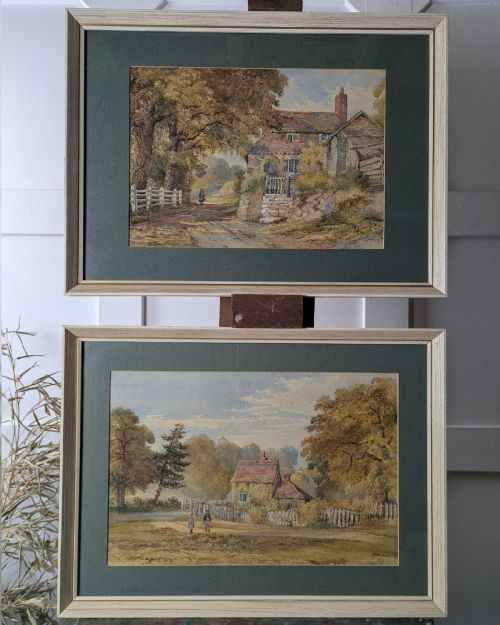
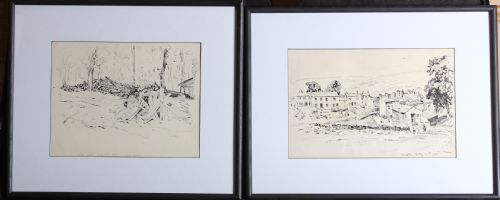


Original Watercolour Pair
When collectors search for an original watercolour pair, they seek balanced twin compositions executed by hand on paper.
Original Watercolour Pair
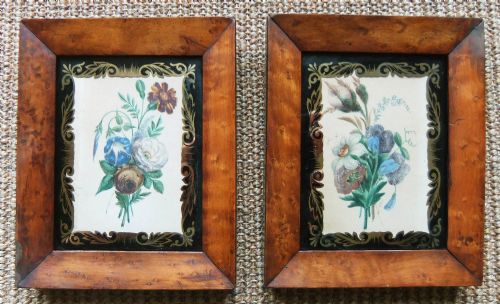
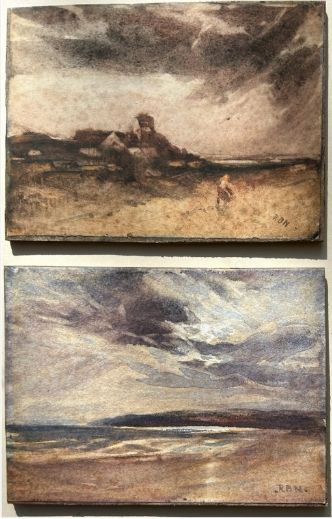
An original watercolour pair consists of two complementary paintings executed by hand, sharing a common subject, maker, and period. When browsing for an original watercolour pair, buyers encounter works spanning from the Georgian era through the Victorian and Edwardian periods into the mid-twentieth century.
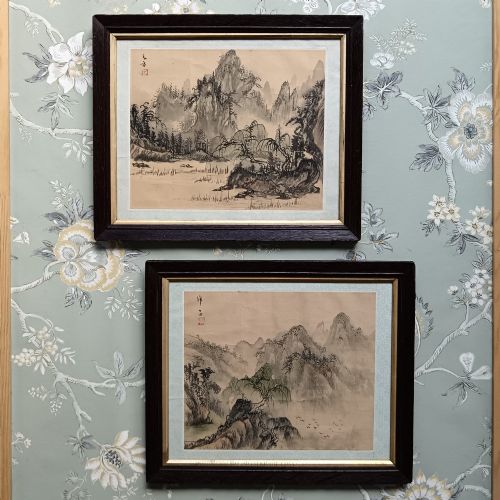
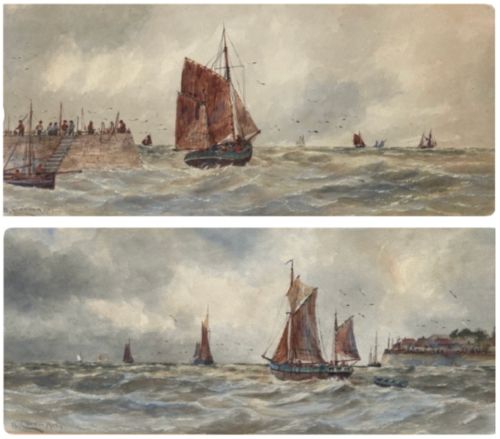
The subjects on this page cover British and Irish landscapes, seascapes, moorland views, architectural studies, portraits, and traditional Chinese compositions. These twin artworks are typically framed together or housed in matching period surrounds, designed to hang side by side on a wall.
Makers range from named professional artists associated with regional schools to skilled painters working within traditional genres. Each set displays the individual touch of the brush, distinguishing them from mass-produced prints.
Materials and construction
Watercolour pigment and ink are applied to paper or silk, capturing translucent washes and fine linear details. The application relies on water-soluble pigments handled with precision to build light and shadow across the surface.
Mounting and framing utilise wood, gilt wood, ebonised frames, and glass to protect the delicate paper supports. Many pieces retain their original period frames, which contribute context to the history of the artwork.
Original Watercolour Pair Retail Price Guide 2026
Typical asking prices for original watercolour pair among the pieces listed under this phrase on Sellingantiques today, from the lower quarter to the upper quarter. They describe what is for sale here now, not the wider market.
Listings feature works spanning the nineteenth century, the Edwardian era, and mid-twentieth-century realism.
Elements of quality
Quality rests upon the handling of the pigment and the clarity of the composition across both sheets. Superior examples maintain an equal standard of execution in each picture, ensuring the pair balances visually when hung together.
The preservation of the paper support and the vibrancy of the pigment determine the longevity of the work. Evidence of original framing and known signatures from established painters further elevate the standing of a set.
William Cannon·Robert A Nottingham·Fred Lawson·Th Thibault·F J Snell·Alfred George Morgan·Ernest Uden·George Whyatt·Robert Buchan Nisbet·Sidney James Beer·Nora Cundell·Robert Richard Scanlan·Leslie Rackham·Jan van Couver·Thomas Woolnoth·John Sanderson Wells·James H Hulse·Alfred Rimmer·WD Scull·Frank Dadd·Gordon Meadows·Karl Feiertag·JS Cooper·F Wood·Charles Frederick Allbon
The Original Watercolour Pair Glossary
- Watercolour
- A painting method in which the paints are made of pigments suspended in a water-based solution. This technique allows for delicate washes and translucent layers.
- Diptych
- A painting divided into two distinct sections or panels. In this context, it refers to two hinged or matching artworks conceived as a single unit.
- Gilt wood
- Wood that has been treated with a thin layer of gold leaf or gilt finish. Frames of this material are frequently found on nineteenth-century fine art.
- Shan Shui
- Traditional Chinese landscape painting style featuring natural scenery such as mountains and rivers. These works are often executed on silk or paper.
- Provenance
- The documented history of ownership of an art object. Verified background details help confirm the authenticity and origin of older works.
Original Watercolour Pair: Frequently Asked Questions
How were watercolour pairs traditionally displayed?
Pairs were designed to hang symmetrically on domestic walls, often flanking a doorway, fireplace, or larger centrepiece painting.
Matching frames helped unify the two distinct sheets into a single decorative scheme within nineteenth-century and Edwardian interiors.
Why are watercolours painted on paper?
Paper provides a reflective white ground that shines through translucent washes of pigment, creating luminosity.
Artists utilised various weights of handmade paper to absorb water efficiently without buckling the surface during application.
How can I tell a watercolour from a print?
Examining the surface under magnification reveals the brushstrokes, pooling of pigment, and texture of the paper fibres.
Original watercolours lack the uniform dot pattern or ink spray associated with mechanical reproduction methods.
What subjects are most common in these pairs?
Landscapes and coastal scenes dominate the selection, reflecting the Victorian and Edwardian taste for rural scenery.
Artists also produced portraits, architectural views, and sporting subjects in matching formats for domestic patrons.