

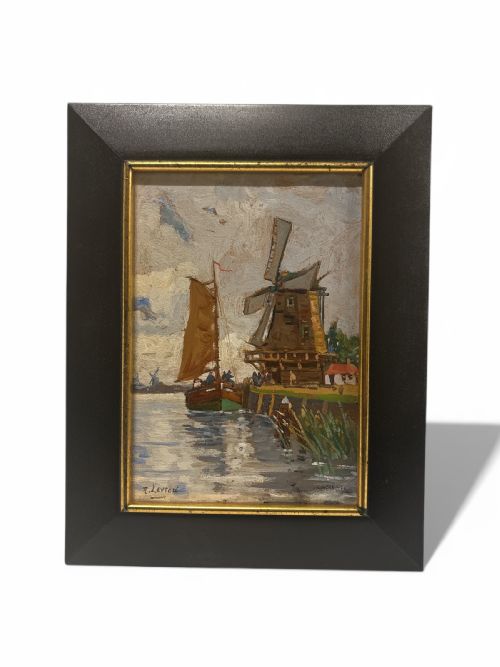


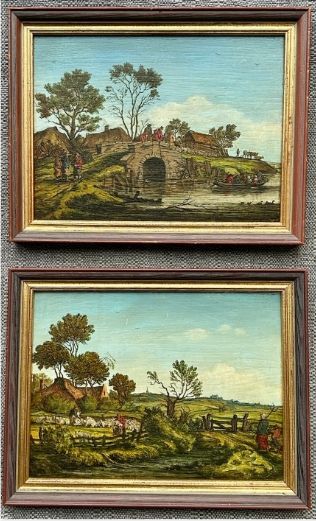
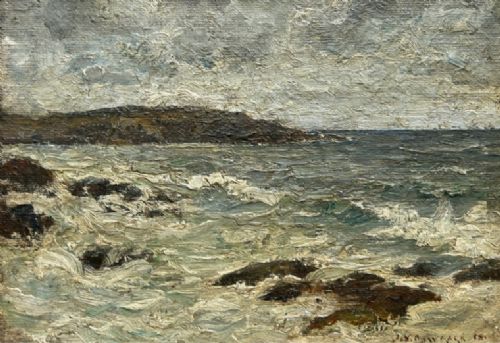
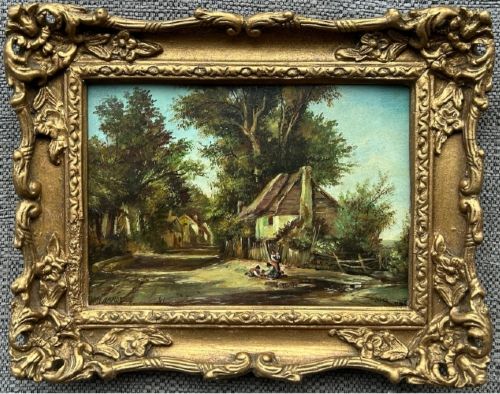
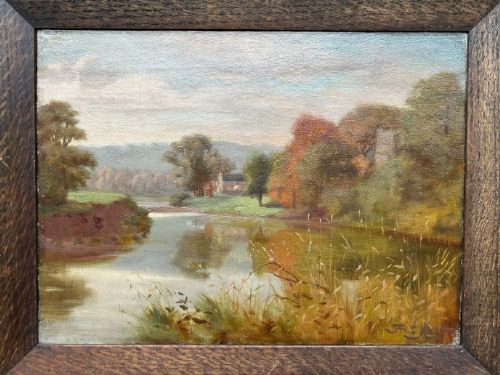
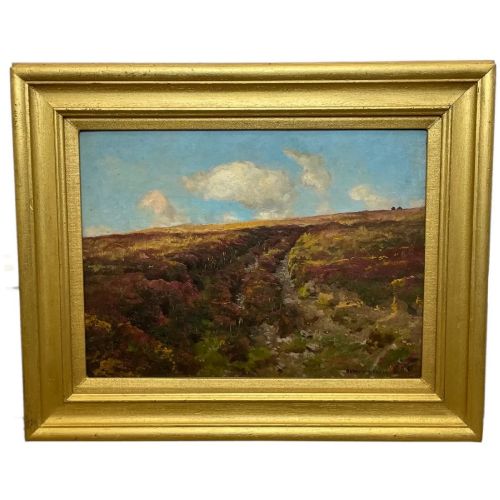
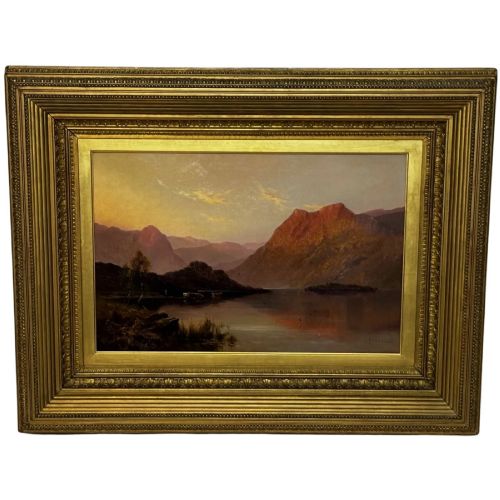
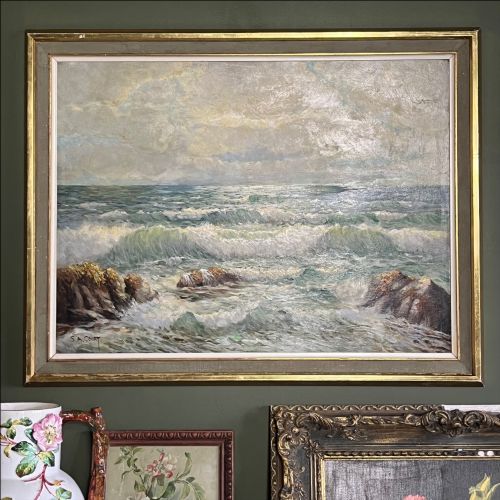
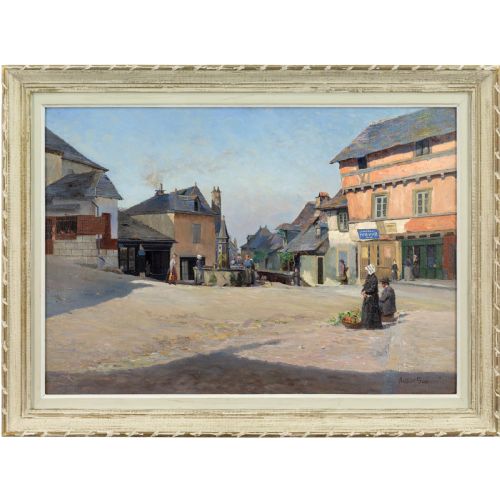
Original Signed Oil Landscape
These original signed oil landscape paintings capture Victorian rivers, Edwardian coasts and mid-century countryside with lasting painterly depth.
Original Signed Oil Landscape
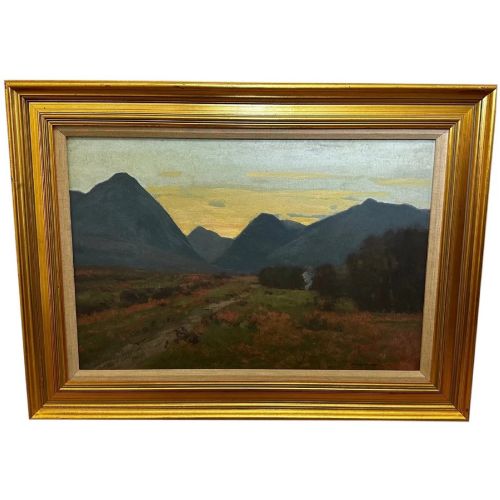
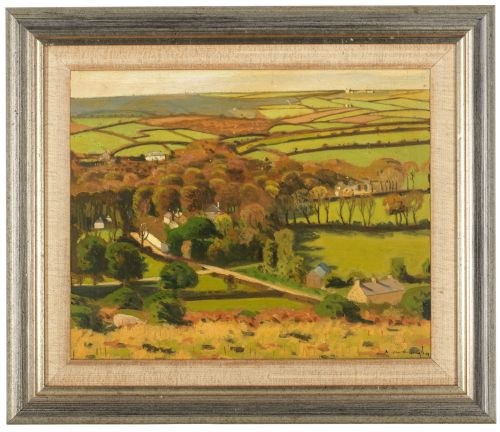
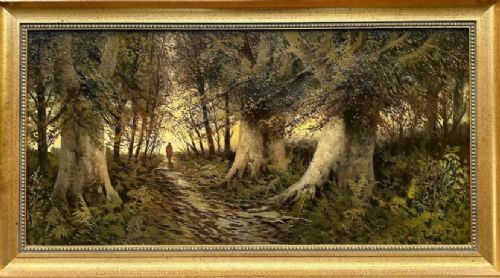
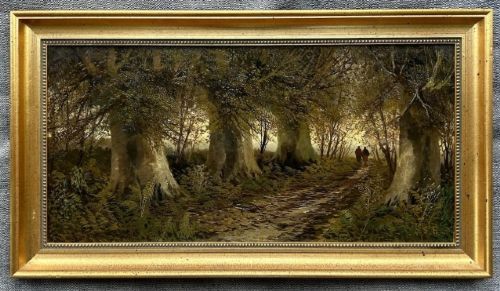
An original signed oil landscape brings the texture of nineteenth-century and twentieth-century topography directly into a room, offering genuine hand-painted character rather than mechanical reproduction. These works typically depict British and European scenes, ranging from Scottish highlands and Welsh rivers to quiet coastal harbours and pastoral farmland.
Most pieces encountered here date from the Victorian era through the mid-twentieth century, executed by regional artists working on canvas, wood panel or board. Buyers acquire these works to anchor a wall with authentic period atmosphere, regional history and individual artistic expression.
How They Were Made
Artists built these compositions using oil paint applied to stretched canvas, wooden panels or sturdy boards, frequently utilising the natural grain or primed surfaces to hold rich pigments. Pigments were blended or laid on with thick impasto strokes, capturing transient effects of light in the open air or within studio settings.
Many surviving examples retain their period gilt or wooden frames, which protect the edges of the support and complement the earthy tones of the landscape scenes.
Several artists clearly braved biting winter winds to capture snowy Scottish hills and frozen farmyards with stiff, freezing fingers.
What Varies in Quality
Quality rests upon the artist's handling of light, atmospheric perspective and spatial depth, where confident brushwork distinguishes a master from a routine amateur. The stability of the paint layer and the preservation of the original support dictate the enduring integrity of the composition.
A work succeeds when the pigment retains its vibrancy and the composition draws the eye naturally into the rendered terrain, supported by an appropriate period frame.
Kenneth Cozens·Tom Campbell·William Howard Hardy·Frederick Marriott·Arthur Wardle·Alfred Fontville de Breanski Jr·Sidney A Court·George Houston RSA RSW·Robert Morson Hughes·Thomas W Lascelles·Arthur Gue·Lucy Pratt·Eric Brown·L De Gent·William George Tennick·Sir David Murray·Herbert Royle·Arthur Herbert Rigg·Reginald Grange Brundrit RA·Fernando Del Basso·William Littlejohn RSA·Arthur W Newsholme·Ferdinand E Grone RBA·Oscar Perlasca·T H McKay
The Original Signed Oil Landscape Glossary
- Impasto
- Paint applied thickly to a canvas or board, standing out in relief from the surface so that the marks of the brush or palette knife remain visible. This technique adds tactile dimension to highlights on water or rocky crags.
- En Plein Air
- The practice of painting outdoors directly from nature to capture authentic changing light and weather conditions. Artists taking their easels into the countryside relied on quick, responsive brushwork.
- Support
- The physical foundation upon which the oil paint is applied, such as stretched canvas, wood panel, millboard or card. Each material absorbs and ages oil paint differently over the decades.
- Verso
- The back of the canvas, panel or frame, which frequently bears artist signatures, exhibition labels, titles or dates written by the creator. Examining this side often reveals crucial provenance details.
- Provenance
- The documented history of ownership of a painting, helping to establish its authenticity and origin. Tracing past collections adds historical context to regional landscape views.
Original Signed Oil Landscape: Frequently Asked Questions
Can I reframe an antique oil painting safely?
Replacing a frame is possible if the new moulding matches the exact depth and dimensions of the original support.
Retaining the period frame is usually recommended because it preserves the historical context and integrity of the piece.
Where should I hang a landscape painting?
Position the artwork away from direct sunlight and steady moisture sources to protect the delicate oil pigments and wooden supports.
Keep the centre of the canvas at standard eye level on an interior wall with stable room temperature.
How do I identify the artist signature?
Signatures typically appear in the lower corners of the composition, rendered in contrasting paint or subtle pencil.
Checking the reverse of the panel or canvas often reveals additional inscriptions, studio stamps or exhibition labels.