


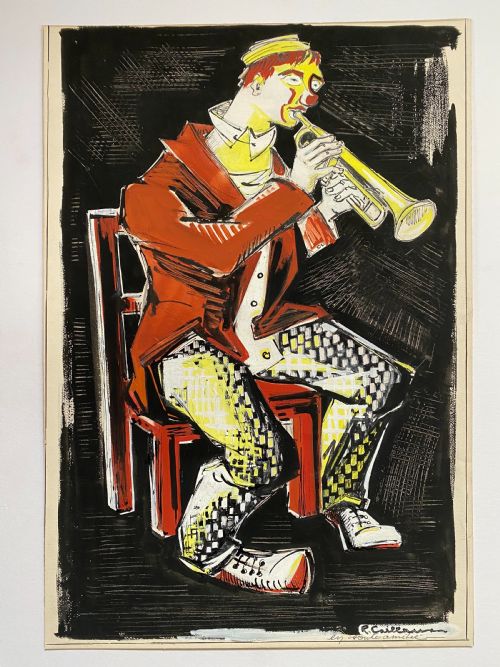

Original Gouache on Paper
Original gouache on paper brings together pigment and support to capture colour with a characteristic matte depth.
Original Gouache on Paper
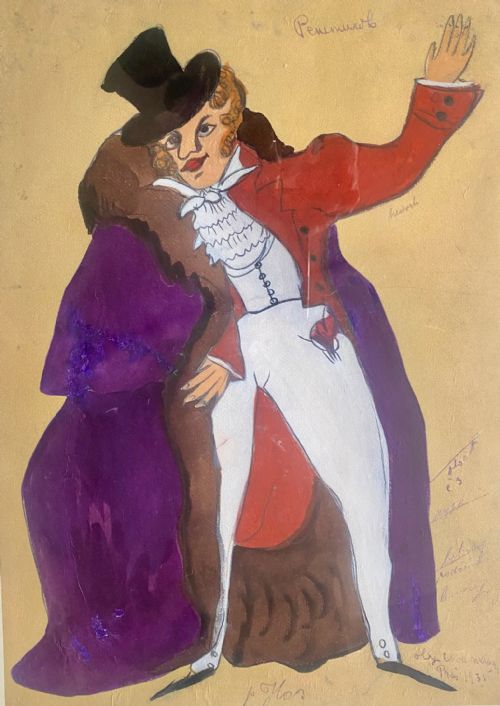
Original gouache on paper encompasses works created across the nineteenth and twentieth centuries, taking forms from botanical studies to portraits and coastal scenes. When exploring original gouache on paper on this page, a buyer encounters everything from Victorian theatre figures to mid-century modern landscapes and abstract compositions.
The material surface ranges from standard white paper to buff paper and tinted sheets, each providing a distinct ground for opaque water-soluble pigment. Many examples combine gouache with watercolour, ink or pencil to build line and tone.
How they were made
Artists apply ground pigments mixed with water and a binding agent such as gum arabic onto paper supports, often layering the paint to achieve solid blocks of saturated colour. Pencil, ink and wash frequently provide the underlying drawing before the opaque gouache is added.
Framed behind glass in wood surrounds, these works rely on paper as their fundamental base, sometimes incorporating buff paper or supporting boards to stabilise the medium.
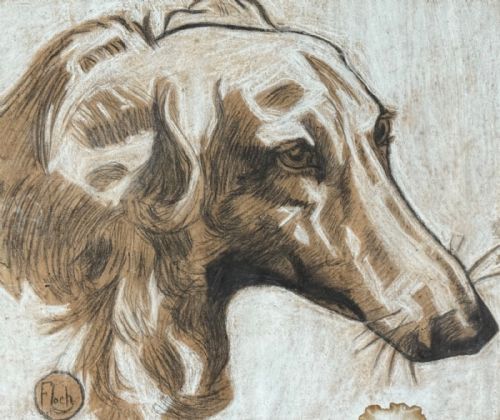
An artist once painted a dog named Borzoi using gouache and pencil on buff paper, forever preserving a noble canine gaze.
What varies in quality
The distinction between pieces rests upon the surety of the brushwork, the balance of the composition and the preservation of the pigment against fading or paper discolouration. Stronger works demonstrate a confident handling of opacity and line, whether capturing a portrait or a landscape.
The integration of secondary mediums like ink or pencil also influences the character of the piece, with more accomplished examples showing a precise interplay between drawn line and painted pigment.
Frank Dobson·Kershaw Schofield·Andrè Maurice·Montagu Barstow·Dame Laura Knight·Reginald Mills
The Original Gouache on Paper Glossary
- Gouache
- An opaque water-soluble paint consisting of pigment, water, and a binding agent, often mixed with a white filler to create flat, solid areas of colour. It dries to a characteristic matte finish.
- Buff paper
- A pale brownish-yellow paper used as a drawing surface, which provides a warm mid-tone background for highlights in gouache and white chalk.
- Watercolour
- A paint consisting of transparent pigments suspended in a water-soluble vehicle, frequently combined with gouache in these works to add both transparent washes and opaque highlights.
- Avant-garde
- A style or movement pushing the boundaries of traditional art forms, seen here in surrealist and modernist compositions from the twentieth century.
Original Gouache on Paper: Frequently Asked Questions
What is original gouache on paper?
Original gouache on paper refers to unique painted artworks utilising opaque water-soluble pigments on various paper supports, produced by hand rather than reproduced.
These pieces span periods from the nineteenth century through the 1950s and beyond, encompassing portraits, landscapes and abstract works.
How should I frame and hang gouache?
Gouache works on paper require framing behind glass to protect the pigment and paper support from dust, moisture and physical damage.
Direct sunlight should be avoided when hanging these pieces to prevent the colours from fading over time.
How do I identify the period of a piece?
Dating relies on stylistic clues such as the modernist abstraction of the 1950s, the distinct linework of Art Deco, or nineteenth-century realism.
Materials like buff paper and the signature or recorded dates of the artist also help place the artwork in its proper era.
What is the difference between gouache and watercolour?
Watercolour uses transparent pigments that allow the white of the paper to shine through the layers of wash.
Gouache contains added chalk or white pigment, making the paint opaque so that lighter colours can be applied over darker ones.