


19th Century Gouache Paintings
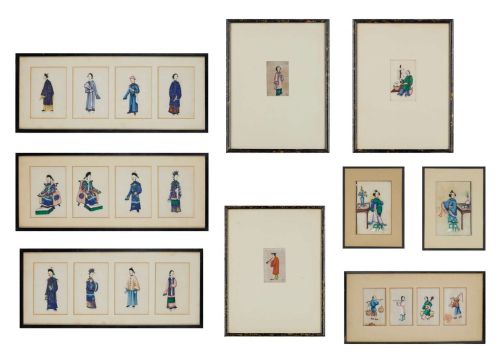
These 19th century gouache paintings offer vibrant opaque pigments on paper and pith, capturing everything from grand landscapes to delicate portraits.
19th Century Gouache Paintings
When you search for 19th century gouache paintings, you encounter a diverse range of works spanning European academic subjects and Chinese export art. The selection frequently includes framed botanical studies, landscape views from the Grand Tour, and figural scenes.
Many examples combine gouache with watercolour, ink, pastel, or pencil on paper or pith paper. These works capture specific periods from the Regency era through to the late Victorian years.
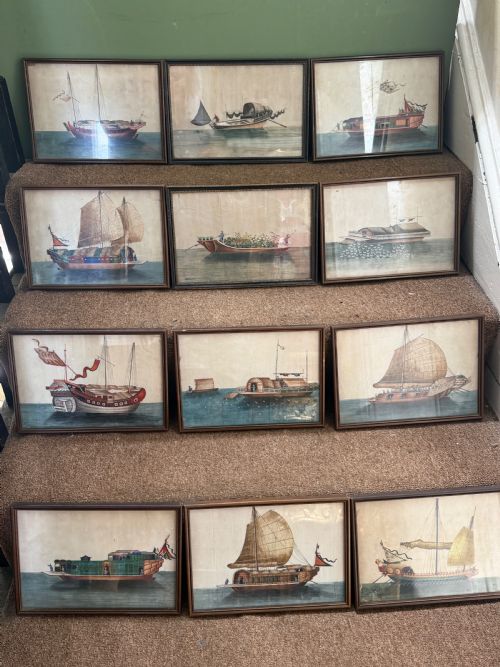
Buyers will find both individual framed pieces and matching sets depicting ships, floral subjects, and Italian or English scenery. The scale ranges from intimate portrait miniatures to large landscape views.
How they were made
Artists built these images using opaque water-based gouache pigments, often combining them with watercolour, ink, pastel, and pencil. The application creates a dense, matte surface that holds colour with high saturation compared to standard watercolours.
Many Asian works utilise fragile pith paper, traditionally known as rice paper, which absorbs the gouache to produce vivid, velvety tones. European works commonly employ standard paper or card mounted within period wooden frames, frequently protected behind glass.
Identified styles span Victorian, Chinese Export, Qing Dynasty, Regency, Academic Realism, Neoclassical, and English Regional.
What varies in quality
Quality rests primarily in the precision of the brushwork and the preservation of the delicate opaque pigments. Finer pieces maintain strong colour saturation without significant fading or flaking across the paper surface.
The sophistication of the composition and the integrity of the original framing also separate standard decorative examples from superior works. Pith paper paintings show distinction through the intricacy of the figural or botanical detail despite the fragile medium.
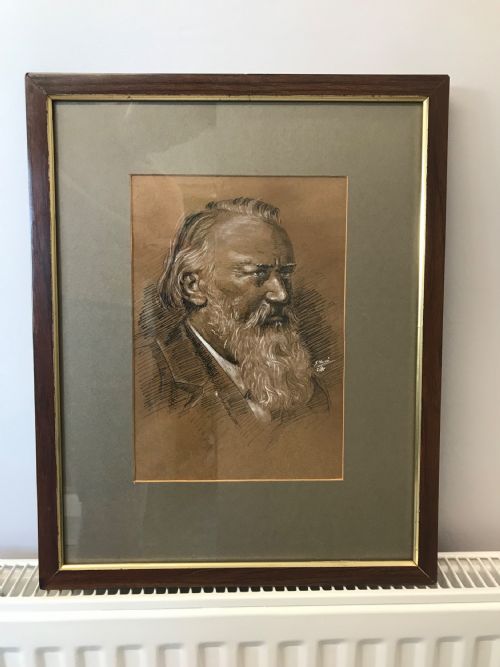
Johannes Brahms·Joseph Knight·Alice Anne Renshaw·Paul Lelong·Emma Kendrick·Milton Drinkwater
The 19th Century Gouache Paintings Glossary
- Gouache
- An opaque water-based paint consisting of pigment, water, and a binding agent such as gum, yielding a heavier and less transparent finish than watercolour.
- Pith paper
- A delicate material derived from the pith of the Tetrapanax papyrifer plant, commonly used in nineteenth-century Chinese export paintings. It has a velvet-like texture that absorbs opaque water-based colours effectively.
- Grand Tour
- A traditional trip of Europe undertaken by upper-class European young men of sufficient status, resulting in the acquisition of local souvenir artworks such as landscape gouaches.
- Chinese Export Art
- Goods manufactured in China specifically for western markets, encompassing pith paintings, ship portraits, and floral studies from the Qing dynasty.
19th Century Gouache Paintings: Frequently Asked Questions
How should I display a pith paper painting?
Pith paper paintings require careful framing behind glass with proper UV-filtering protection to prevent the delicate material from drying out and crumbling.
Keep these works away from direct sunlight and areas prone to high humidity to preserve the opaque pigments.
What is the difference between gouache and watercolour?
Gouache contains a higher concentration of larger pigment particles and a binding agent mixed with a white filler, making the paint completely opaque.
Watercolour remains transparent, allowing light to reflect off the white paper beneath the wash.
Are these paintings usually framed?
Many nineteenth-century works survive within period wooden frames that complement the aesthetic of the artwork.
Some pieces, particularly Chinese export pith paintings, may require custom framing to ensure they remain secure behind glass.
How do I identify a Regency era piece?
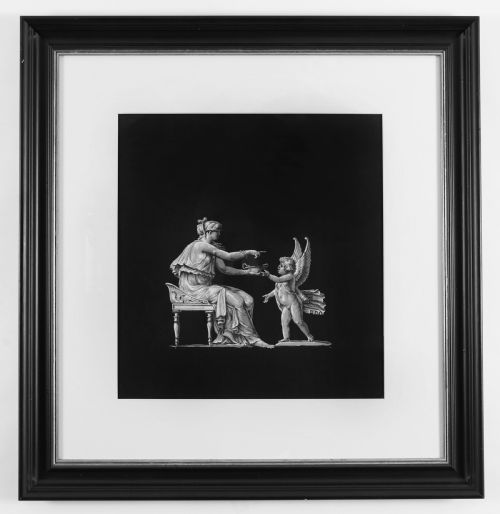
Regency works typically date from the early nineteenth century, reflecting Neoclassical influences and specific portrait styles of the period.
Examining the attire of any human subjects and the framing materials helps narrow down the decade of creation.