






Set of Six Artworks
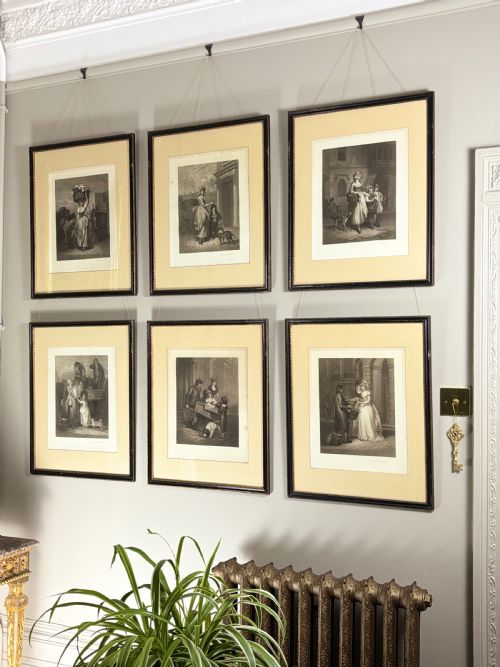
A set of six artworks offers a balanced arrangement for wall display, spanning periods from Regency views to mid-century prints.
Set of Six Artworks
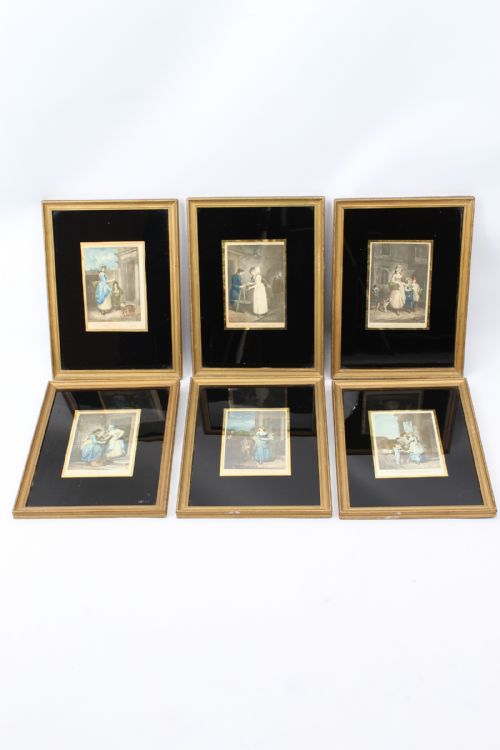
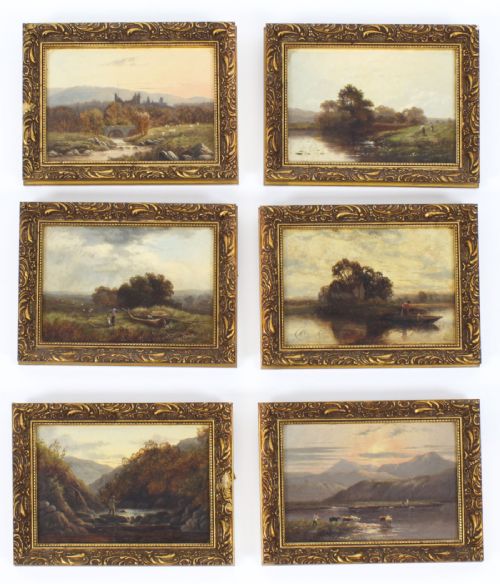
A set of six artworks brings together matching groups of framed prints, paintings, and works on paper designed to be displayed as a unified arrangement. When searching for a set of six artworks, buyers encounter varied historical groupings ranging from Regency theatrical tinsel prints to Edwardian watercolours.
The selections on this page incorporate diverse subjects such as London street cries, river landscapes, Italian landmarks, and botanical or theatrical themes. These suites are typically found framed in wood or giltwood, ready for immediate placement on a wall.
Makers and artists represented across the listings include signed works by printmakers and painters from the nineteenth and twentieth centuries. The groupings offer uniform decorative impact because they were created or assembled as matching sets from the outset.
Materials and construction methods
The works utilise traditional supports such as paper, oil on board, and glass, paired with wooden and giltwood framing. Techniques span hand-coloured engravings, mezzotints, watercolours, gouaches, and decoupage.
Metallic foil and ink frequently enhance the visual detail on prints and tinsel pictures, while burr walnut and other timbers form the structural surrounds of the frames. Each piece demonstrates period craftsmanship appropriate to its respective century, from Georgian elegance to Art Nouveau styling.
Set of Six Artworks Retail Price Guide 2026
Typical asking prices for set of six artworks among the pieces listed under this phrase on Sellingantiques today, from the lower quarter to the upper quarter. They describe what is for sale here now, not the wider market.
Listings feature works across eight distinct periods, from the eighteenth century through to the 1950s.
Judging quality in grouped works
Quality in a set of six artworks rests on the crispness of the printing technique, the vibrancy of hand-applied watercolour or ink, and the preservation of the original paper or board. Suites that retain matching frames and uniform patination command greater visual harmony.
The distinction between standard decorative prints and finer signed mezzotints or gouaches lies in the skill of the artist and the depth of the medium. Complete sets where every individual piece remains in matching condition demonstrate superior preservation.
Thomas G Appleton·F Petitjean
The Set of Six Artworks Glossary
- Mezzotint
- A printmaking process of the intaglio family where the surface is roughened to produce tones of grey and black. This technique allows for subtle gradations of light and shadow.
- Gouache
- An opaque water-based paint that produces a flat, matte colour finish. It is frequently seen in topographical and architectural watercolours.
- Tinsel print
- A nineteenth-century theatrical print embellished with pieces of tinsel, silk, and metallic foil. These decorative works depict popular actors and stage characters of the era.
- Grand Tour
- A cultural journey undertaken by European elites that inspired the creation of topographical watercolours and gouaches. These artworks served as souvenirs of continental travel.
- Giltwood
- Wood carved and coated with gold leaf or gold paint to create a decorative frame finish. It is commonly found on traditional frames from the eighteenth and nineteenth centuries.
Set of Six Artworks: Frequently Asked Questions
How should I hang a set of six artworks?
A set of six artworks is typically arranged in a symmetrical grid of two rows of three, or three rows of two, to create a balanced focal point on a wall. Maintaining equal spacing between each framed piece ensures the visual unity of the grouping.
Consider the lighting in the room to protect paper supports and watercolours from direct sunlight, which can cause fading over time. Standard picture wire and secure wall fixings will support the weight of multiple framed items safely.
What periods do these artworks cover?
The listings span several centuries, incorporating eighteenth-century engravings, Regency theatrical pieces, and Victorian landscape paintings. Edwardian watercolours and mid-century prints also feature among the available suites.
Each period brings distinct stylistic traits, from the classical restraint of Georgian works to the fluid lines of Art Nouveau and the bolder palettes of the mid-twentieth century.
Are matching frames original to the pieces?
Many sets retain their period frames, such as giltwood or timber surrounds, which complement the age of the artwork. Consistency in framing enhances the overall presentation of the grouped pieces.
When frames show signs of age, they are part of the historical character of the item, provided the structure remains stable and protects the artwork within.
How do I care for antique prints and paintings?
Keep works on paper and board away from high humidity and fluctuating temperatures to prevent warping or foxing. Dust frames gently with a dry cloth and avoid using liquid cleaners on glass or gilded surfaces.
Professional framing with acid-free backing materials helps preserve delicate watercolours, engravings, and gouaches for long-term display in a home environment.