
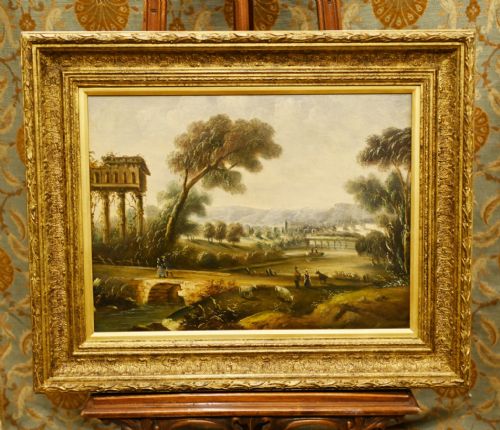


Classical Italian Ruin Paintings
Classical Italian ruin paintings capture decaying architectural remnants across the Campagna and southern landscapes, offering tangible connections to historic Mediterranean travels.
Classical Italian Ruin Paintings
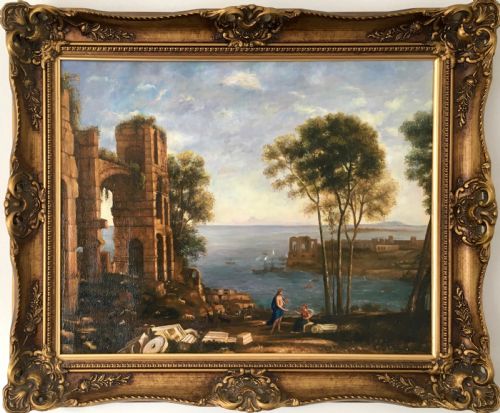
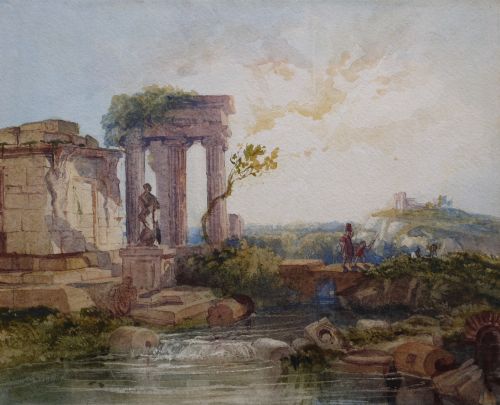
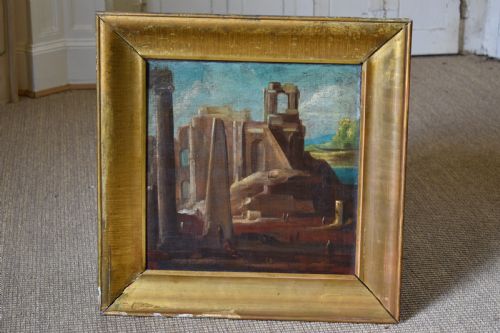
When buyers search for classical italian ruin paintings, they encounter works recording ancient stone fragments, crumbling columns, and overgrown arches across Italy. These pieces frequently emerge as Grand Tour watercolours, gouaches, and oils on canvas documenting iconic sites like the Roman Forum, Pompeii, and Tivoli.
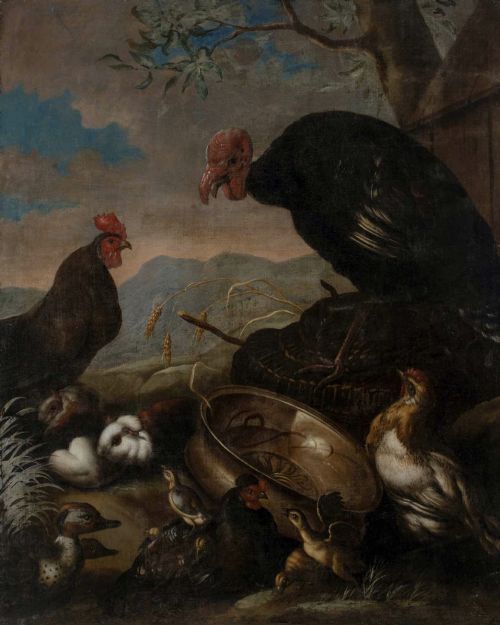
The selections available here range from intimate nineteenth-century watercolours to expansive seventeenth-century canvases depicting birds and fowl amidst castle ruins. Pastoral landscapes featuring figures beside classical remnants appear alongside architectural studies executed by travelling artists and regional schools.
How they were made
Artists relied upon pigments, oil on canvas, gouache, and watercolour applied to paper or stretched fabric to render these Italian scenes. Works often received framing in gilded wood to complement the pictorial depth of the architectural subjects.
Execution methods vary from detailed topographical watercolours produced during nineteenth-century travels to looser seventeenth- and eighteenth-century oil paintings created within studio traditions.
Identified styles span the Grand Tour, Victorian Classical, Baroque, Neoclassical, and the Neapolitan School.
What varies in quality
Quality rests in the precision of the architectural perspective, the handling of light across crumbling stonework, and the integration of figures within the landscape. The dexterity of brushwork or watercolour washes dictates whether a composition achieves atmospheric depth or remains merely schematic.
The integrity of the original frame and the clarity of artist signatures or period attribution further distinguish superior examples from standard regional productions.
Richard Principal Leitch·Angelo Maria Crivelli·Giovanni Paolo Panini·Franz Knebel·Francesco Zuccarelli·Francesco Guardi
The Classical Italian Ruin Paintings Glossary
- Grand Tour
- A traditional journey through Europe undertaken by upper-class European young men of means during the seventeenth, eighteenth, and nineteenth centuries. This practice generated a demand for topographical paintings and watercolours as souvenirs.
- Capriccio
- An architectural fantasy placing together disparate buildings, archaeological ruins, and other architectural elements in a fictitious combination. Painters utilised this genre to showcase imaginative compositions of classical structures.
- Gouache
- An opaque watercolour medium consisting of pigment, water, and a binding agent such as gum arabic, often featuring a heavier white additive. Artists employed this material for vibrant depictions of southern Italian landscapes.
- Campagna
- The countryside surrounding Rome characterised by rolling hills, ancient aqueducts, and scattered ruin sites. Painters frequently visited this region to capture rustic pastoral scenes.
- Neapolitan School
- A loose association of artists operating in Naples during the eighteenth and nineteenth centuries known for luminous gouache paintings of local views. These works often catered directly to international travellers.
Classical Italian Ruin Paintings: Frequently Asked Questions
What subjects appear in classical italian ruin paintings?
These compositions depict ancient Roman structures, decaying temples, triumphal arches, and aqueducts set within pastoral Italian landscapes. Artists frequently included local figures or herdsmen to establish scale against the monumental stonework.
Views span specific archaeological excavations such as Pompeii alongside imagined architectural caprice arrangements.
How do watercolours and oil paintings differ here?
Watercolours and gouaches on paper were typically portable records produced on-site during travels across the Italian peninsula. Oil paintings on canvas tended to be larger studio works designed for permanent domestic display.
Both mediums served to commemorate classical antiquity for collectors returning from southern Europe.
How should these framed artworks be displayed?
Works on paper require protection from direct sunlight to preserve delicate watercolours and gouache pigments. Displaying them in rooms with stable humidity levels prevents degradation of the paper support and wooden frames.
Canvas paintings benefit from well-ventilated wall spaces away from direct heat sources to maintain the stability of the oil medium.
How can one identify nineteenth-century tourist works?
Nineteenth-century productions frequently bear specific topographical annotations naming sites like the Forum of Nerva or the Colosseum. They commonly utilise watercolour or gouache on paper and often emerge as cohesive sets.
Signatures or dates placed by travelling artists help anchor these pieces within the broader Grand Tour tradition.