




1950s French Artwork
1950s french artwork brings mid-century modern character to a room through expressive canvases and works on paper.
1950s French Artwork
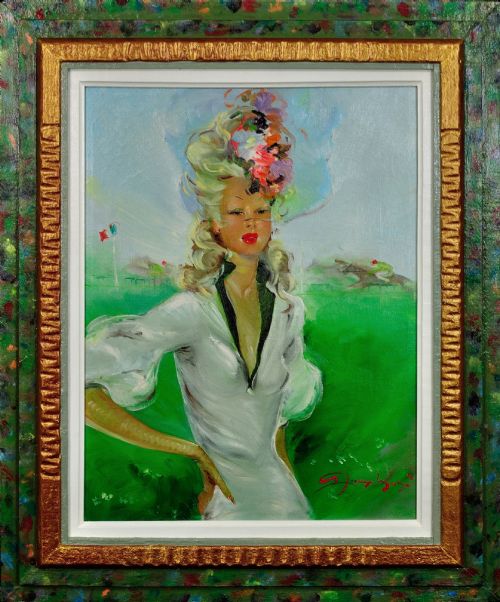
When you search for 1950s french artwork, you encounter mid-century oil paintings, gouache, and watercolours produced in France during the nineteen-fifties. The selection focuses heavily on mid-century modernism, French school, and expressionist idioms.
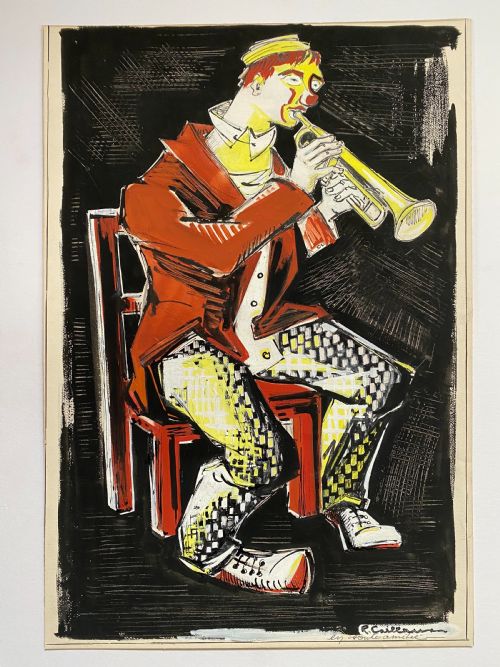
Most examples take the form of framed oil paintings on canvas or board, alongside vibrant gouache works on paper. Subjects range from Mediterranean landscapes and harbour scenes to figurative studies and still lifes.
Many pieces reflect the artistic movements active in France at the time, including cubist abstraction, surrealism, and French colourism. These works capture the vitality of post-war European visual culture.
How they were made
Artists of this period typically applied oil paint or gouache to canvas, board, or heavy paper supports. Ink and watercolour also appear in works that rely on fluid line and atmospheric wash.
Wooden frames frequently enclose these pieces, complementing the mid-century aesthetic of the paintings within. The application of pigment ranges from thick, expressive impasto to flat, vibrant planes of gouache.
A double bass quietly anchors a surrealist musician's landscape filled with instruments.
What varies in quality
Quality rests in the confidence of the brushwork and the clarity of the composition, distinguishing standard decorative pieces from compelling modernist statements. Stronger works demonstrate a deliberate handling of colour and form.
The choice of medium and surface also influences the impact of a piece, with dynamic oil paintings and finely balanced gouaches holding visual presence. Provenance and the strength of the signature further separate works of note.
Jean-Gabriel Domergue·Fred Pailhes·Archille Zavatta
The 1950s French Artwork Glossary
- Gouache
- An opaque watercolour medium that dries to a matte finish. It allows for vibrant, saturated blocks of colour on paper.
- Impasto
- The process of laying paint thickly on a canvas so that it stands out from the surface. This technique adds tactile dimension to mid-century oil paintings.
- Cubist Abstracted
- A style that breaks subjects down into geometric planes and multiple viewpoints. It defines several landscapes and compositions from this period.
- Chiaroscuro
- The strong contrast between light and dark to create spatial depth and volume within a figure study. It is visible in expressive nudes from the era.
1950s French Artwork: Frequently Asked Questions
What defines 1950s French artwork?
These pieces encompass oil paintings, gouache works, and watercolours created in France during the nineteen-fifties. They reflect mid-century modernism, cubist abstraction, and expressionist styles.
Subjects include Mediterranean landscapes, harbour views, musicians, and still lifes. Artists utilised canvas, board, and paper supports.
How should I hang these paintings?
Consider pairing these works with mid-century interior spaces where their vibrant palettes can anchor a room. Ensure they hang away from direct sunlight to protect the pigments.
Framing in wood is common for these pieces, helping them integrate with existing wall displays. Keep lighting focused to bring out the texture of oil and gouache.
Are these works original?
The listings comprise original paintings and works on paper executed during the nineteen-fifties. They feature authentic brushwork by painters active in France at the time.
Many bear signatures or stylistic markers connecting them to the French school and mid-century modern movements.
How do I spot a cubist landscape?
Cubist landscapes break natural forms down into geometric shapes and intersecting planes. You will see structured representations of trees, buildings, and hills.
This approach shifts away from strict realism in favour of abstracted spatial arrangements.