

Original Countryside Oil Artwork
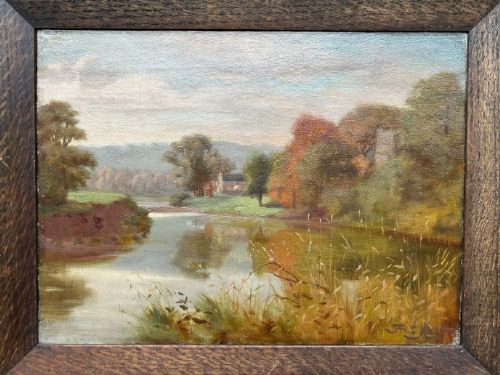
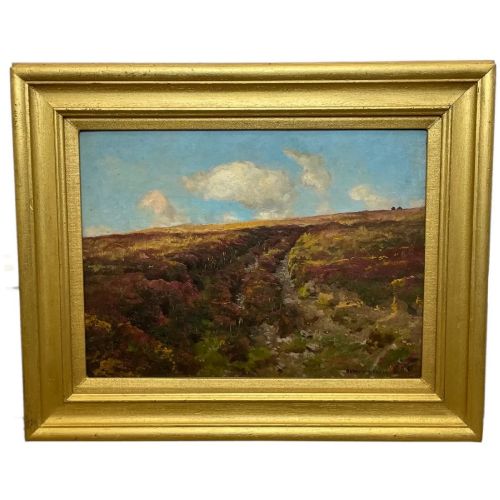
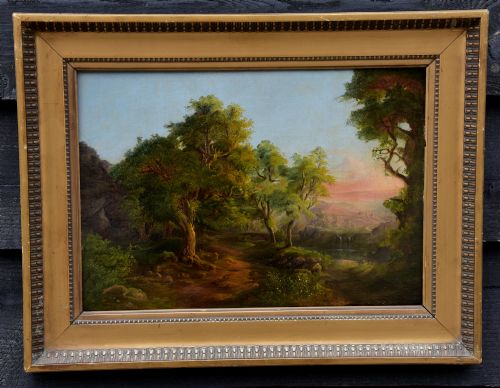
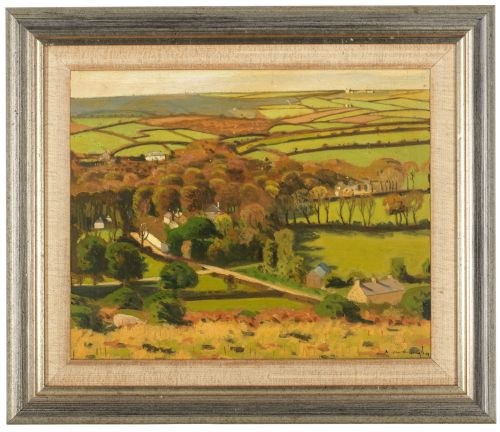
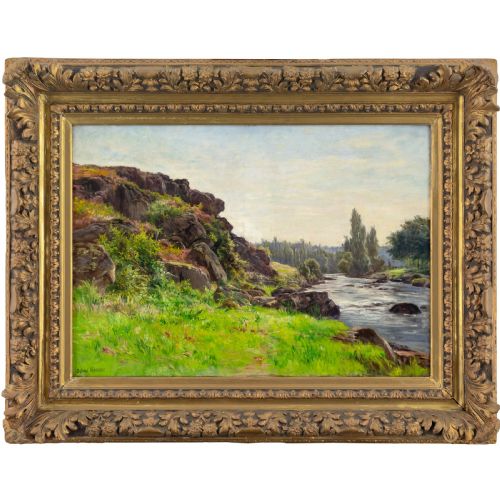
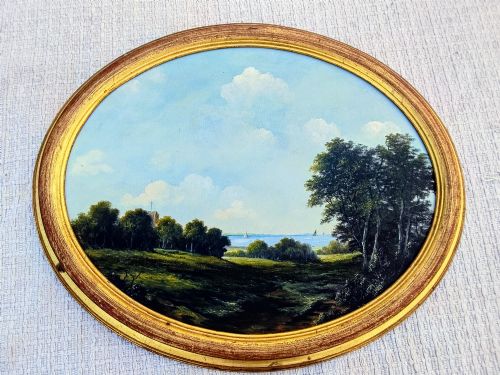
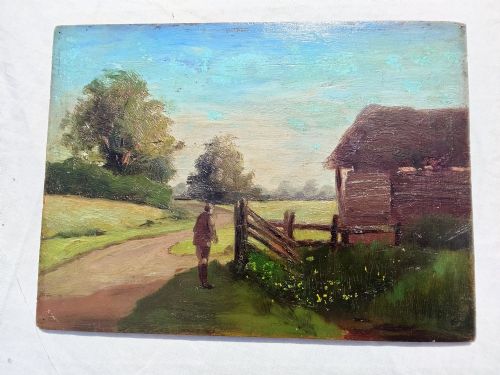
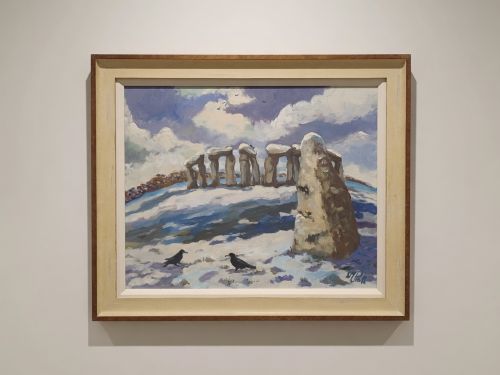
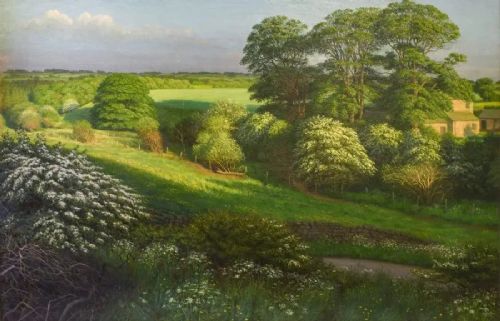
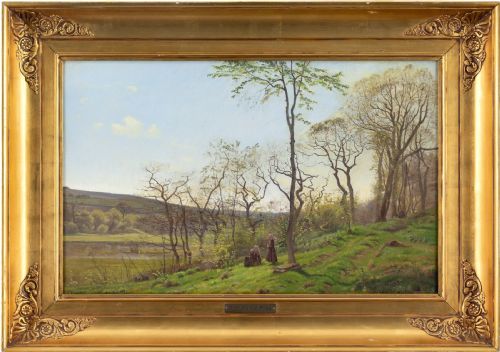
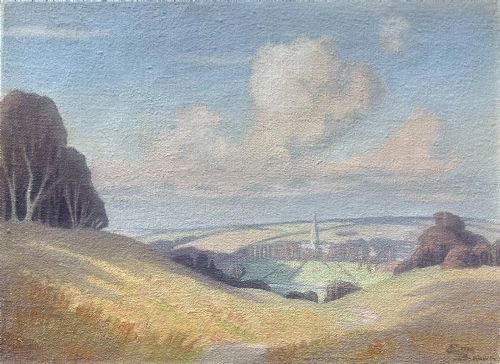
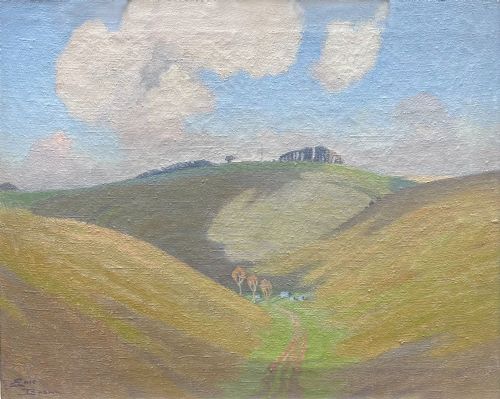
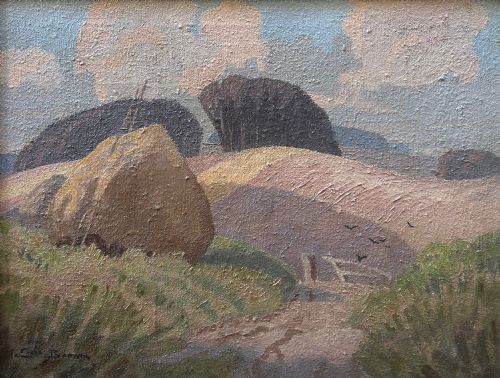
Original countryside oil artwork captures open fields, rivers, and woodland scenes through pigment layered onto canvas and wood.
Original Countryside Oil Artwork
Original countryside oil artwork encompasses pastoral scenes, river valleys, and rural views created by applying oil paint to supports like canvas and wooden panels.
Buyers exploring this selection encounter works spanning the nineteenth century through the mid-twentieth century, including pieces reflecting Victorian, Edwardian, and Impressionist movements.
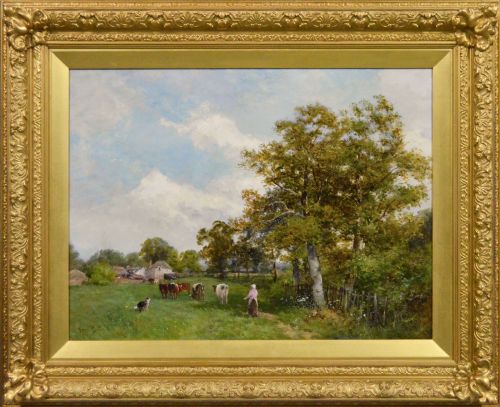
Subjects range from British and Welsh landscapes to French rural views, capturing cattle in woodland, autumn rivers, and coastal inlets.
Materials and Construction
Pigments mixed in oil are applied directly to woven canvas or rigid wooden boards and panels, allowing artists to build rich textures and subtle tonal gradations.
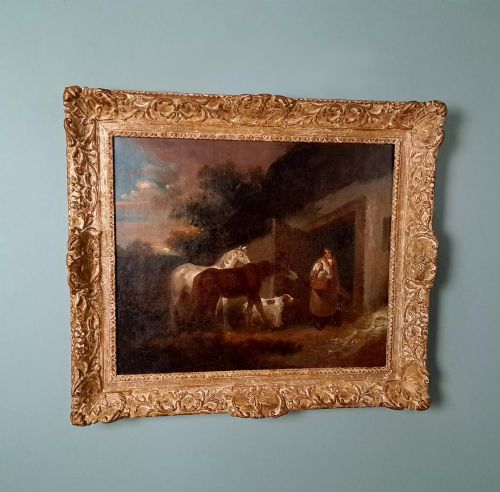
Many paintings retain their period frames, often constructed from wood with gilt enrichment that complements the warmth of the rural compositions.
Several canvases capture cows pausing near woodland streams, proving that centuries-old bovine models enjoyed a leisurely river walk just as much as we do.
Judging Quality in Rural Oils
Quality rests upon the artist's handling of light, atmosphere, and brushwork, distinguishing a lively impression from a rigid transcription of scenery.
The sensitivity of the composition and the preservation of the paint surface dictate the standing of an individual landscape within its period.
William H Myers·Frederick Marriott·Arthur Wardle·William Joseph Shayer Senior·Robert Morson Hughes·Gabriel Mathieu·David Bates·Lucy Pratt·Raymond Booth·Harald Foss·Eric Brown·Henri Ottmann·Ernest Higgins Rigg·Peter Newcombe·Rene Levrel·Florence Adelina Hess·John Horace Hooper·Hubert Wellington·Charles Clair·Joseph Edward Hennah·Helen Layfield Bradley·André Prévot-Valéri·Herbert Royle·Mario Pinetti·John Sanderson Wells
The Original Countryside Oil Artwork Glossary
- Canvas
- A heavy woven fabric stretched across a wooden frame to serve as a foundation for oil paint. It provides a slightly flexible surface that responds well to layered brushwork.
- Oil paint
- A slow-drying medium composed of pigment particles suspended in a drying oil, typically linseed. This medium allows for deep colour saturation and seamless blending.
- Impasto
- Paint applied thickly to a canvas or panel so that it stands proud of the surface. This technique preserves the physical gesture of the brush and catches natural light.
- Gilt wood
- Wood coated with a thin layer of gold leaf or metallic gilt powder. It is frequently seen on the decorative frames enclosing period landscape paintings.
- Panel
- A rigid wooden board utilised as a support for painting instead of fabric. Panels offer a firm, stable ground that resists the sagging common to older stretched canvases.
Original Countryside Oil Artwork: Frequently Asked Questions
How do I care for an oil painting?
Keep the artwork away from direct sunlight and steady humidity fluctuations to protect the canvas and wooden support.
Dust the surface gently with a soft, dry brush and avoid using liquid cleaners on either the paint or the frame.
Are these paintings signed by the artist?
Many of the rural landscapes feature visible signatures or monograms left by the painter, either within the composition or along the lower margin.
Some older works remain unattributed or indistinctly signed, representing the output of regional British or European schools.
What framing is typically included?
The works frequently arrive within period wooden frames, occasionally highlighted with gilt details that match the era of the painting.
These frames complement the rustic subject matter and provide immediate protection for the edges of the canvas or panel.
How can I tell the period of a landscape?
Stylistic clues such as Impressionist brushwork, Victorian narrative elements, or Edwardian tonal palettes offer clear indications of the painting era.
The choice of support material and framing construction also helps place the work within the nineteenth or twentieth century.