


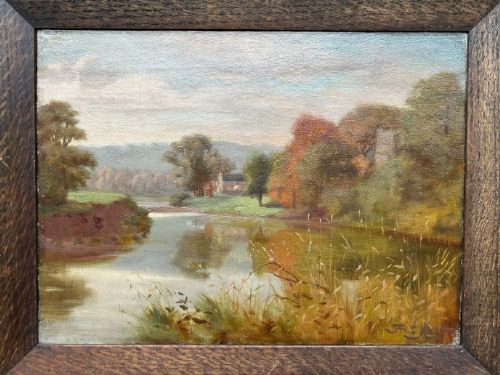
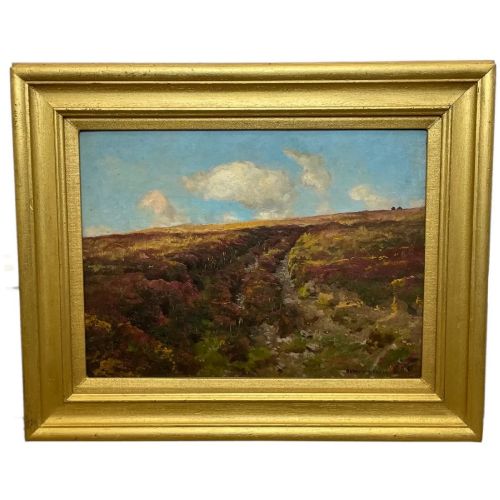
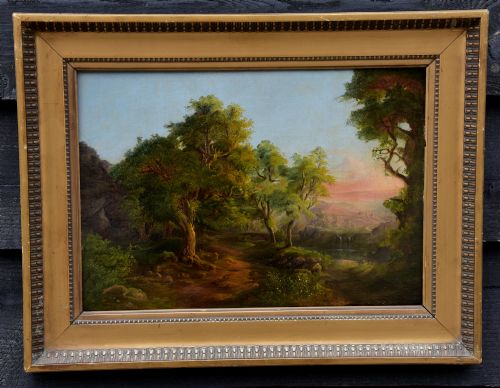
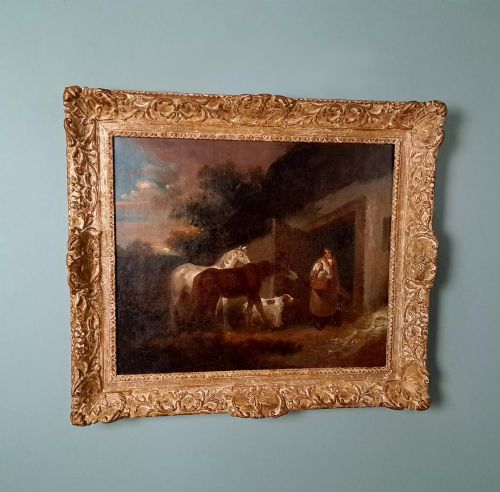

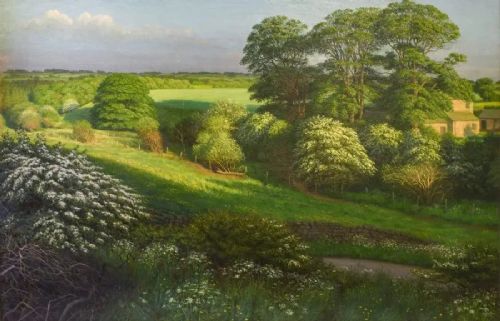
Original Countryside Landscape Painting
An original countryside landscape painting brings the quiet expanse of rural rivers, valleys, and harvest fields directly into a room.
Original Countryside Landscape Painting
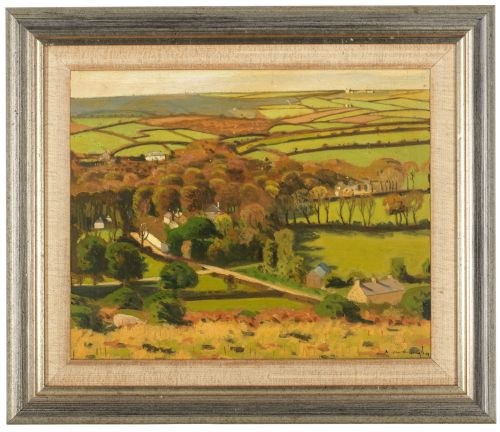
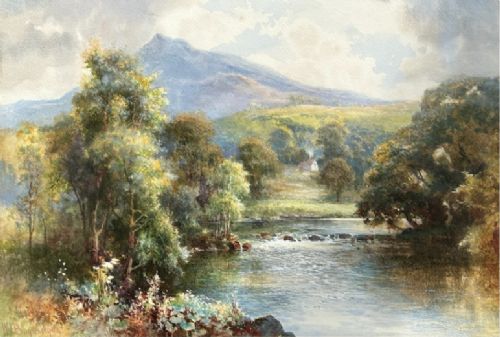
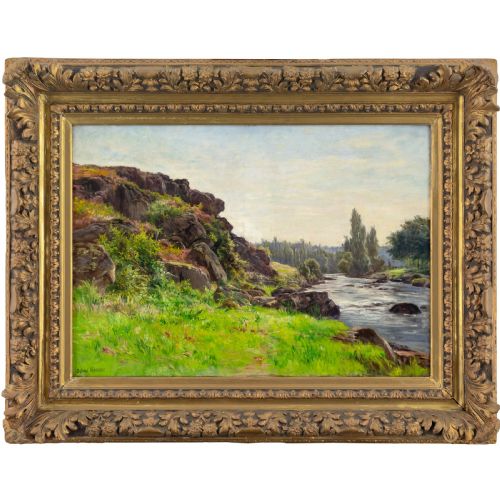
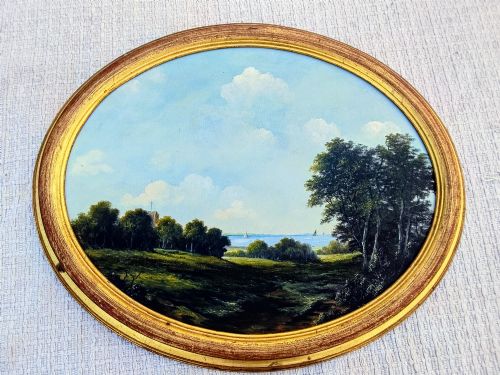
When searching for an original countryside landscape painting, buyers encounter works spanning from the nineteenth century through to the mid-twentieth century. The selection ranges from pastoral river scenes and woodland paths to depictions of cottages and farming life in Britain and beyond.
Most pieces on this page are oil paintings on canvas or board, alongside watercolours on paper. These works reflect movements such as British Impressionism, Victorian romanticism, and Modern British painting, capturing changing light across rural topography.
Materials and Methods
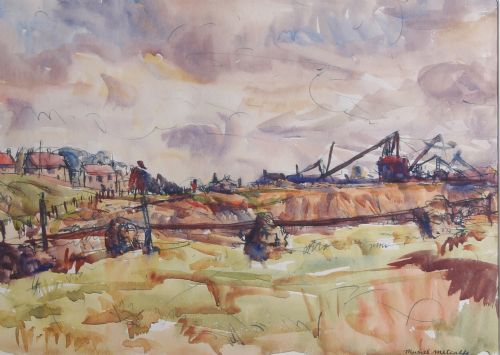
Artists painted primarily with oil paint or watercolour, applying their medium onto stretched canvas, wooden panels, or heavy paper. Wooden boards and panels provide a rigid support often favoured for smaller plein air studies.
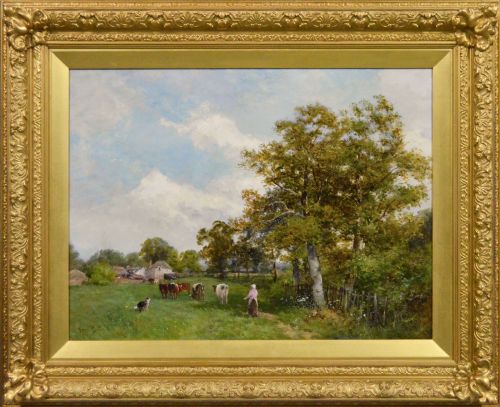
Canvases are typically mounted in wooden frames, sometimes retaining original gilded wood mouldings that complement the palette of the composition. Watercolours require protective glass, safeguarding the delicate pigments from atmospheric moisture and light.
Several cows and a stray dog make regular appearances in these fields, quietly supervising the harvest from the corners of the canvas.
Assessing Composition and Handling
Quality rests in the confidence of the brushwork and the artist's command of light and atmosphere. Stronger works demonstrate a deliberate balance of colour and depth that draws the eye naturally into the rural vista.
Weaker examples often rely on formulaic repetition without establishing a convincing sense of space or air. The handling of foliage, water, and sky separates a routine topographical record from a compelling piece of fine art.
William H Myers·George Graham·Frederick Marriott·Arthur Wardle·William Joseph Shayer Senior·Robert Morson Hughes·William Joseph Boyes·Gabriel Mathieu·David Bates·Muriel Metcalfe·Lucy Pratt·Raymond Booth·Harald Foss·Eric Brown·Henri Ottmann·Ernest Higgins Rigg·Peter Newcombe·George Oyston·Rene Levrel·Russell Sidney Reeves·Florence Adelina Hess·Frederick Hines·John Horace Hooper·Hubert Wellington·Owen Bowen
The Original Countryside Landscape Painting Glossary
- Oil paint
- A slow-drying paint made of pigment suspended in a drying oil, typically linseed. This medium allows for rich colour blending and textured impasto application.
- Watercolour
- A paint consisting of water-soluble pigments suspended in a water-based solution, traditionally applied to paper. It yields translucent washes that capture bright daylight.
- Canvas
- A closely woven fabric used as a surface for oil painting, usually stretched tightly over a wooden frame. It provides a flexible yet durable support for the artist.
- Panel
- A flat piece of wood used as a rigid painting support instead of canvas. Panel paintings frequently date from earlier periods or smaller outdoor studies.
- Impressionism
- A style of painting emphasising spontaneous brushstrokes and the shifting effects of natural light. Artists sought to capture the immediate visual impression of a scene.
Original Countryside Landscape Painting: Frequently Asked Questions
How do I hang a heavy oil painting?
Heavy oil paintings on canvas require secure picture hooks fixed directly into wall studs or solid masonry using appropriaterawl plugs. Ensure the hanging wire and D-rings on the frame are robust enough to support the total weight.
Position the centre of the painting at eye level, roughly one hundred and fifty centimetres from the floor, to achieve a balanced display in a room.
Where should I place a watercolour painting?
Watercolours need protection from direct sunlight, which causes fugitive pigments to fade over time. Choose an interior wall away from bright windows and damp areas such as unventilated kitchens.
Framing with acid-free mounts keeps the paper separated from the glass, preventing humidity from trapping moisture against the delicate painted surface.
How do I identify the period of a landscape?
The painting style, framing, and stretcher construction offer primary clues to a work's age. Victorian and nineteenth-century pieces often feature darker earth tones, heavier narrative elements, and ornate gilded frames.
Mid-century and modern works generally employ brighter palettes, looser brushwork, and simpler wooden mouldings that reflect the aesthetic shifts of the twentieth century.