




Original British Watercolour Landscape
Original british watercolour landscape works capture rural scenery, coastal views, and town settings across centuries of artistic production.
Original British Watercolour Landscape
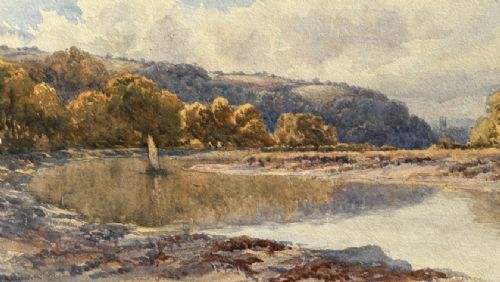
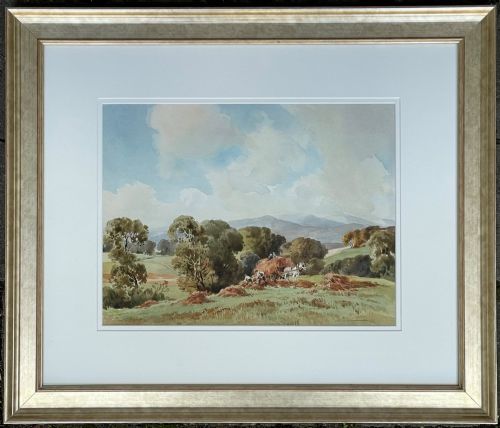
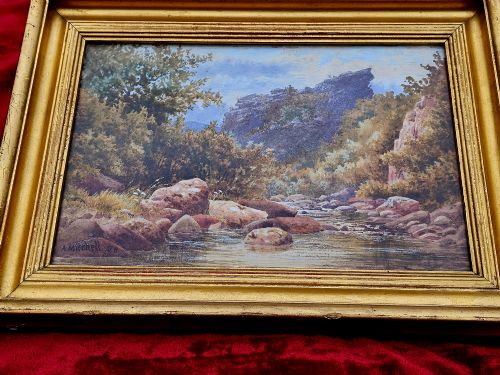
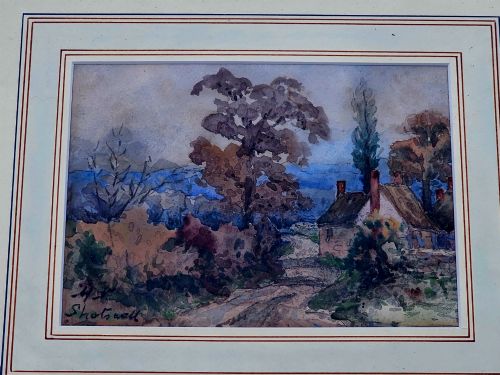
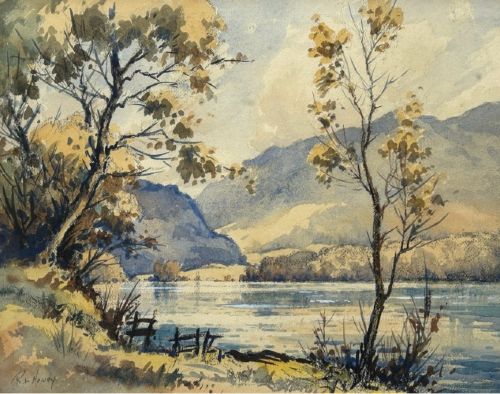
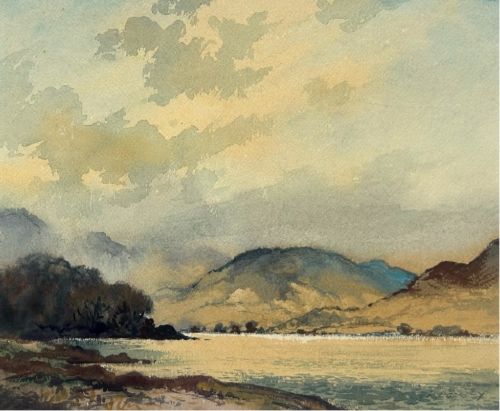
An original british watercolour landscape captures scenes from the countryside, coastlines, and rivers across the United Kingdom. These works date from the nineteenth century through the mid-twentieth century, encompassing Victorian, Edwardian, and mid-century movements. Buyers will find depictions of Welsh mountains, Scottish lochs, Yorkshire dales, and Thames valley views.
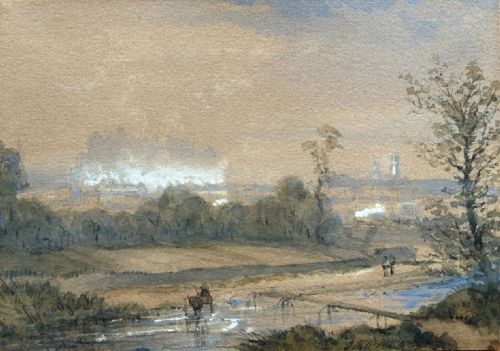
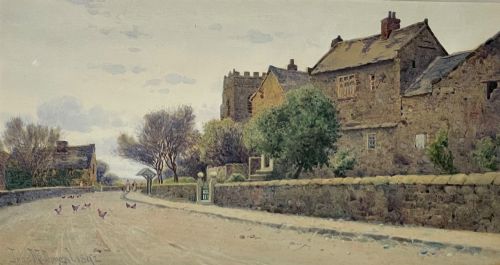
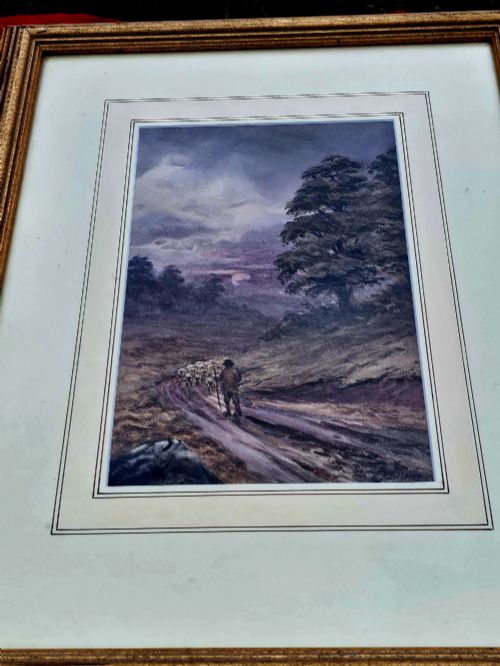
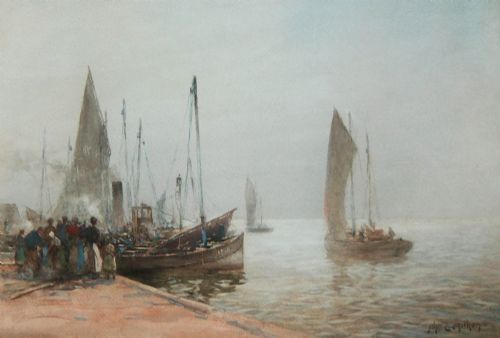
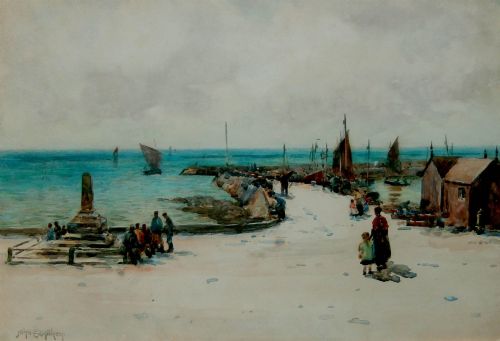
The selections range from detailed architectural studies of castles and churches to expansive pastoral vistas featuring sheep, cattle, and rural workers. Many pieces record specific regional locations such as Whitby harbour, St Ives, or the English Lake District. These paintings document both topographical accuracy and atmospheric interpretations by named artists and regional schools.
How They Were Made
Artists applied watercolour pigment and ink onto paper supports, often using washes to build up translucent atmospheric effects. Many works incorporate pencil or ink underdrawing to define the structural elements of buildings, trees, and shorelines before colour is introduced.
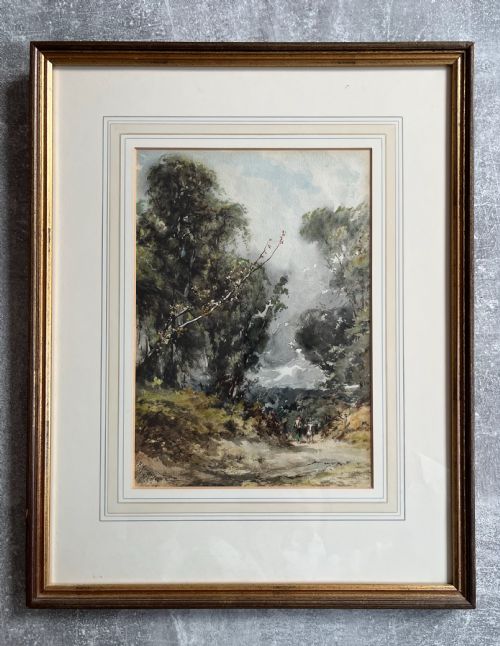
The finished paintings are secured behind glass within wooden frames, frequently featuring giltwood mouldings that complement the palette of the artwork. Gouache highlights appear in certain compositions to add opaque opacity to light elements such as foaming waves or clouds.
Listings feature paper, watercolour pigment, ink, and giltwood within Victorian, Edwardian, and mid-century British art styles.
What Varies in Quality
The strength of a composition rests on the artist's handling of light, atmospheric depth, and tonal balance across the paper. Superior examples demonstrate confident brushwork and precise control over pigment saturation, particularly in complex water and sky elements.
Provenance and documentation elevate certain works, especially when signed, dated, or linked to known exhibition societies and Royal Academy artists. The condition of the paper and the retention of original pigment vibrancy without excessive fading also separate masterworks from standard regional sketches.
George Fotherly Hargitt·James Orrock·John R Prentice·Thomas Ellison·Alfred Young Nutt·Percy Lancaster·A. Mitchell·John McDougal·EJ Letheren·Robert Leslie Howey·James E. Aitken·John E. Aitken·William Banks Fortescue·William Joseph Boyes·Muriel Metcalfe·Thomas William Morley·Fred Lawson·Robert Thorne Waite·John Smith Atherton·Hector Caffieri·Richard Henry Wright·Thomas Maidment·George Oyston·Frederick James Kerr·Alfred G. Morgan
The Original British Watercolour Landscape Glossary
- Gouache
- An opaque watercolour paint that includes a white pigment binder to create solid, heavier coverage. This medium allows artists to layer light details over darker washes.
- Giltwood
- Wood carved and finished with a thin layer of gold leaf. Frames utilising this material provide a traditional decorative border for antique works on paper.
- Wash
- A thin, fluid application of watercolour pigment spread evenly across paper. Painters use this technique to establish expansive skies and background water surfaces.
Original British Watercolour Landscape: Frequently Asked Questions
How should I frame an antique watercolour?
Antique watercolours require framing behind glass with acid-free mounting materials to protect the paper from humidity and ultraviolet light degradation.
Traditional wood or giltwood frames suit these historical works, maintaining the aesthetic context of their original period.
Can I hang watercolours in direct sunlight?
Sunlight causes watercolour pigments to fade over time because the dyes used in nineteenth-century and early twentieth-century paints lack modern chemical UV resistance.
Positioning these paintings away from direct windows preserves the intensity of the original hues.
What subjects appear in these landscapes?
Common subjects include coastal fishing boats, rural harvest scenes, Welsh mountain passes, Scottish lochs, and English river valleys.
Artists also documented rural architecture such as bridges, cottages, churches, and mills across various British counties.
How do I identify the date of a watercolour?
Dates often appear alongside the artist's signature or within the title inscription on the reverse or front of the paper. Stylistic clues, clothing styles of figures, and framing materials also help narrow down the decade of creation.