

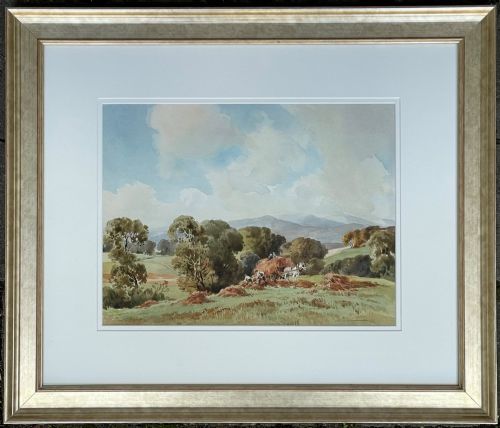
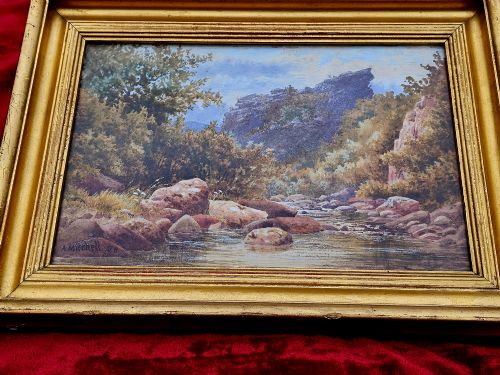
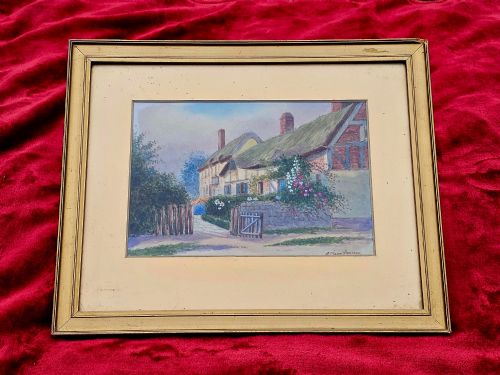
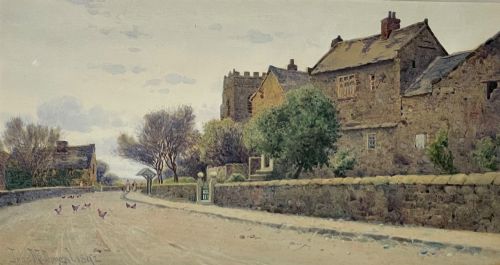

Framed Watercolour Landscape Art
Framed watercolour landscape art captures topography and light across the nineteenth and twentieth centuries.

Framed Watercolour Landscape Art
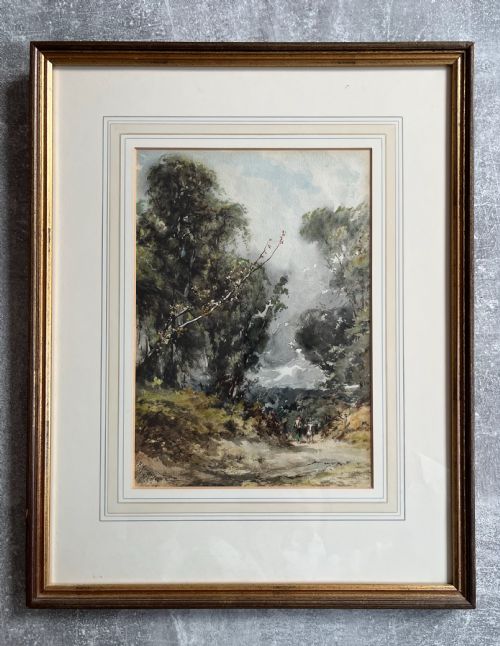
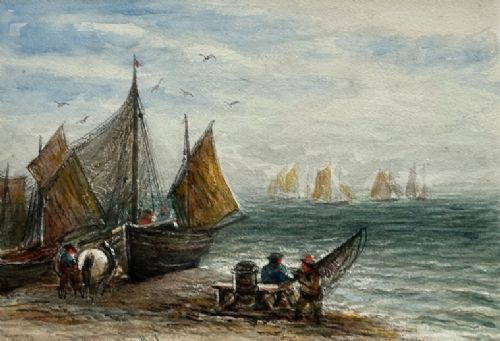
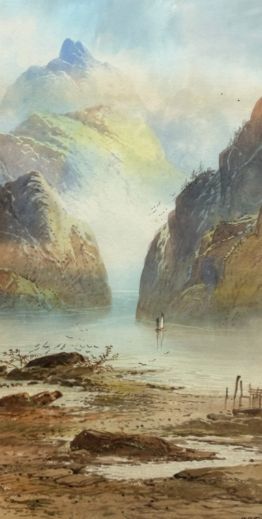
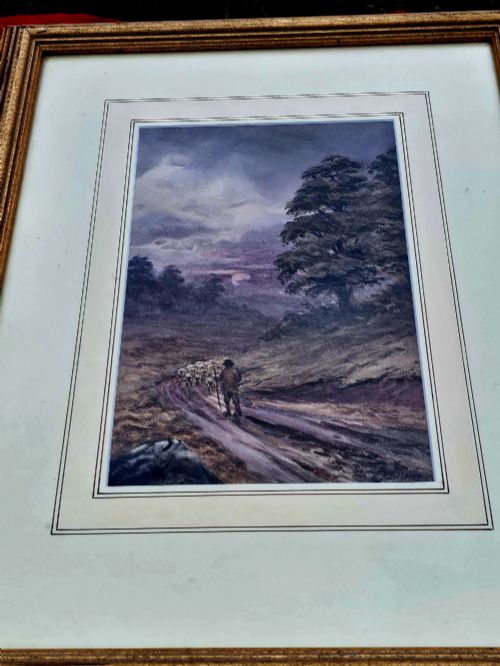
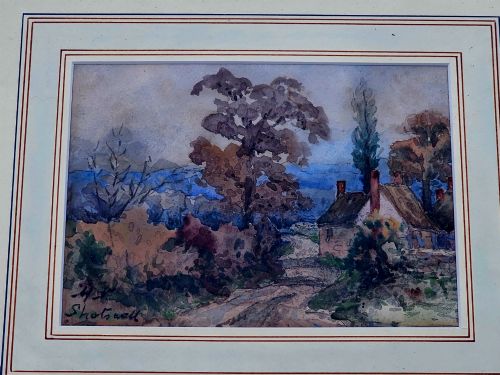
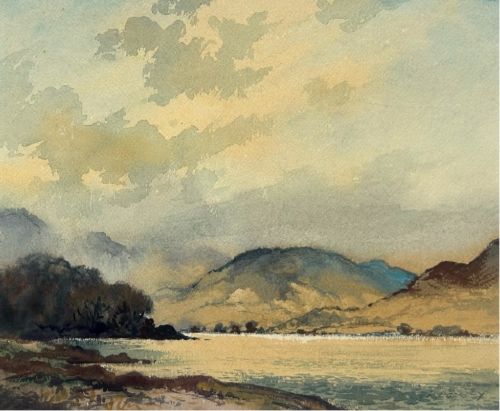
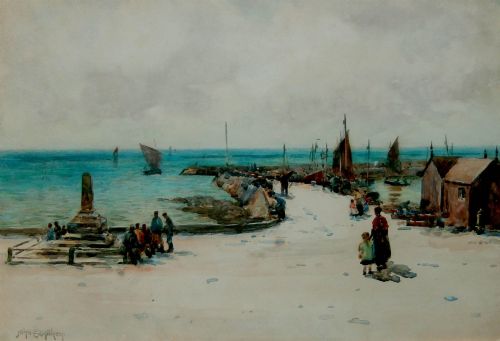
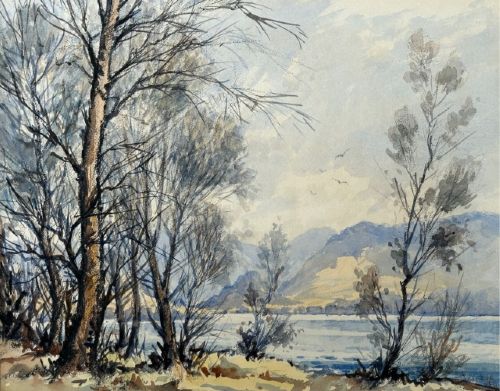
When you search for framed watercolour landscape art, you encounter works on paper executed in water-soluble pigment, often combined with ink. These paintings depict rural views, coastal scenes, and architectural settings from British and European schools. The versions most commonly found here stem from the Victorian and Edwardian eras, alongside pieces from the 1920s to the 1960s.
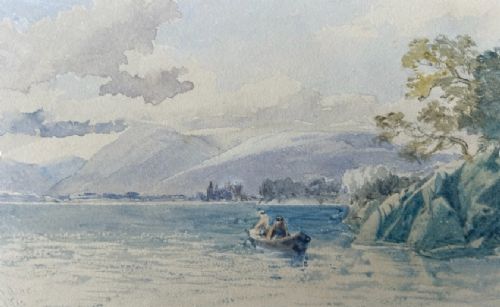
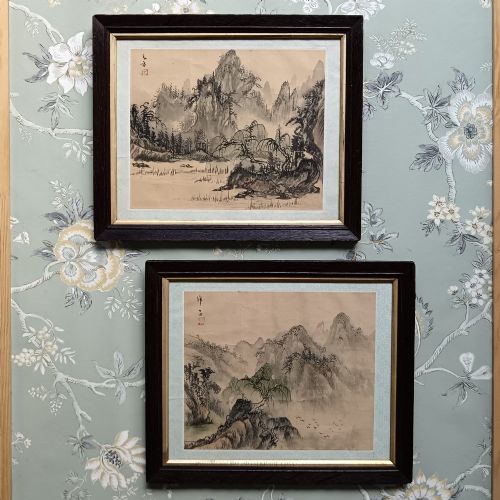
The selection ranges from traditional British rural studies to Impressionist interpretations and Chinese Shan Shui silk paintings. Works arrive set behind glass within timber frames, some original to the period and others replaced. Subjects span from Scottish lochs and Welsh rivers to Yorkshire towns and continental vistas.
Materials and Construction
Artists painted primarily with watercolour pigment suspended in water, applied to absorbent paper sheets or silk surfaces. Ink was frequently utilised for preliminary sketching or defining structural details within the composition. Pigments relied on natural minerals and plant extracts, laid down in transparent washes to build luminosity.
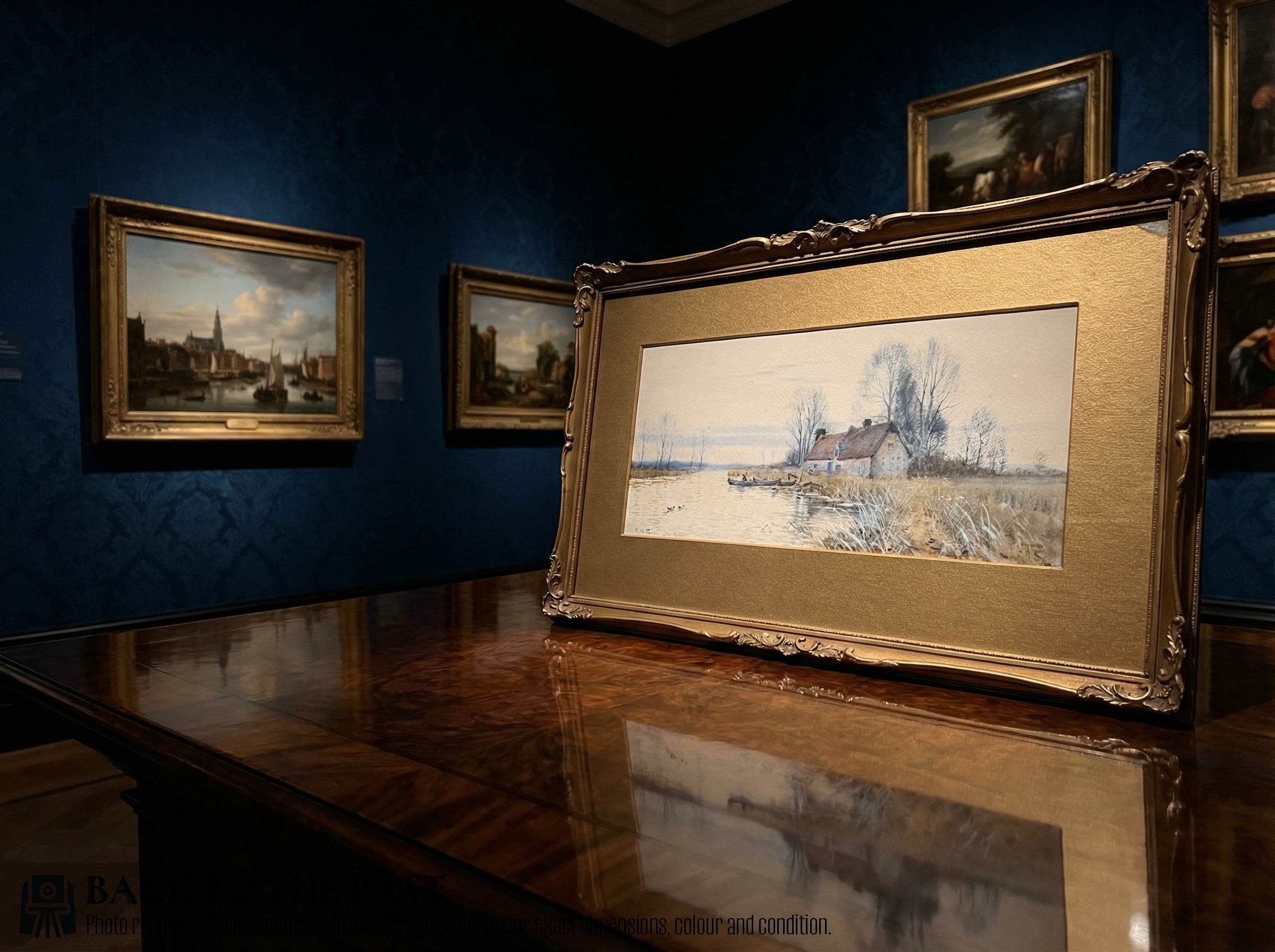
Protection came from timber framing, incorporating wooden mouldings and glass to shield the fragile paper from atmospheric moisture and dust. Gilt wood frames also appear, adding decorative weight to exhibition pieces. Many surviving examples retain their period mounts and backboards.
The listings span from the nineteenth century through the 1960s, utilising paper, silk, wood, and glass.
Differentiating Quality
Quality rests upon the artist's draughtsmanship, brushwork control, and management of light and atmosphere. Stronger examples display confident handling of pigment washes and precise topographical observation, whereas weaker pieces suffer from flat colour application or rigid composition.
The integrity of the framing materials further distinguishes the pieces. Original period wood frames and hand-cut mounts that complement the artwork elevate a piece above those housed in generic modern replacements.
Thomas Miles Richardson Jnr RWS·James Orrock·William Henry Earp·Percy Lancaster·John McDougal·Robert Leslie Howey·John E. Aitken·William Banks Fortescue·Ernest Arthur Rowe·George Oyston
The Framed Watercolour Landscape Art Glossary
- Watercolour
- A painting method where paint is made of pigments suspended in a water-based solution. The technique relies on translucent washes applied to paper.
- Gilt wood
- Wood coated with a thin layer of gold leaf or metallic gilt paint. This finish frequently appears on nineteenth-century picture frames.
- Impressionism
- A style of painting that focuses on the visual impression of the moment, particularly regarding shifting light. British adaptations of this style appear in several twentieth-century landscapes.
- Shan Shui
- A style of traditional Chinese painting that represents scenery or natural landscapes. These works typically employ brush and ink rather than western watercolour techniques.
Framed Watercolour Landscape Art: Frequently Asked Questions
How do I date a framed watercolour?
Dating relies on stylistic clues, artists' signatures, and framing materials. Victorian and Edwardian works often feature specific mounting techniques and inscribed paper labels on the reverse.
Paper stock and handwriting styles also provide chronological markers. Comparing signatures against artist registry records confirms the active period.
Are these watercolours originals?
The listings consist of original hand-painted works rather than mass-produced prints. Each piece displays distinct brush strokes and pigment granulation unique to manual application.
Examination under magnification reveals the direct interaction between the pigment and the paper fibres.
What defines British Impressionism in landscapes?
British Impressionism translates continental en plein air methods into domestic topography. Artists captured transient effects of weather, mist, and seasonal light across rural fields.
Brushwork becomes looser and more expressive compared to rigid Victorian academic standards. Palettes shift toward lighter, broken tones.