
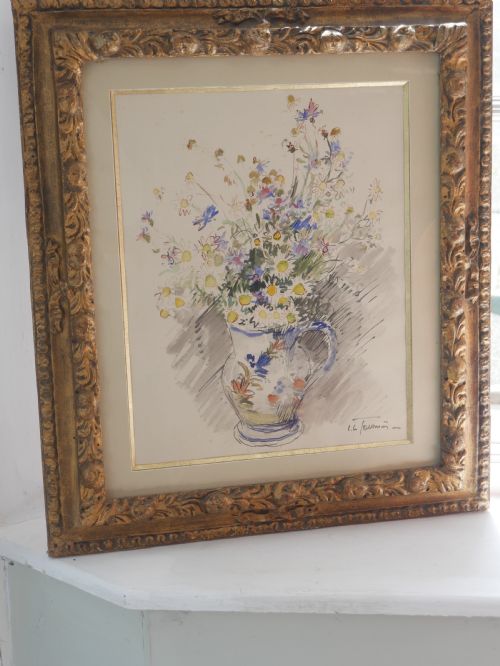


Original Botanical Watercolour
Original botanical watercolour works capture natural specimens with precise hand-painted detail, offering collectors enduring depictions of flora framed for display.
Original Botanical Watercolour
An original botanical watercolour is a hand-painted depiction of flowers, fruit, fungi or garden scenes executed on paper using pigment suspended in water. These pieces bridge scientific record and decorative art, capturing the exact growth habits and colour variations of specific plant specimens.
The selections available here span from nineteenth-century Victorian studies to mid-century modern compositions. The nineteenth-century examples often lean towards meticulous botanical accuracy or rich floral still lifes, while later decades introduce looser brushwork and varied framing contexts.
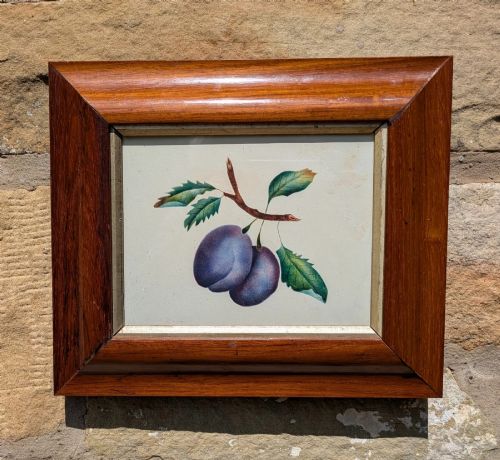
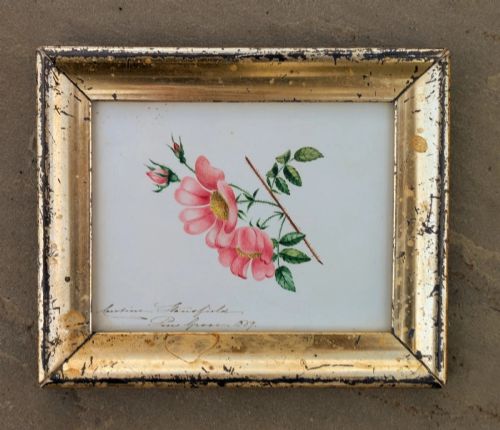
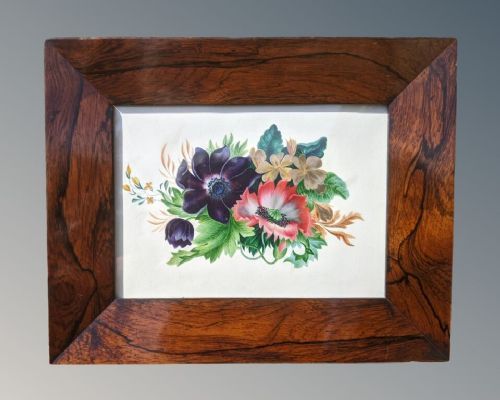
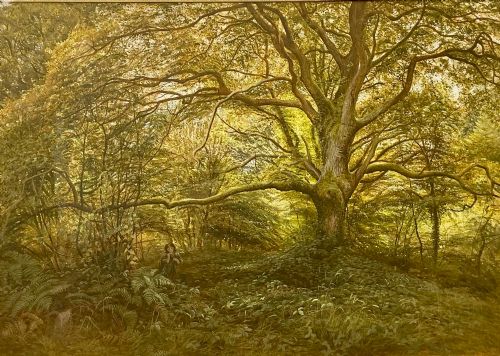
Subjects range from single stems and walled gardens to detailed studies of plums, wild roses, azaleas and woodland bluebells. Buyers encounter works created within distinct British and European artistic traditions, ranging from intimate domestic studies to exhibition pieces.
Materials and technique
These works rely fundamentally on watercolour pigment applied to paper, occasionally augmented with bodycolour, gouache or ink to heighten contrast and detail. The transparency of the washes allows artists to build luminous colour gradations that mimic the natural translucency of petals and leaves.
Framing materials recorded in the evidence include glass, wood and gilt mouldings, which serve to protect fragile paper surfaces from atmospheric moisture and handling. The integration of pencil underdrawings beneath the paint layer remains a standard technical foundation across these historical studies.
The listings encompass paper supports paired with watercolour paint, ink, and glass-fronted wooden frames across multiple twentieth-century decades.
Assessing quality in botanical works
Quality rests upon the artist's draughtsmanship, botanical precision and ability to handle pigment without muddying the paper's surface. Superior works display confident brush control that defines leaf veins and petal edges cleanly while preserving the luminous white of the paper.
Compositional balance and the preservation of original pigments separate exceptional examples from standard decorative studies. Stronger pieces maintain their original colour saturation and sit within period frames that complement the scale and palette of the artwork.
BONOMI EDWARD WARREN·John Sherrin·James Tower·Harry Wanless·M Simpson·Henrietta Creswell·William Edward Fox·Lester Sutcliffe·LILIAN STANNARD·EDITH BARROW·Rowland Henry Hill·GRACE HASTIE·Margaret Laing·Phyllis I Hibbert·MARIAN CHASE·Alfred W. Parsons·Owen Bowen·CHARLOTTE ISA JAMES·ALICE MACALLAN SWAN·BEATRICE PARSONS·MARION BROOM·ANNIE MARY YOUNGMAN·EDITH ALICE ANDREWS·GEORGE FREDERICK NICHOLLS·M.K Rhodes
The Original Botanical Watercolour Glossary
- Watercolour paint
- A medium consisting of finely ground pigments mixed with a water-soluble binder, traditionally gum arabic. It is diluted with water and applied in translucent washes to paper.
- Gouache
- An opaque water-based paint similar to watercolour but mixed with a white pigment to create opacity. It is frequently utilised in these works to add highlights to petals and fruit.
- Bodycolour
- An older term for watercolour paint containing a dense white filler to increase opacity. Artists use it to achieve solid blocks of colour and opaque details alongside transparent washes.
- Botanical illustration
- The art of depicting the form, colour and details of plant species with scientific accuracy. These works balance aesthetic appeal with precise natural history documentation.
- Gilt frame
- A wooden picture frame coated with gold leaf or metallic paint. They are commonly found protecting nineteenth-century and early twentieth-century paper works.
Original Botanical Watercolour: Frequently Asked Questions
How should I display a watercolour?
Watercolour paintings require protection from direct sunlight to prevent the fading of delicate botanical pigments over time. Hang them away from strong light sources and damp environments.
Ensure the frame utilises conservation-grade backing and glass that prevents the paper from touching the surface directly. This maintains air circulation and protects the fragile paper support.
Are these works scientifically accurate?
Many pieces on this page originate from a tradition where artists worked alongside botanists to record plant structures precisely. Their detailed petal counts and leaf formations serve as reliable historical records of flora.
Other works approach the subject with a freer artistic perspective, prioritising decorative still life arrangements over strict scientific classification. Checking the style helps determine where a piece sits on this spectrum.
How do I identify the period of a piece?
Dating relies on stylistic clues, framing methods and signatures recorded by the artist. Victorian pieces often display tight, meticulous detail, while mid-century examples show looser brushwork.
Accompanying documentation or inscriptions on the reverse of the paper frequently confirm the exact decade of execution. Comparing the paper type and pigment characteristics further assists in placing the work.
What is the difference between gouache and watercolour?
Watercolour is inherently transparent, allowing the reflective quality of the white paper to shine through the thin washes of pigment. Artists build depth by layering these translucent coats.
Gouache includes an added white pigment that makes the paint opaque, producing solid areas of colour. Many botanical artists combine both mediums within a single painting to create contrast.