
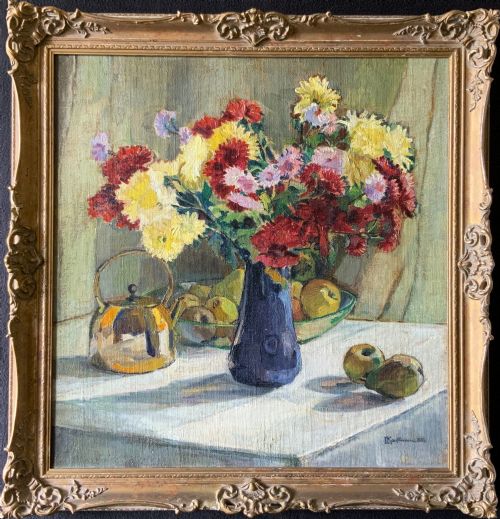


Original 1930s Oil Painting
When you search for an original 1930s oil painting, you enter an era of rich pigment and modernist experimentation captured on canvas and board.
Original 1930s Oil Painting
An original 1930s oil painting captures the distinct aesthetic of the interwar period, spanning vibrant still lifes, coastal scenes, and figurative works. The selections present here lean heavily into European landscapes, French post-impressionism, and British school compositions.
Canvases and wooden boards carry brushwork from French, British, and continental European hands, reflecting movements such as Art Deco, Modernism, and Post-Impressionism. These works bring authentic period atmosphere to interiors through subjects ranging from tranquil farmyards to sunlit Mediterranean vistas.
Materials and application
Artists of this decade typically applied oil paint directly onto stretched canvas or wooden board, occasionally incorporating gilt frames to finish the piece. The medium allowed for textured brushwork, impasto highlights, and fluid blending that defined modernist and impressionist output.
Supports varied between traditional woven canvas and rigid boards, each interacting differently with oil binders and pigments over time. Pigments were brushed, layered, or applied en plein air to capture transient effects of light in landscapes and interiors.
Original 1930s Oil Painting Retail Price Guide 2026
Typical asking prices for original 1930s oil painting among the pieces listed under this phrase on Sellingantiques today, from the lower quarter to the upper quarter. They describe what is for sale here now, not the wider market.
Listings feature oil on canvas and board supports across British and French modernist, post-impressionist, and Art Deco styles.
Distinctions in execution
The strength of an original 1930s oil painting rests upon the confidence of the brushwork, the depth of the palette, and the clarity of the composition. Works executed with deliberate, expressive strokes tend to hold more visual presence than formulaic studio output.
Provenance and attribution also shape the standing of a piece, with documented artist signatures or studio sales providing verifiable context for the imagery. The harmony of colour and the stability of the paint layer further distinguish finer examples from standard decorative works.
Henri Vincent-Anglade·Gustave Vidal·Gaetan Dumas·William JB Jenkins·Philip Naviasky·Frank Percy Wild·Claude Jousset·Sir Matthew Smith·Yo Mayer·Harold Edward Conway·Burr Singer·Donald Wood·Adrian Bury
The Original 1930s Oil Painting Glossary
- Oil paint
- A slow-drying paint made by combining pigment particles with a drying oil, most commonly linseed oil. This medium allows for rich blending and textured impasto application.
- Post-Impressionism
- An art movement extending the limitations of impressionism while retaining its use of vivid colours and thick application. Artists prioritised symbolic content and expressive brushwork.
- Impasto
- The technique of laying paint thickly on a surface so that brush or palette knife marks remain prominent. It adds physical depth and tactile quality to the canvas.
- Board
- A rigid flat support made from wood or composite material used by artists as an alternative to stretched canvas. It provides a stable ground for oil applications.
- En plein air
- The act of painting outdoors to directly capture the natural light and atmosphere of a landscape. This approach became central to impressionist and post-impressionist landscape traditions.
Original 1930s Oil Painting: Frequently Asked Questions
How do I identify an authentic 1930s oil painting?
Authenticity relies on examining the physical materials, such as the weave of the canvas, the ageing of the oil paint, and the construction of the wooden stretcher or board. Signatures, artist stamps, and period framing often provide additional clues to the origin of the work.
Analysing the stylistic markers, brush techniques, and subject matter against known movements of the decade helps confirm the timeline. Comparing the piece with documented works by the same school or artist further solidifies its period attribution.
What subjects are common in these paintings?
Artists of this decade frequently painted sunlit landscapes, coastal scenes, and domestic interiors reflecting the quiet rhythms of daily life. Still lifes featuring flowers, fruit, and simple household objects also appeared regularly across European studios.
Figurative studies, particularly female nudes and portraiture, captured the human form through modernist and impressionist lenses. Industrial and rural farmyard scenes provided further inspiration for painters working in Britain and on the continent.
How should I display an oil painting at home?
Oil paintings on canvas or board benefit from placement away from direct sunlight and extreme temperature fluctuations to protect the pigment and support. Choosing an appropriate wall space ensures the work is viewed in balanced ambient light without risk of environmental damage.
Matching the frame to the aesthetic of the painting enhances its visual impact within a room. Many collectors prefer period frames that complement the artistic style of the decade without overpowering the composition.
What is the difference between canvas and board supports?
Canvas consists of fabric stretched tightly across a wooden frame, offering a slight give under the brush and a textured woven surface. It has been a traditional support for oil painting due to its durability and responsiveness to layered pigments.
Board provides a completely rigid surface that requires less tension and remains stable over time, making it popular for smaller outdoor or plein air studies. Both supports react distinctively to the drying process of oil paint.