


Orientalist Bronze Statue
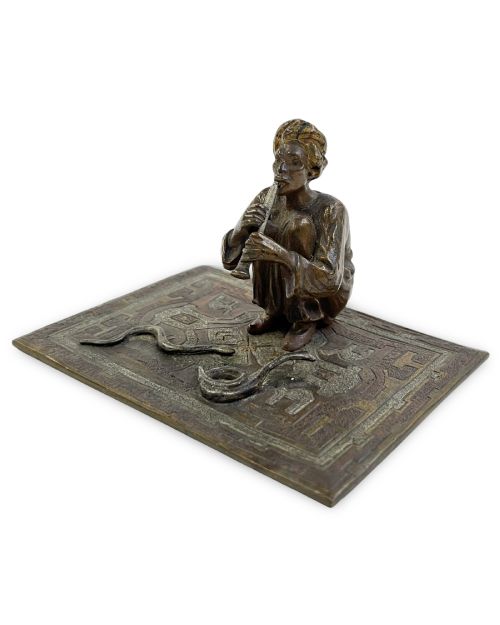
When you collect an orientalist bronze statue, you bring home figures of Arab merchants, snake charmers, and dancers cast during the nineteenth and early twentieth centuries.
Orientalist Bronze Statue
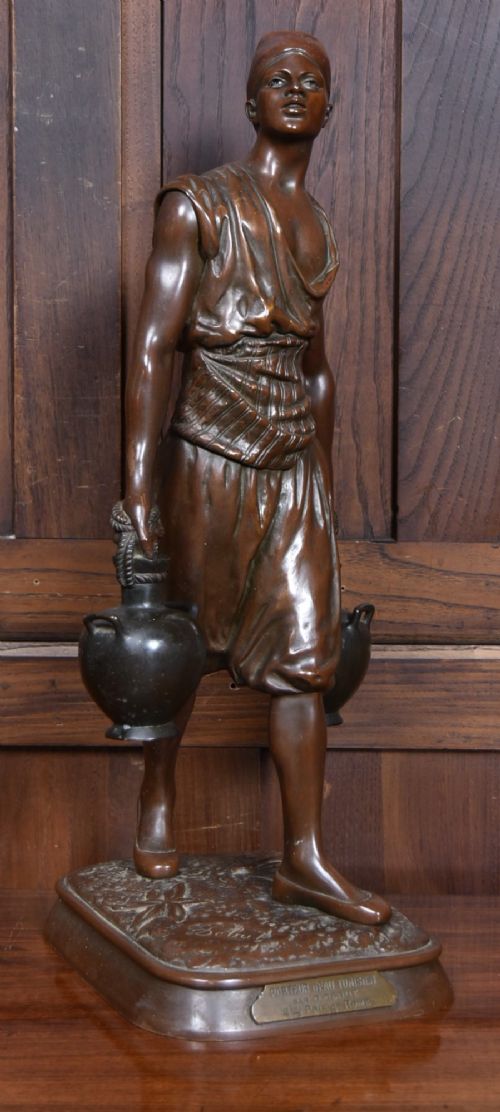
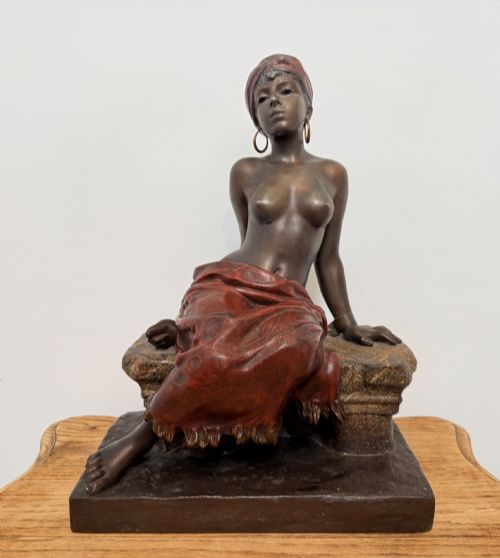
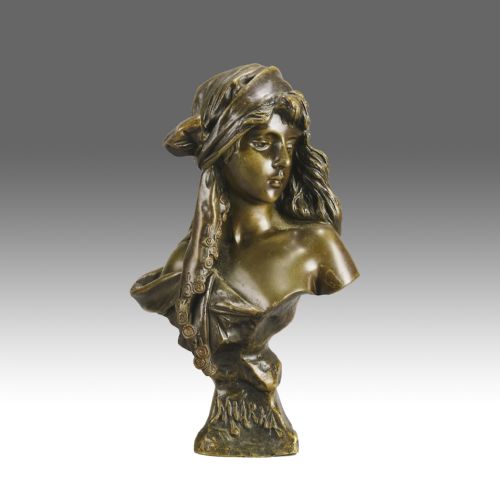
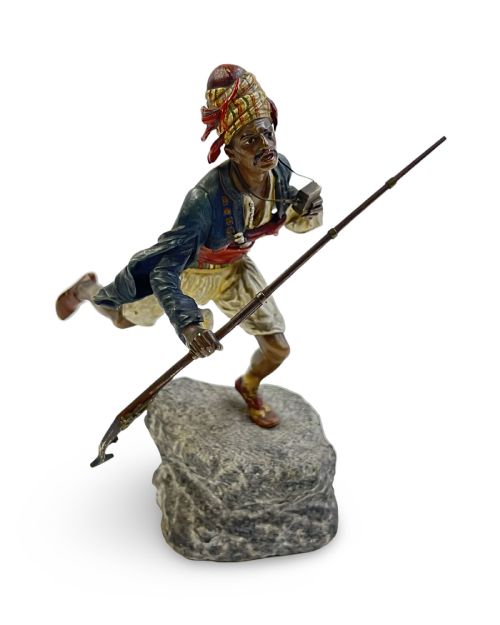
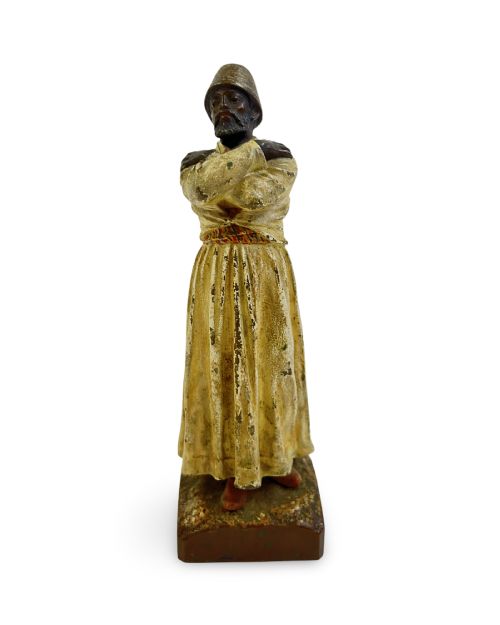
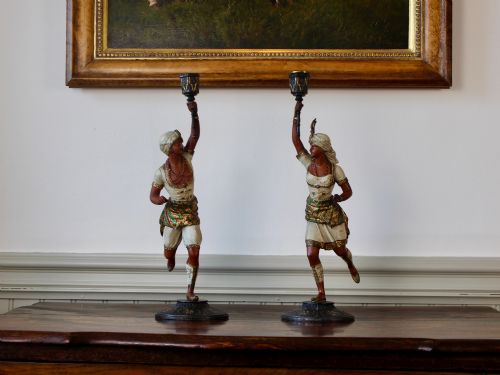
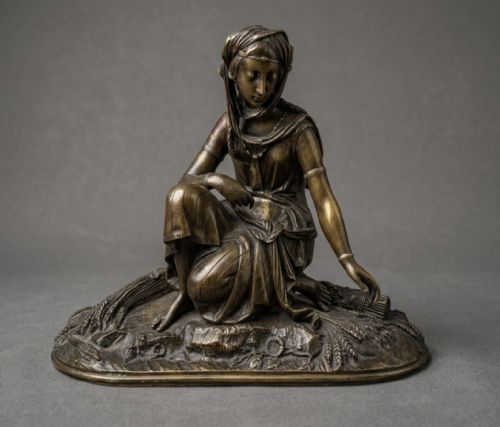
An orientalist bronze statue captures Western interpretations of North African, Middle Eastern, and Ottoman subjects, ranging from water carriers and scholars to dancers and warriors. These pieces emerge predominantly from the nineteenth century and the early decades of the twentieth century, carrying the stylistic hallmarks of Victorian, Art Nouveau, and Art Deco movements.
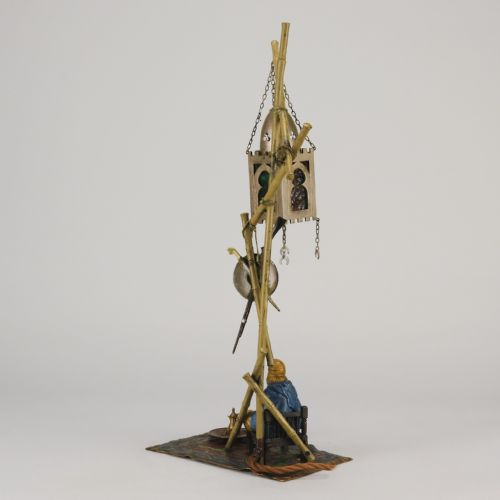
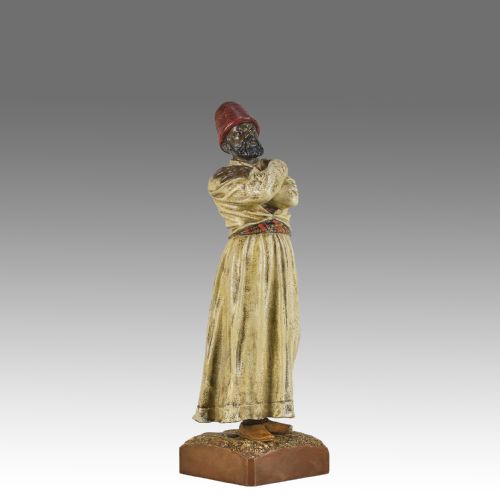
The objects take diverse physical forms on this page, appearing as standalone sculptures, figural table lamps, and candlesticks. Figures might depict a solitary dervish, a merchant with a sword, or an Egyptian man with a donkey, reflecting European fascination with eastern lands.
Materials and casting
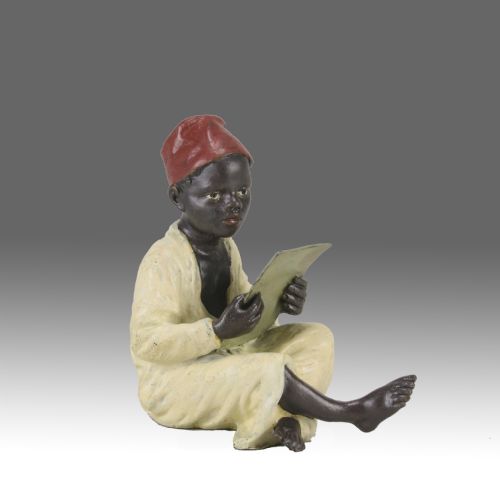
Casting relies heavily on traditional bronze and patinated bronze, alongside cold-painted bronze where pigment is applied to the cold metal surface rather than fired. Spelter and painted terracotta also appear as alternative sculptural mediums for figures and busts.
Makers enhance surfaces through polychromed finishes and cold paint, lending detailed realism to garments, skin tones, and decorative items. Marble often serves as a heavy base for these sculptural studies.
Orientalist Bronze Statue Retail Price Guide 2026
Typical asking prices for orientalist bronze statue among the pieces listed under this phrase on Sellingantiques today, from the lower quarter to the upper quarter. They describe what is for sale here now, not the wider market.
Listings feature works spanning the nineteenth century into the Art Deco era, utilising bronze, spelter, terracotta, and marble.
Evaluating the work
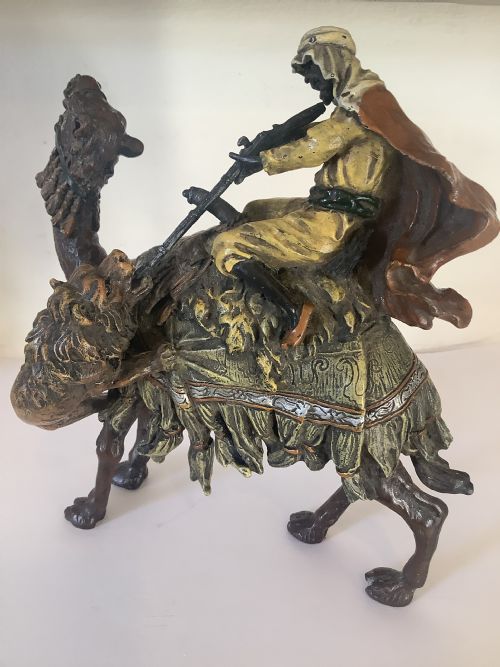
Quality rests in the crispness of the chasing and the preservation of the applied cold paint or patination. Finer examples display meticulous detail in facial expressions, textiles, and harness work on animals like camels.
The distinction between superior castings and simpler items lies in the liveliness of the pose and the depth of the casting detail. Signed pieces by recorded founders or sculptors naturally command greater attention from collectors.
Franz Bergman·Emmanuel Villanis·Edouard Drouot·Alfred Dubucand·Arthur Waagen·Claire Colinet·Demetre Chiparus
The Orientalist Bronze Statue Glossary
- Cold-painted bronze
- Bronze sculpture finished with layers of unfired paint applied after casting. This technique requires careful handling to preserve the delicate pigments over time.
- Patinated bronze
- Metal treated with chemical solutions to produce a specific surface colour or aged finish. It protects the metal while enhancing the sculptural contours.
- Spelter
- A zinc alloy used as a less expensive substitute for bronze in figural casting. It is softer and lighter than true bronze.
- Terracotta
- Fired clay used for sculptural figures and busts. It offers a warm, matte surface texture distinct from cast metal.
Orientalist Bronze Statue: Frequently Asked Questions
Are these figures solid bronze?
Many sculptures are cast using the lost-wax method and are hollow rather than solid metal. Some smaller pieces or specific details may be solid, while larger statues are hollow to reduce weight.
Alternative materials like spelter also occur across nineteenth-century and Victorian items.
How can I tell bronze from spelter?
Bronze is heavier, colder to the touch, and has a resonant ring when tapped gently. Spelter is a softer zinc alloy that feels lighter and shows a duller sound.
Examining the underside or where patination has worn thin can reveal the lighter, greyish metal underneath spelter.
Where were these statues made?
The majority originate from European workshops, particularly in Vienna and France, during the nineteenth and early twentieth centuries. Viennese foundries specialised in cold-painted pieces.
French studios produced many of the detailed patinated bronze sculptures and figural lamps seen in this period.