


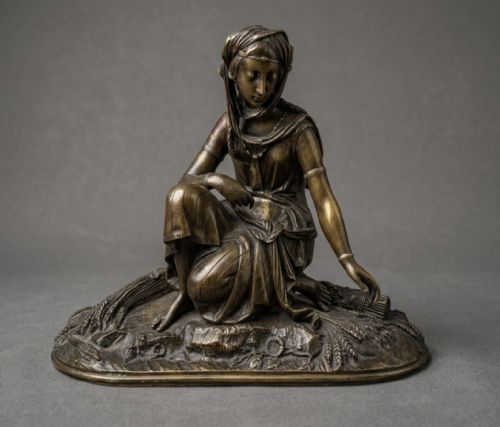


Orientalist Art Sculpture
Orientalist art sculpture brings nineteenth and early twentieth century visions of North Africa and the Near East directly into the room.
Orientalist Art Sculpture
Orientalist art sculpture captures figures, dancers and traders from North Africa and the Near East through nineteenth and early twentieth century European eyes. When you search for orientalist art sculpture, you encounter dynamic figures, busts and lamps produced across several distinct design movements.
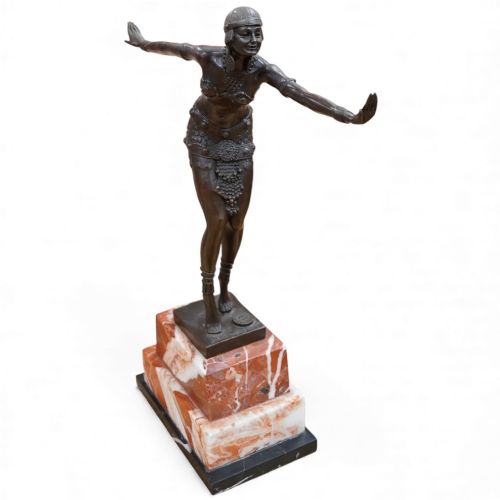
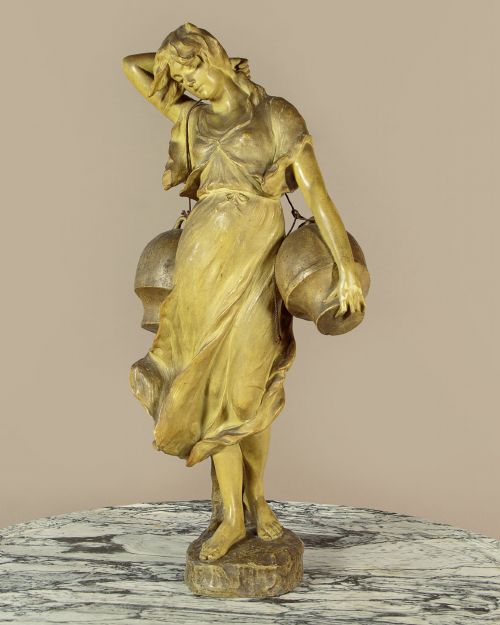
The pieces on this page span the nineteenth century, Art Nouveau and Art Deco periods, stretching from eighteen eighty up to nineteen thirty. Subjects range from water carriers and snake charmers to dancers and merchants.
Forms vary from grand patinated bronzes and carved marble to glazed ceramic and porcelain table lamps. Most examples originate from French, Austrian and Italian studios active during these decades.
Materials and methods
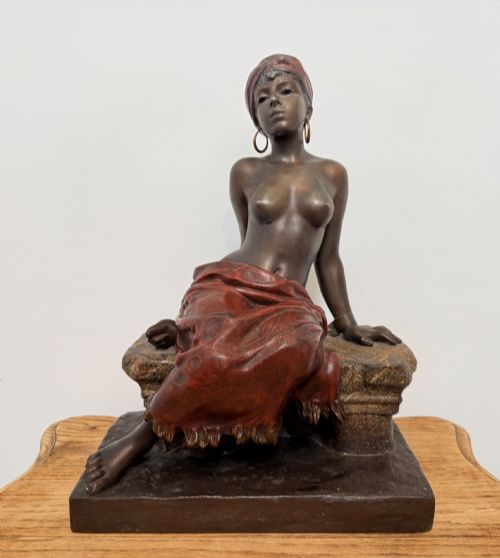
Foundry cast bronze forms the backbone of these works, frequently finished with rich patination or cold painted polychrome details. Artisans utilised the lost wax casting method to capture fine drapery, jewellery and facial expressions.
Ceramic and terracotta figures rely on factory moulding and hand painting, often paired with delicate glaze work or enamel highlights. Alabaster and carved marble provide alternative mediums for smooth, luminous figures.
Many sculptures double as functional objects such as perfume lamps, nightlights and table lamps, integrating cast metal figures with electrical fittings or ceramic vessels.
Judging quality in the cast and clay
Quality rests in the crispness of the casting and the sensitivity of the chisel work on bronze surfaces. Superior bronzes retain sharp details in hair, costume and accessories without softening from worn moulds.
Signed works by established sculptors or documented factory output carry stronger attribution, though unsigned foundry casts of substantial weight and finish still hold considerable merit.
Emmanuel Villanis·Edouard Drouot·Goldscheider·Georges-Charles Coudray·Arthur Waagen·Charles Arthur Bourgeois·Franz Bergman·Claire Colinet·Bruno Zach·Demetre Chiparus·Pierre Jules Mène
The Orientalist Art Sculpture Glossary
- Patinated bronze
- A bronze sculpture treated with chemical solutions to produce a specific surface colour, ranging from deep brown to golden tones. This finish protects the metal and defines the shadows.
- Cold painted
- A technique where paint is applied to a metal object without heat firing. It allows for vibrant multi-coloured clothing on bronze figures but remains vulnerable to flaking.
- Lost wax casting
- A metal-casting process where a molten metal is poured into a mould that has been created by means of a wax model. It permits exceptional detail and undercuts in the finished sculpture.
- Art Nouveau
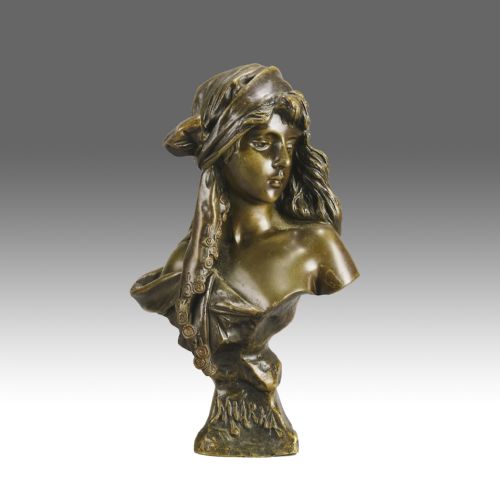
- A decorative style prevalent between eighteen ninety and nineteen ten, characterised by fluid, organic lines and floral motifs. Figures from this era often feature flowing hair and sinuous drapery.
- Art Deco
- A design movement peaking around nineteen twenty and nineteen thirty, defined by clean geometric lines, stylised forms and modern elegance. Sculptures from this time favour sleek dancers and streamlined geometry.
Orientalist Art Sculpture: Frequently Asked Questions
How do I tell Art Nouveau from Art Deco pieces?
Art Nouveau pieces, produced around eighteen ninety, feature flowing organic lines, soft drapery and naturalistic curves inspired by plants and hair.
Art Deco works from nineteen twenty onwards favour sharp geometric angles, stylised movement and sleek modern silhouettes.
Were these sculptures always used as lamps?
Many figures were created purely as decorative bronzes or ceramic statues to sit on mantelpieces and cabinets.
Others were purposefully designed as functional items, incorporating light fixtures or perfume burners into the sculptural composition.
How should I clean a cold painted bronze?
Cold painted surfaces require gentle dusting with a soft, dry brush to preserve the delicate paint layers.
Water, polish and chemical cleaners must be avoided entirely because they lift the historical pigment from the metal.
What does a signature on the base indicate?
Signatures carved into the bronze or stamped by the foundry indicate the original artist or the producing firm.
While signed pieces are well documented, unsigned works from the same period often display identical casting quality.