



Orientalist Accent Table
An orientalist accent table brings complex geometric inlay and rich lacquer into a room, offering a distinct focal point rooted in nineteenth and early twentieth century revival styles.
Orientalist Accent Table
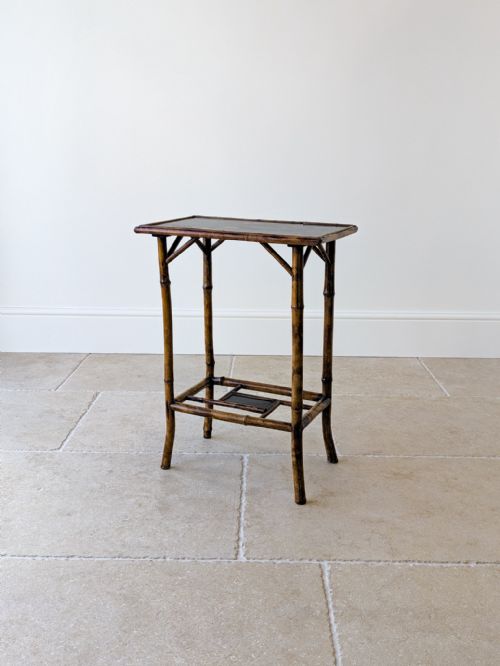
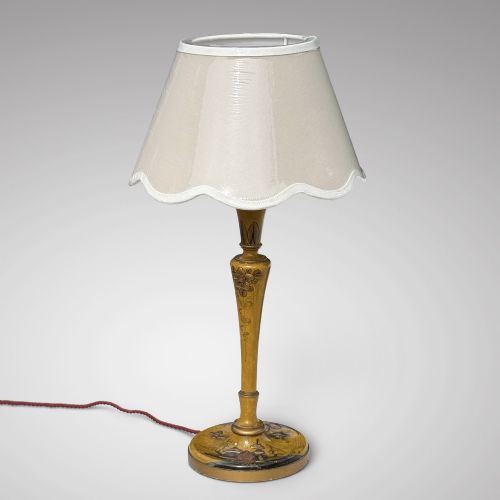
When you search for an orientalist accent table, you encounter a concentrated selection of side tables, occasional tables, and table lamps spanning the nineteenth century through the nineteen-thirties. These pieces draw on Moorish Revival, Syrian, Mamluk Revival, Chinoiserie, and Anglo-Japanese design traditions.
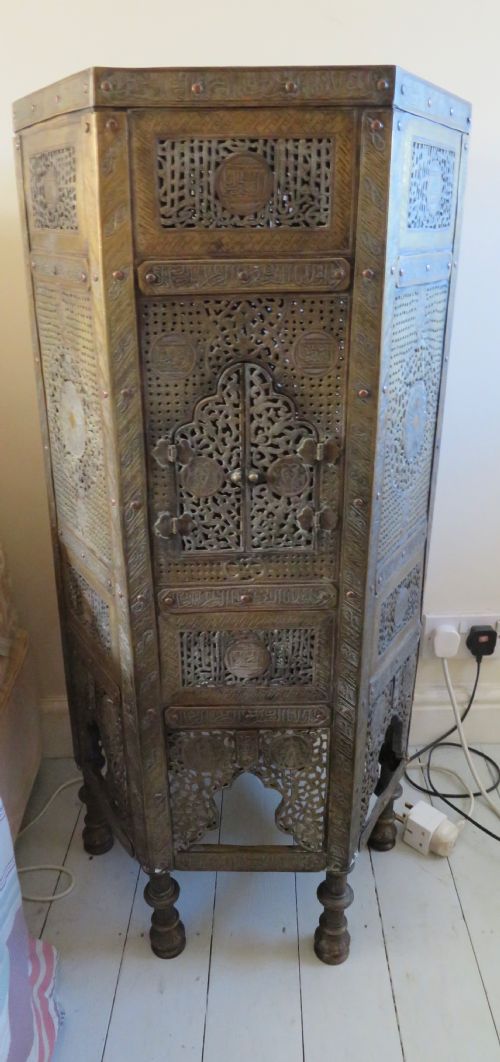
The most frequent examples on this page are low occasional tables and side pieces, often featuring octagonal or hexagonal tops designed to function beside seating. These forms reflect nineteenth and early twentieth century European taste for imported motifs and exoticised domestic furnishings.
How they were made
Construction relies on timber foundations such as walnut, mahogany, and ebonised wood, decorated with surface treatments including black and ochre lacquer, gilt, and cold painted bronze. Craftsmen shaped these materials into tiered side tables and pagodas.
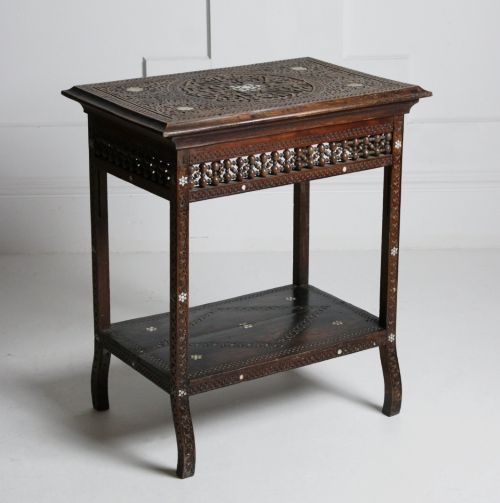
Detailing involves intricate inlays of mother-of-pearl, bone, white-metal, and copper into brass and wood, alongside openwork carving. These methods create heavily patterned surfaces across Syrian tables and Cairo ware.
Revival styles represented span Moorish, Mamluk, Venetian Baroque, and Anglo-Japanese traditions across the nineteenth and early twentieth centuries.
What varies in quality
The distinction between standard and superior pieces rests on the precision of the inlay work and the depth of the hand carving. Finer examples display tightly fitted geometric patterns in bone or mother-of-pearl that remain secure within the timber substrate.
Finish application also separates pieces, particularly where lacquer or gilt is used. High quality items exhibit smooth, even surfaces where decorative elements integrate harmoniously with the structural form rather than appearing applied as an afterthought.
Liberty & Co·Bruno Zach
The Orientalist Accent Table Glossary
- Moorish Revival
- A nineteenth century architectural and decorative style incorporating elements of North African and Spanish Islamic design. It heavily influences the geometry of these occasional tables.
- Cairoware
- Metalwork from Cairo, typically brass inlaid with copper and silver, often found on mid-nineteenth to early twentieth century pieces. The technique creates dense, contrasting surface patterns.
- Anglo-Japanese
- A late nineteenth century aesthetic movement combining British furniture forms with Japanese artistic motifs. It appears in pagodas and lacquered occasional tables.
- Chinoiserie
- European interpretation and imitation of Chinese artistic traditions, utilised here in lacquered table lamps and furniture. It employs motifs like pagodas and ochre finishes.
- Occasional table
- A small, movable table designed for specific, intermittent uses within a room. These pieces provide surface space without dominating the interior layout.
Orientalist Accent Table: Frequently Asked Questions
What is an orientalist accent table?
An orientalist accent table is a small occasional piece, side table, or lamp inspired by nineteenth and early twentieth century European interpretations of Middle Eastern, North African, and Asian design.
These items use detailed inlay, carving, and lacquer to introduce varied geometric patterns and textures into domestic interiors.
How were these tables used originally?
These tables served as decorative occasional pieces in Victorian and Edwardian drawing rooms, often holding lamps, ornaments, or smoking paraphernalia.
Their compact size allowed them to be moved easily around reception rooms to suit changing social layouts.
How do I clean mother-of-pearl inlay?
Mother-of-pearl inlay requires gentle dusting with a soft, dry cloth to prevent abrasive damage to the delicate shell and surrounding timber.
Avoid liquid cleaners, moisture, and polishes containing harsh chemicals, as these can loosen the adhesive holding the inlay pieces in place.
How can I tell the period of a table?
Dating relies on examining the timber species, construction methods, and the specific revival style employed, such as Mamluk Revival or Anglo-Japanese.
Nineteenth-century examples often show hand-cut joinery and dense natural material inlays, whereas later twentieth-century pieces may utilise simplified construction techniques.