




Oriental Temple Jar Pair
An oriental temple jar pair brings symmetry and rich ornament to a room, drawing the eye with classic ceramic forms and detailed painting.
Oriental Temple Jar Pair
An oriental temple jar pair consists of matching lidded ceramic vessels created for display, often featuring generous shoulders tapering down to a neat base. Buyers seeking an oriental temple jar pair typically encounter examples from the nineteenth century, alongside earlier seventeenth and eighteenth century pieces.
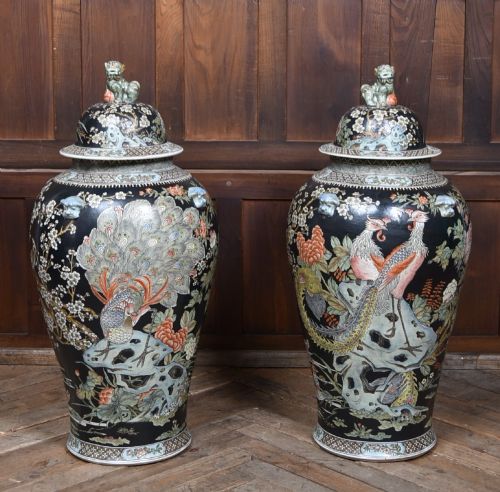
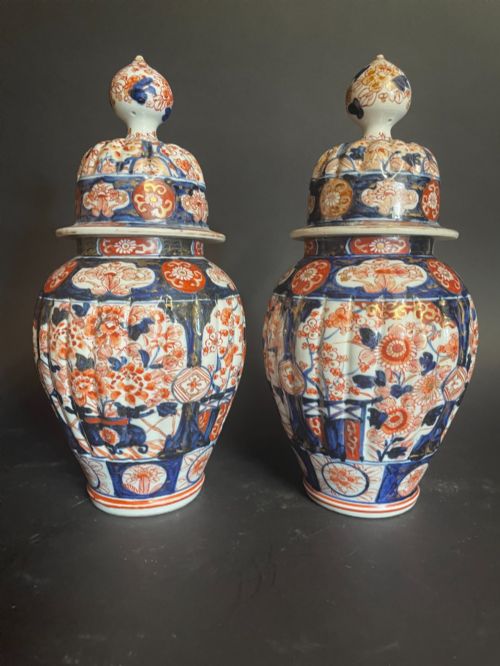
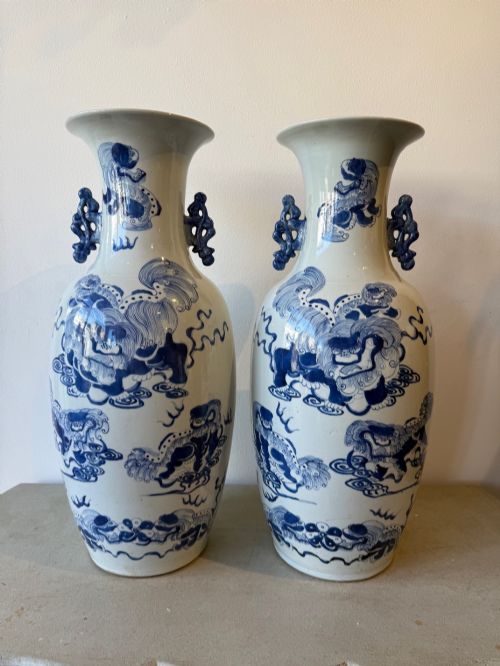
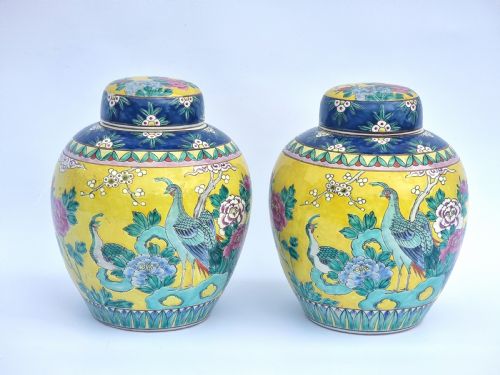
The selections span Chinese and Japanese traditions, taking forms such as ginger jars, floor vases, and lidded urns. Many pairs exhibit classic decorative schemes including Japanese Imari, Chinese blue and white, and Famille Rose palettes.
Makers and factories sometimes adapted these forms for Western interiors, mounting them on ormolu or converting them into table lamps. These diverse iterations reflect the enduring appeal of export porcelain across various historical periods.
Materials and methods
Makers shaped these vessels from fine porcelain, applying mineral pigments under and over the glaze before firing them in kilns. Cobalt oxide provided the deep blue tones in traditional blue and white pieces, while polychrome enamel and gold leaf added vibrant surface detail.
Certain examples incorporate metalwork elements, pairing the ceramic bodies with brass, copper, or gilt ormolu mounts. Wood stands and fitted covers occasionally accompany the jars, completing the construction of each matched set.
Object types range from ginger jars and floor vases to table lamps and lidded urns.
Assessing quality in matched sets
Quality reveals itself in the precision of the hand painting and the clarity of the ceramic glaze. Superior examples display crisp brushwork and consistent colour depth across both vessels in the set, maintaining visual harmony.
The crispness of moulded details and the integration of metal mounts, where present, distinguish finer pieces from standard production. Preservation of the original lids and overall structural integrity further separate notable examples.
Samson·Carlton Ware·Arita
The Oriental Temple Jar Pair Glossary
- Imari
- A style of Japanese export porcelain characterised by underglaze blue, iron red, and gilt highlights. This palette originated in Arita and became widely exported to European markets.
- Famille Rose
- A palette of Chinese porcelain decoration distinguished by opaque pink or rose enamel colours. The style developed during the Qing dynasty and was frequently used on ginger jars and vases.
- Cloisonne
- An enamelwork technique where metal wires form raised partitions on a base to hold coloured paste. This method produces intricate surface patterns on decorative vessels.
- Ormolu
- Gilded bronze mounts applied to furniture and porcelain. French and British makers frequently added these decorative metal mounts to imported oriental jars.
- Ginger Jar
- A broad-shouldered ceramic vessel with a domed lid, originally made for storage and later adapted for decorative display.
Oriental Temple Jar Pair: Frequently Asked Questions
How old are these temple jars?
Most surviving examples date from the nineteenth century, though seventeenth and eighteenth century pieces appear alongside twentieth century productions.
Stylistic details and ceramic bodies help indicate the specific period of manufacture for each pair.
Were these jars made in China or Japan?
The listings include both Chinese and Japanese wares, reflecting distinct regional styles such as Arita Imari and Chinese blue and white.
Export wares often combined traditional Eastern motifs with forms suited to European interiors.
Do these jars come with lids?
Many examples retain their original matching lidded covers, which is a key characteristic of traditional temple jars and ginger jars.
Some pieces were later adapted as table lamps or fitted with metal mounts.
How do I care for antique porcelain?
Dust the surfaces gently with a soft, dry cloth to protect the enamel and gilt decorations.
Avoid using harsh cleaning agents or submerging pieces with metal mounts in water.