






Oriental Rosewood Tea Tables
Oriental rosewood tea tables bring dense timber and intricate carving together, offering sturdy surfaces shaped for serving or display.
Oriental Rosewood Tea Tables
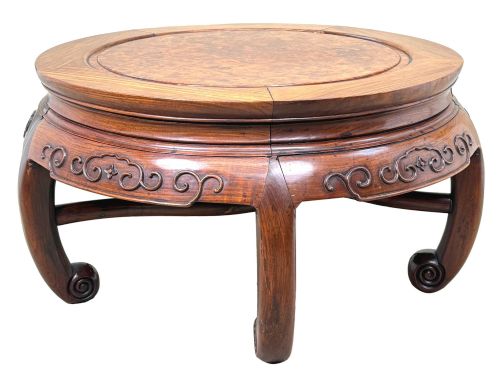
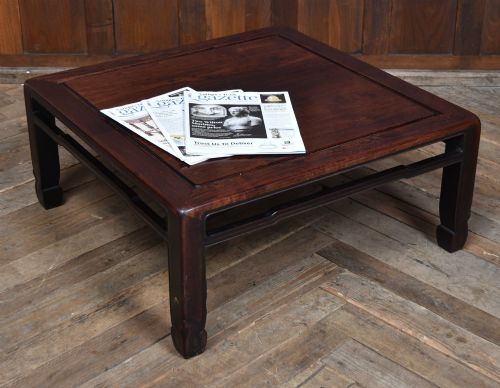
These pieces encompass low tables, nesting sets, coffee tables, and occasional stands originating from nineteenth-century China and India. When searching for oriental rosewood tea tables, buyers encounter formats ranging from low Kang tables and opium tables to multi-tiered nests and octagonal occasional stands.
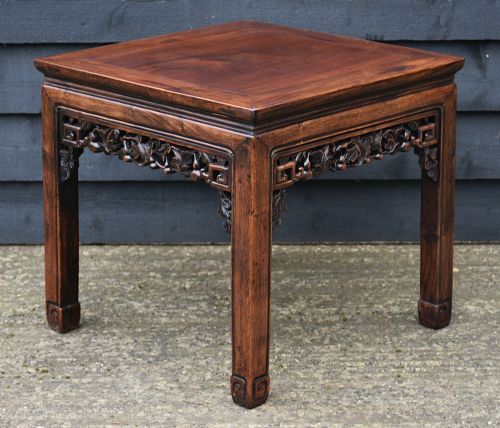
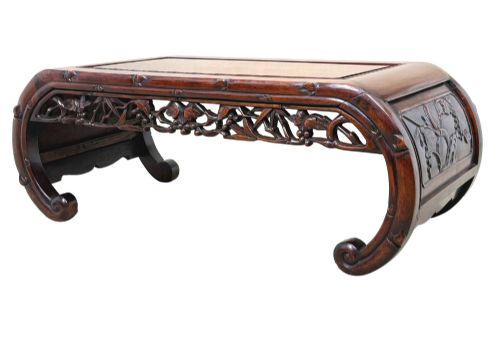
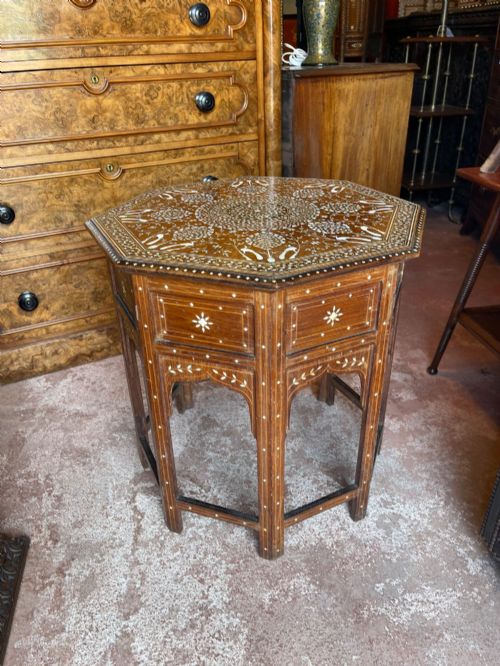
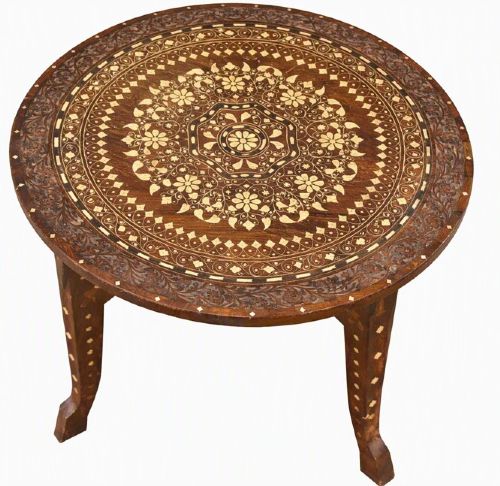
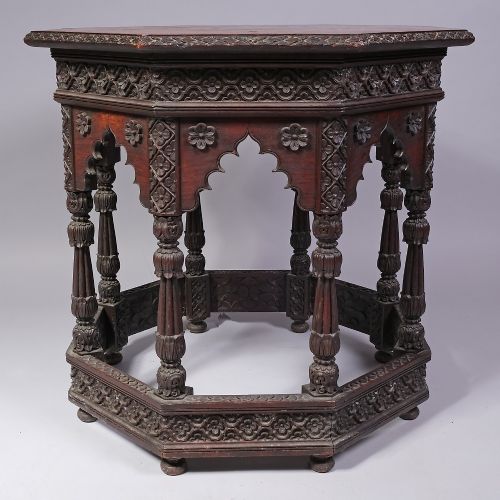
Chinese examples often display traditional Qing Dynasty carving, scroll-ends, and floral motifs executed in dense rosewood, padouk, or hongmu. Indian variations, including Anglo-Indian production from Hoshiarpur, introduce octagonal silhouettes alongside extensive bone inlay and intricate surface carving.
How they were made
Cabinetmakers utilised dense hardwoods such as rosewood, hongmu, and padouk, selecting timber with heavy natural weight and deep colouration. These heavy woods allowed workshops to construct stable frames without excessive bulk, supporting functional surfaces for daily use.
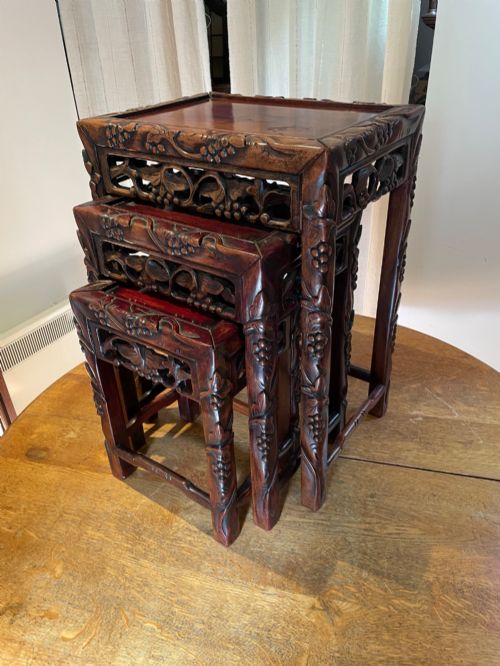
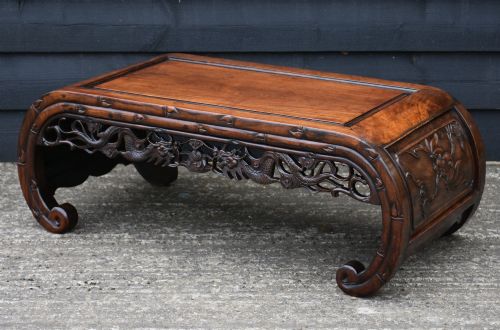
Surface ornamentation involved deep relief carving of floral patterns and dragons, alongside contrasting geometric or figurative bone inlay. Some pieces integrated marble inserts into the wooden framework, providing durable centres resistant to heat and moisture.
Oriental Rosewood Tea Tables Retail Price Guide 2026
Typical asking prices for oriental rosewood tea tables among the pieces listed under this phrase on Sellingantiques today, from the lower quarter to the upper quarter. They describe what is for sale here now, not the wider market.
Materials recorded across the selection include rosewood, hongmu, padouk, marble, and bone inlay.
What varies in quality
The standard of execution in the carving separates standard production from exceptional examples, with superior pieces showing crisp depth and well-defined motifs rather than shallow or hurried lines. Joinery also dictates durability, where tight, well-fitted joints maintain stability across nesting sets and folding bases.
Material selection creates further distinction, with dense, uniform hongmu and finely grained rosewood commanding greater visual weight than mixed hardwoods. The precision of bone inlay work and the integration of fitted marble tops determine the overall refinement of the piece.
Liberty and Co
The Oriental Rosewood Tea Tables Glossary
- Hongmu
- A traditional Chinese term for dense hardwoods, often translated as red wood. It encompasses several heavy timber species prized for deep colour and strength.
- Kang table
- A low platform table traditionally placed upon a heated brick bed in northern China for dining or resting. These low forms translate well to modern coffee table heights.
- Hoshiarpur
- A centre of woodworking in India known for intricate geometric and figurative inlay. Pieces from this region utilise bone set into dark hardwood surfaces.
- Padouk
- A durable tropical timber with reddish-brown tones used in Chinese furniture construction. It provides a sturdy alternative to rosewood while sharing similar heavy density.
Oriental Rosewood Tea Tables: Frequently Asked Questions
What is a Kang table?
A Kang table is a low form originally designed to sit on a heated sleeping platform in traditional Chinese homes. They function well today as low coffee tables.
Their short legs and sturdy frames provide a solid surface while keeping a low profile in a room.
How do nesting tables work?
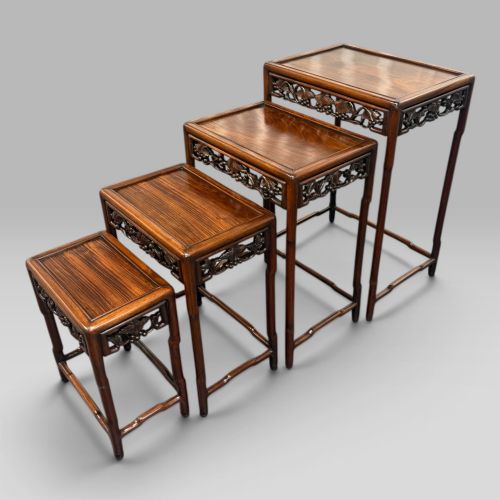
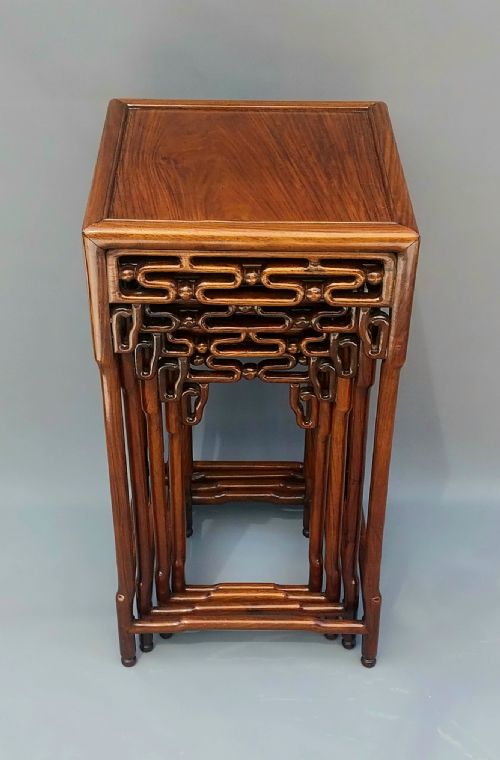
Nesting tables consist of graduated sets where smaller tables slide neatly beneath the largest one. This design saves floor space when tables are not in use.
Sets typically comprise three or four pieces sharing matching carved details and timber types.
What is Hongmu timber?
Hongmu is a collective Chinese term for dense, heavy hardwoods that include various rosewood species. Furniture made from this material possesses significant weight and natural dark colouration.
Over decades of use, the wood develops a rich patina on exposed surfaces.
Where were inlaid tables made?
Many inlaid occasional tables originate from Hoshiarpur in India, where artisans specialised in bone inlay. These pieces feature dense geometric patterns across octagonal surfaces.
Makers sometimes marked their output, as seen with retailer stamps from the period.