







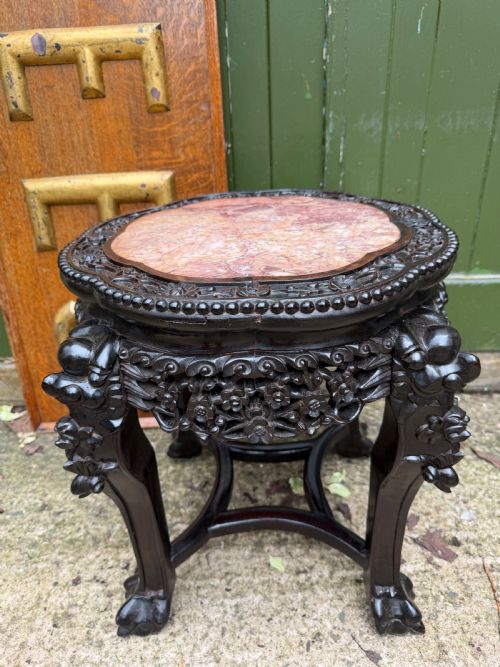

Chinese Carved Occasional Tables
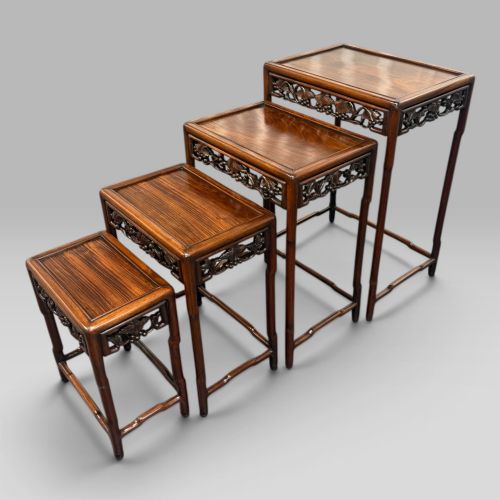
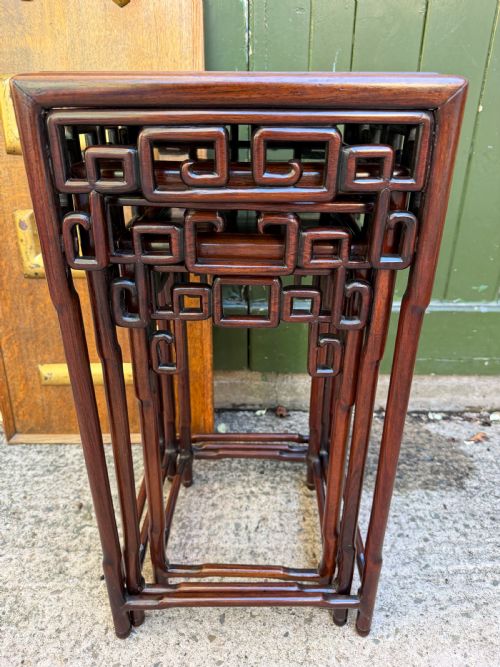
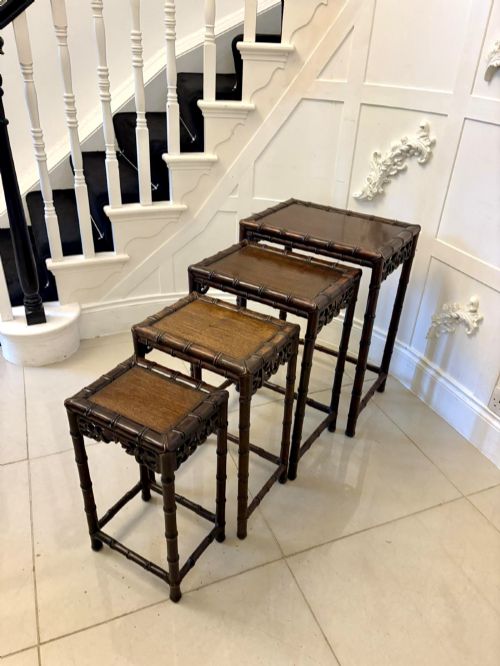
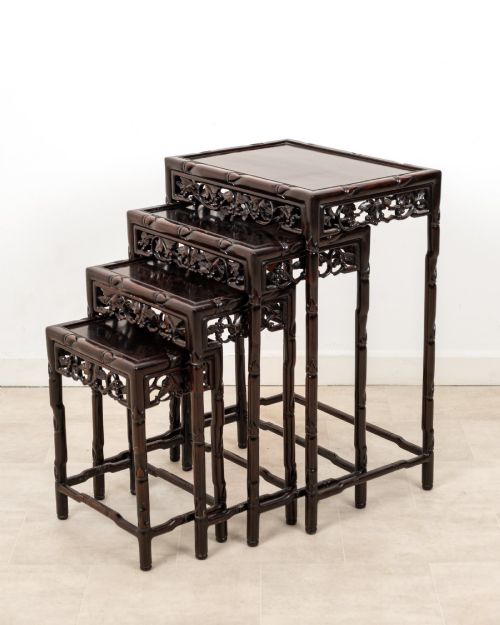
These Chinese carved occasional tables bring substantial hardwood construction, intricate floral motifs and versatile nesting forms into a room.
Chinese Carved Occasional Tables
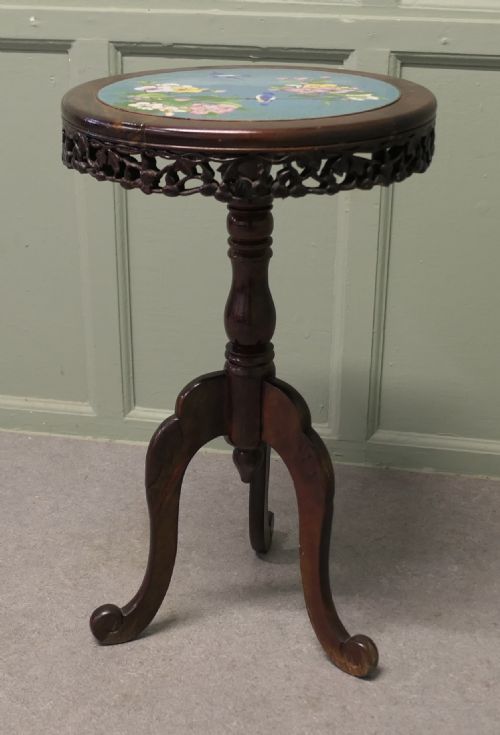
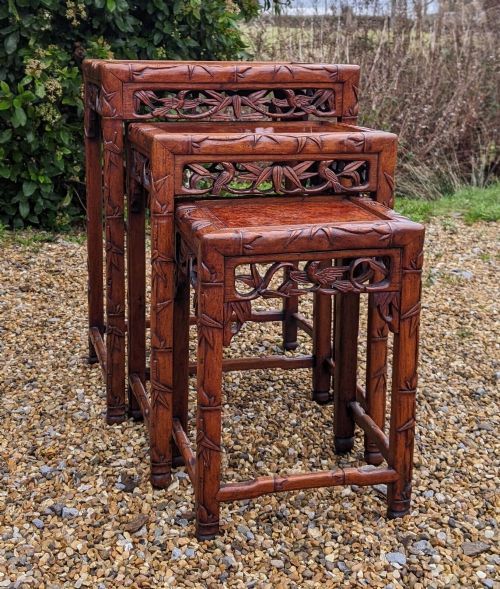
Chinese carved occasional tables span nesting sets, low tea tables, plant stands and side surfaces originating predominantly from the late nineteenth century through to the early twentieth century. You will frequently encounter sets of graduated tables designed to stack together, alongside single square or round lamp tables.
The selection ranges from traditional Qing Dynasty pieces utilising dense hardwoods to export items made for Western interiors. Makers employed forms such as nests of four, folding frames and low jardiniere stands to suit domestic utility.
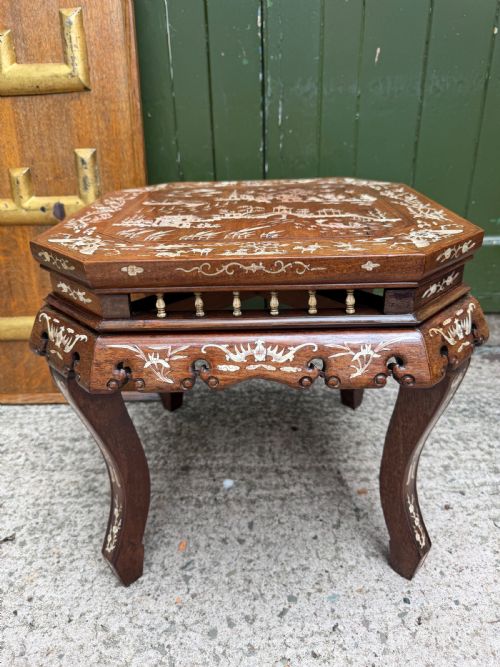
Materials include rosewood, teak and huanghuali, often combined with inset marble tops or mother-of-pearl and bone inlay. These surfaces function effectively as lamp stands, side tables or coffee tables in contemporary settings.
Materials and Construction
Carpenters relied on dense Asian hardwoods like rosewood, huanghuali and hongmu, chosen for their ability to hold deep, undercut relief carving without splitting. Tables frequently incorporate mortise and tenon joinery to maintain stability across nesting sets and folding frames.
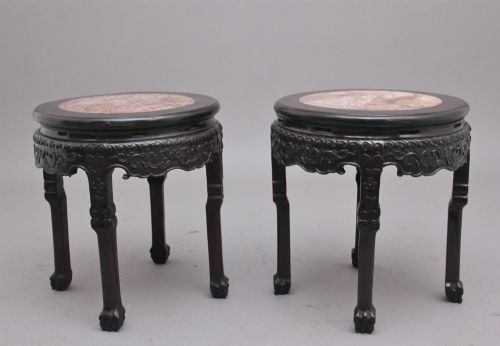
Surfaces often feature inset panels of variegated rouge marble, quartz or polished stone fitted flush into the wooden frames. Decoration extends to bone inlay, mother-of-pearl detailing and intricate hand-carved motifs depicting dragons, birds and floral arrangements.
Chinese Carved Occasional Tables Retail Price Guide 2026
Typical asking prices for chinese carved occasional tables among the pieces listed under this phrase on Sellingantiques today, from the lower quarter to the upper quarter. They describe what is for sale here now, not the wider market.
Objects span the eighteenth, nineteenth and early twentieth centuries, including Victorian and Qing Dynasty periods.
Quality and Craftsmanship
The standard of a piece rests upon the crispness and depth of the hand carving, where superior examples exhibit sharp undercutting and well-defined floral or dragon details rather than soft, shallow incisions. Timber selection dictates the base merit, with dense grains, rich colour and well-matched sets of nesting tables commanding greater attention.
Construction integrity separates standard items from finer work, particularly in the precision with which nesting tables slide together and the careful seating of inset marble or quartz tops. Inlay work also varies, with tightly fitted mother-of-pearl or bone decoration demonstrating superior workshop practice.
The Chinese Carved Occasional Tables Glossary
- Hongmu
- A category of dense, heavy Asian hardwoods translated literally as red wood. It encompasses various heavy timber species used for traditional furniture.
- Huanghuali
- A prized aromatic hardwood prized for its striking grain patterns and warm colour. It appears frequently in high-status Qing period tables.
- Jardiniere stand
- A tall, small-topped table designed specifically to hold heavy plant pots or floral displays. These often feature inset marble surfaces to protect the wood from moisture.
- Nesting tables
- A set of graduated tables designed to slide neatly beneath one another to save floor space. They appear often in sets of three or four.
- Chinoiserie
- European decorative style imitating Chinese artistic traditions. Pieces of this type often incorporate lacquerwork, painted birds and floral motifs.
Chinese Carved Occasional Tables: Frequently Asked Questions
How do I use a nest of tables?
Nesting sets offer flexible surface space by stacking into a single compact footprint when not required. You can separate the graduated tables around a room to hold lamps, drinks or books during gatherings.
Their modular nature makes them practical for smaller rooms or beside seating areas where extra surfaces are needed temporarily.
What are marble top tables used for?
Marble and quartz inserts provide a durable, heat-resistant surface suitable for holding heavy plant pots, lamps or drinks. The stone adds weight and stability to smaller occasional tables and stands.
These stone surfaces also introduce contrasting textures and colours to the dense hardwood frames.
How do I care for antique hardwood tables?
Maintain the timber by dusting regularly with a soft, dry cloth and avoiding placement near direct heat sources or strong sunlight. Excessive temperature fluctuations can cause dense hardwoods and fitted stone inserts to shift.
Occasional application of appropriate wax helps preserve the lustre of the wood without building up a heavy residue.
Are these tables sturdy enough for daily use?
Traditional mortise and tenon construction provides robust structural integrity for everyday tasks like holding lamps, cups or decorative items. The heavy hardwoods utilised in these pieces inherently resist standard wear.
Care should be taken with folding mechanisms or delicate carved aprons when moving the tables between rooms.