




Chinese Floral Carved Tables
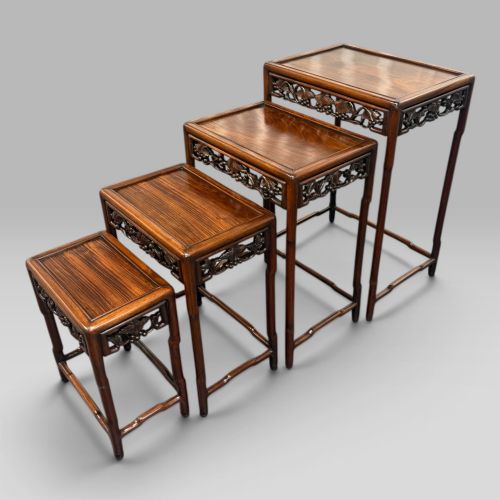
These Chinese floral carved tables bring intricate carving and rich rosewood or hardwood into a room as plant stands, nests, and low coffee tables.
Chinese Floral Carved Tables
Chinese floral carved tables encompass a diverse range of forms designed for display and utility, including nesting tables, plant stands, altar tables, and coffee tables. When exploring this selection, buyers frequently encounter pieces from the late nineteenth century and the early twentieth century, spanning the Victorian and Qing Dynasty periods.
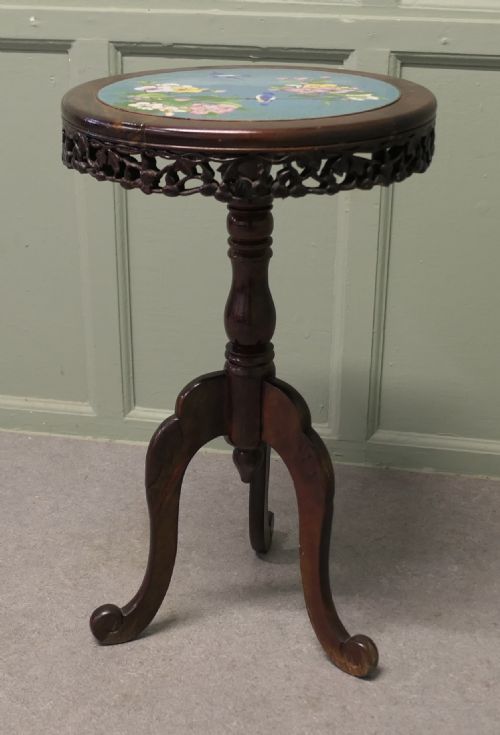
Forms vary from tall jardiniere stands to low coffee tables, utilising specific local timbers and occasionally incorporating inset marble panels or cloisonné elements. Each piece serves a distinct domestic function, whether supporting a heavy porcelain vase or resting beside a seating arrangement.
Materials and construction methods
Construction relies heavily on dense hardwoods such as rosewood and ebonised timber, which provide the structural integrity required for intricate relief carving without splitting. Artisans shaped these materials using traditional joinery techniques that allowed frames to accommodate heavy stone inserts like marble tops securely.
Surface decoration frequently involves deep floral carving into the solid wood, alongside occasional lacquer work, painted details, or brass accents. The integration of contrasting materials, including porcelain or cloisonne enamel on related forms, demonstrates the diverse decorative repertoire of the workshops.
Chinese Floral Carved Tables Retail Price Guide 2026
Typical asking prices for chinese floral carved tables among the pieces listed under this phrase on Sellingantiques today, from the lower quarter to the upper quarter. They describe what is for sale here now, not the wider market.
The furniture spans multiple forms, including plant stands, nest of tables, wine tables, altar tables, and low coffee tables.
Distinctions in quality and execution
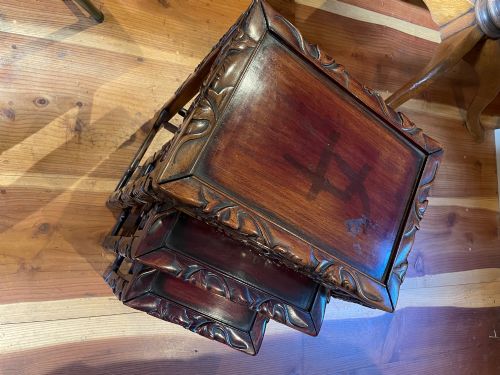
Quality in these tables is determined by the depth and crispness of the floral carving, where superior examples exhibit undercut foliage and well-defined petals rather than shallow, mechanical incisions. The choice of timber also dictates standard, with dense rosewood and heavy Hongmu achieving greater desirability than softer or generic hardwoods.
Structural refinement separates the finest items, evident in the snug fit of nesting sets, the stability of tall plant stands, and the careful selection of inset marble panels. Tables that retain their original surfaces and display balanced proportions across graduated sets represent the upper tier of the range.
The Chinese Floral Carved Tables Glossary
- Hardwood
- A dense timber used in traditional furniture making, prized for its durability and capacity to hold fine, sharp detail during carving. Rosewood and Hongmu fall into this robust category.
- Quartetto
- A set of four graduated tables designed to slide neatly beneath one another when not in use. These sets are often encountered in nineteenth-century Chinese export groups.
- Jardiniere stand
- A tall, slender pedestal or table specifically constructed to elevate heavy plant pots or floral arrangements. They frequently feature circular marble tops inset into carved wooden frames.
- Altar table
- A longer, narrow form traditionally placed against a wall, characterised by upturned flange ends and structured joinery. These pieces showcase formal joinery and balanced proportions.
- Opium table
- A low coffee table or stool traditionally used for sitting or lounging near floor level. They are built with sturdy hardwood frames and subtle surface decoration.
Chinese Floral Carved Tables: Frequently Asked Questions
How are nesting tables used?
Nesting tables provide flexible surface space that adapts easily to entertaining or daily living. The graduated set can be separated around a room or stored compactly as a single unit.
They slide together beneath one another to save floor space while keeping additional tables close at hand. This design suited both nineteenth-century drawing rooms and contemporary interiors alike.
What is a plant stand used for?
A plant stand elevates decorative flora, urns, or porcelain vases to eye level within a room. Their tall, narrow proportions allow them to occupy tight corners without cluttering the floor space.
The sturdy hardwood and inset marble tops provide a stable, water-resistant surface capable of supporting heavy ceramic vessels safely.
How do I care for rosewood tables?
Rosewood tables require minimal maintenance beyond regular dusting with a soft, dry cloth to protect the polished timber. Avoid placing them near direct heat sources or strong sunlight to prevent the wood from drying out.
Applying occasional natural wax helps preserve the lustre of the carved surfaces. Care must be taken around inset marble panels to prevent moisture accumulation in the surrounding joints.
How do I identify a Qing Dynasty piece?
Qing Dynasty pieces are identified through traditional construction methods, dense native hardwoods, and characteristic carving motifs such as flora and fauna. The materials often include heavy rosewood or Hongmu combined with traditional joinery.
Examining the patina and the depth of the hand carving helps distinguish authentic period items from later revival pieces. Each workshop utilised specific stylistic cues that reflect the era's aesthetic priorities.