
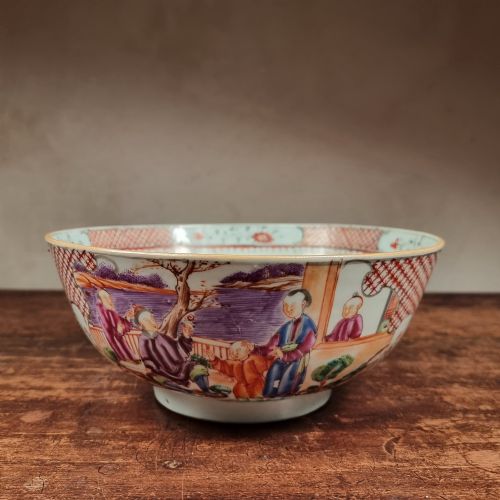
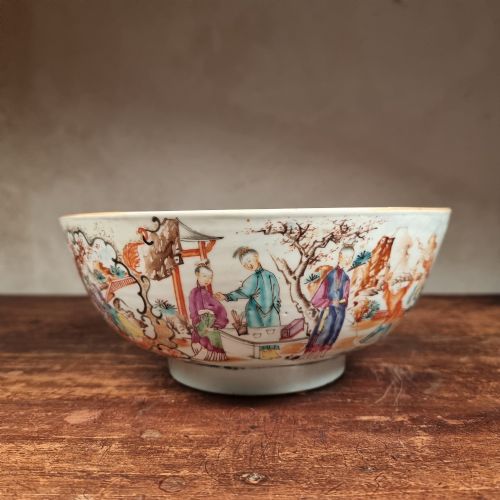
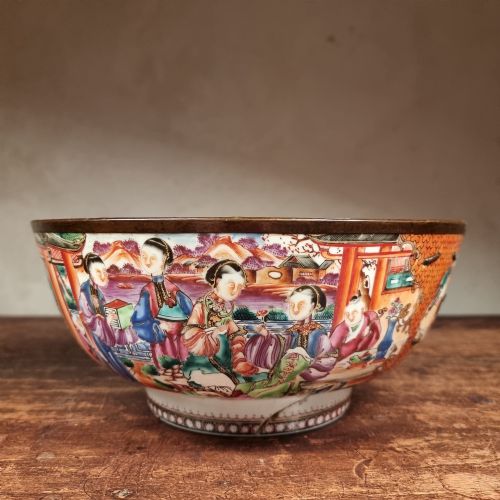
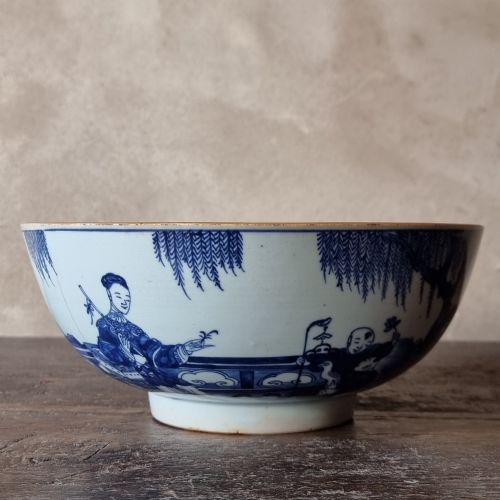




Oriental Porcelain Punch Bowl
An oriental porcelain punch bowl brings centuries of export artistry into the home, offering deep forms made for communal drinking.
Oriental Porcelain Punch Bowl
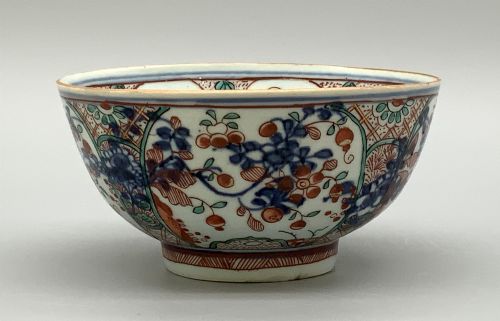
An oriental porcelain punch bowl serves as a capacious vessel designed for mixing and serving communal drinks during grand gatherings. These pieces range from deep 18th-century Chinese Kangxi and Ming dynasty examples to later 19th-century Japanese Imari and Satsuma productions.
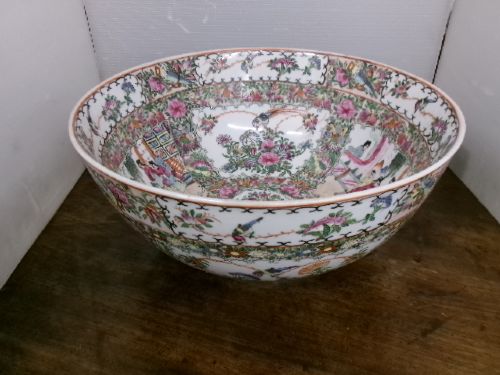
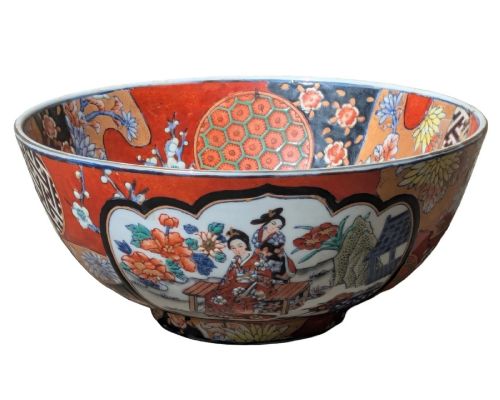
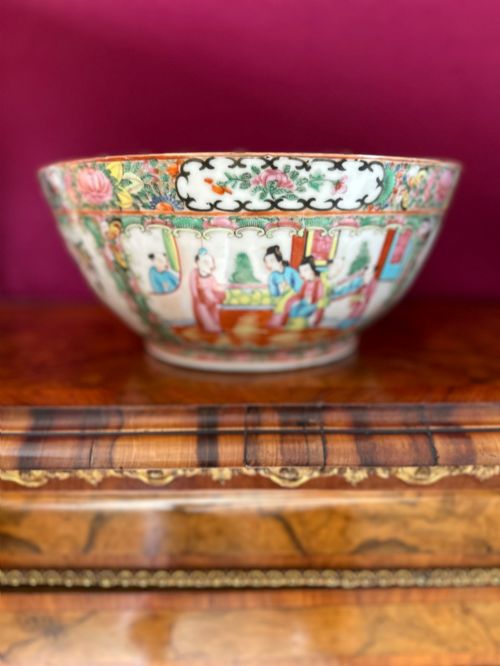
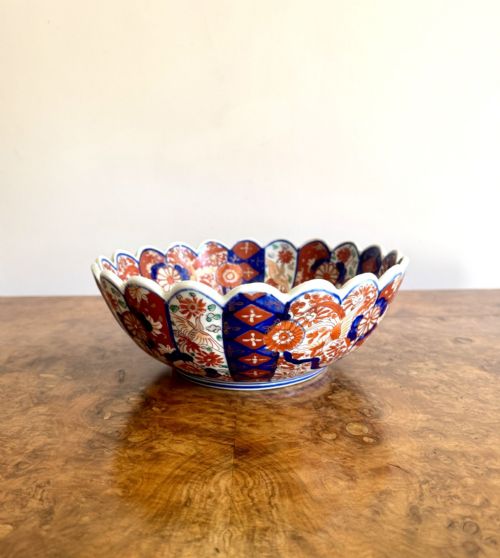
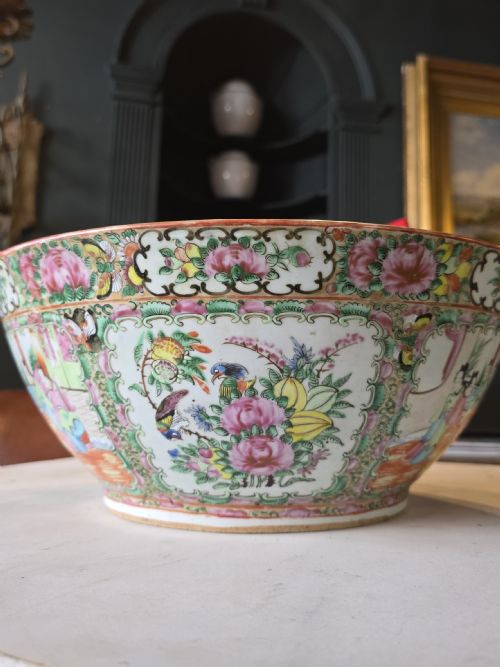
Buyers on this page most frequently encounter 19th-century Japanese Imari bowls alongside Chinese Canton and Famille Rose pieces. Forms vary from simple circular basins to scalloped-edge centrepieces and large decorated bowls.
Origins span multiple periods including the Qing dynasty, Meiji period, and Victorian eras. The listings capture both blue and white scholar designs and heavily painted polychrome export wares.
What varies in quality
The precision and detail of the hand-painted motifs separate simpler utility items from superior artistic commissions. Crisp brushwork in cobalt blue or finely delineated enamel and gold leaf indicate a higher grade of manufacture.
The weight, throwing consistency, and clarity of the porcelain body also distinguish the tier of the piece. Superior bowls display balanced proportions and controlled glazing without excessive kiln defects.
Listings span centuries of production, recording both 16th-century Ming dynasty porcelain and extensive 19th-century Japanese Imari and Satsuma wares.
Ryuzan
The Oriental Porcelain Punch Bowl Glossary
- Imari
- A style of Japanese porcelain featuring a distinctive palette of underglaze blue, iron red, and gilt highlights. These wares were heavily exported to Europe from the port of Imari.
- Famille Rose
- A major palette of Chinese ceramic enamel colours dominated by pink or rose opaque overglaze enamels. Introduced in the Qing dynasty, it allowed for nuanced shading in floral and figural scenes.
- Canton
- A style of Chinese export porcelain decorated in vibrant polychrome enamels, often featuring panels of figures and birds surrounded by dense floral borders. Production centred around the port city of Guangzhou.
- Satsuma
- A type of earthenware from Japan characterised by a ivory-coloured cracked glaze decorated with elaborate enamel patterns and raised gold. Satsuma wares gained great popularity during the Meiji period.
- Cobalt Glaze
- An intense blue mineral pigment applied under the glaze before firing to create enduring cobalt blue motifs on porcelain vessels. It withstands high kiln temperatures without losing definition.
Oriental Porcelain Punch Bowl: Frequently Asked Questions
What was a punch bowl used for?
These large bowls served large quantities of mixed punch during social gatherings and banquets in past centuries. Guests would ladle the drink directly from the central vessel into individual cups.
Over time, their generous proportions and decorative exteriors also allowed them to function as ornamental centrepieces when not in active use.
How do I date an oriental punch bowl?
Dating relies on examining the painting style, glaze characteristics, and potting techniques recorded across periods like the Ming dynasty or Meiji period. Specific motifs and colour palettes help link pieces to particular manufacturing eras.
Comparing the base treatment and weight further assists in separating earlier 18th-century examples from later 19th-century export wares.
Can I use these bowls for serving food?
Most antique pieces function best as decorative objects or dry centrepieces rather than for active food service. Historic glazes and age-related wear make modern culinary use impractical.
Gentle cleaning with a soft cloth preserves the delicate enamel and gold leaf decorations found on these fragile ceramics.
How do Imari and Satsuma differ?
Imari pieces consist of hard porcelain decorated with underglaze blue, iron red, and gold, featuring crisp metallic resonance when tapped. Satsuma pieces are typically earthenware with an ivory crackle glaze and dense polychrome enamel painting.
Both styles emerged from Japan but utilised entirely different clay bodies and firing traditions.