





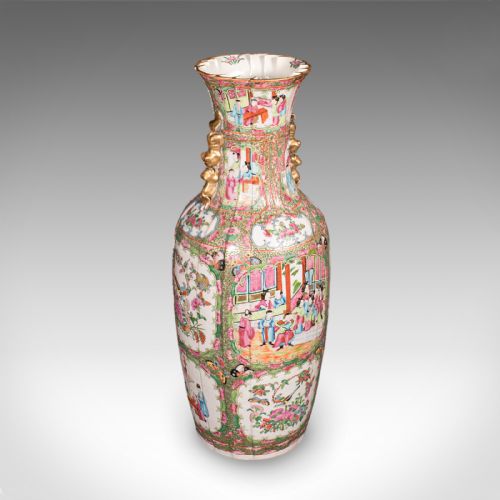
19th Century Famille Rose
The search for 19th century famille rose reveals hand-painted porcelain objects defined by vibrant pink enamels, sought after for their intricate detail and historical presence.
19th Century Famille Rose
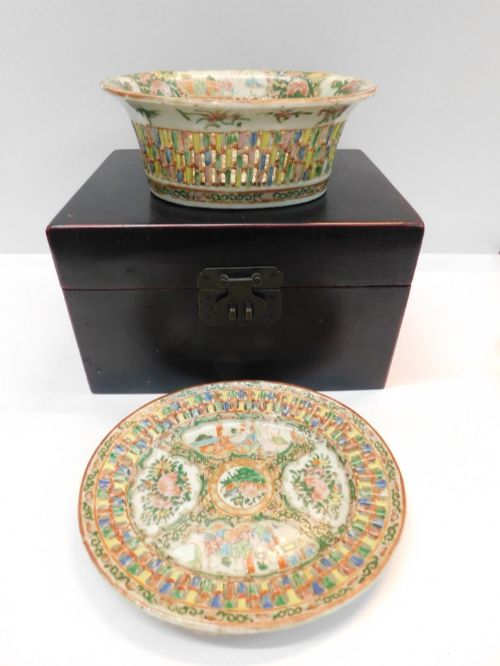
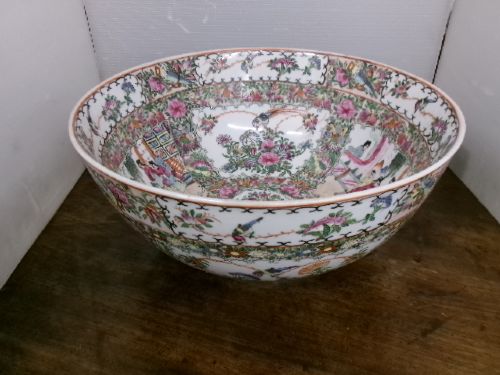
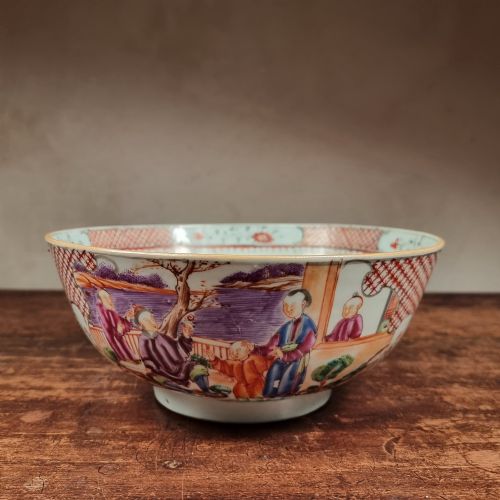
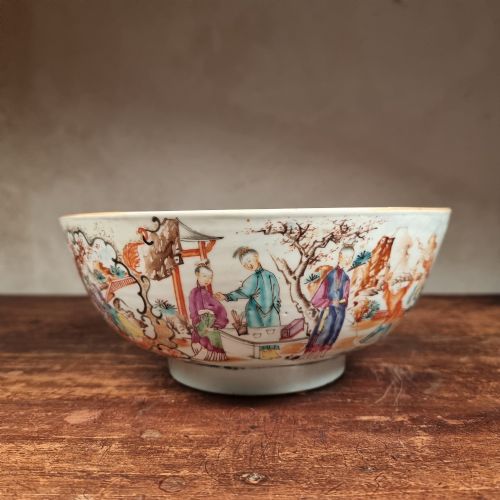
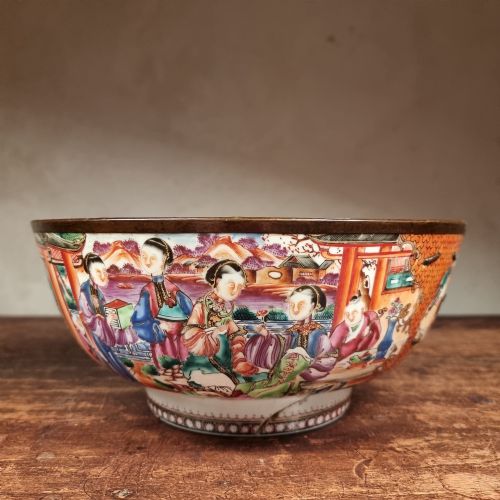
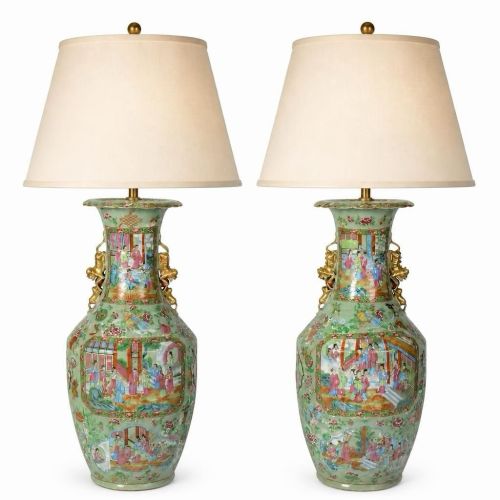
Items associated with the search for 19th century famille rose comprise a diverse array of ceramics produced during the Qing Dynasty, particularly within the Canton region, alongside European interpretations. Buyers encounter numerous large punch bowls, decorative vases, garden seats, and table lamps adapted from earlier vessels.
Vessels span utilitarian forms like brush pots and lidded boxes as well as monumental floor vases and pedestal dishes. Many pieces date from the mid to late decades of the nineteenth century, reflecting both domestic Chinese output and items made specifically for export.
How they were made
Production centres on porcelain bodies finished with overglaze enamels, where the characteristic opaque pink enamel derived from gold takes a central role. Artisans applied detailed hand-painted scenes often enhanced with gilding and gold leaf.
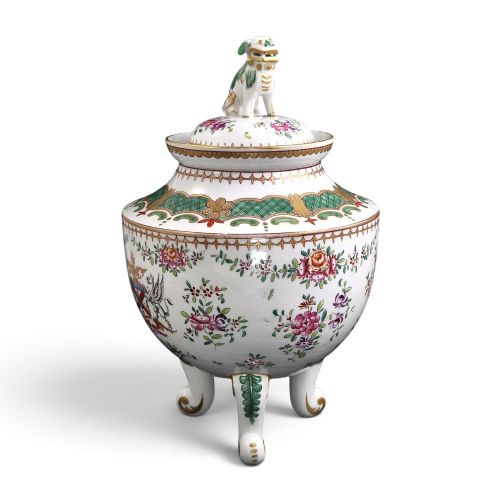
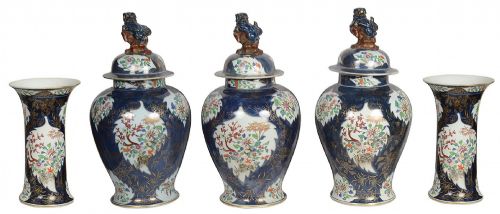
Certain objects incorporate mounts of brass, ormolu, or fabric elements added during later adaptations into lamps or decorative furnishings. European makers such as Samson of Paris also utilised porcelain and enamel to replicate Chinese export styles.
A reclining beauty and immortal figures peek out from tiny snuff bottles, proving that grandeur comes in pocket-sized containers.
What varies in quality
The standard of 19th century famille rose depends heavily on the precision and density of the hand-painted motifs, where finely rendered figural scenes and botanical details elevate a piece above standard repetitive output. The vibrancy of the enamel and the sparing, effective use of gilding dictate visual impact.
Structural scale and condition also divide the range, with monumental floor vases, intact punch bowls, and specialist items like snuff bottles commanding attention for their survival and artistic execution.
Samson of Paris
The 19th Century Famille Rose Glossary
- Famille Rose
- A palette of Chinese porcelain enamels dominated by an opaque pink colour derived from gold, introduced during the Qing Dynasty.
- Canton
- A major port in southern China associated with export porcelain decorated with crowded figural and floral panels.
- Overglaze enamel
- Pigments applied over the fired and glazed porcelain surface before undergoing a secondary, lower-temperature kiln firing.
- Rose Medallion
- A distinct pattern featuring alternating panels of figures, birds, and flowers painted in rich enamel colours.
- Ormolu
- Gilded bronze used for decorative mounts on ceramics, frequently seen on pieces converted into lamps during the nineteenth century.
19th Century Famille Rose: Frequently Asked Questions
What is famille rose porcelain?
Famille rose refers to Chinese porcelain decorated with a distinctive opaque pink enamel palette. The style emerged during the Qing Dynasty and became widely popular for export wares.
Artisans used these vibrant enamels to depict floral compositions, birds, and narrative figural scenes, often enriched with gilt detailing.
How do I identify Canton porcelain?
Canton porcelain is characterised by hand-painted panels crowded with people, birds, and butterflies set against botanical backgrounds. These pieces originated in the southern Chinese port for the export market.
The compositions frequently alternate between figural scenes and floral motifs within geometric borders.
Were these pieces used as lamps?
Many nineteenth-century vases and ginger jars were fitted with ormolu or brass mounts to function as table lamps. This adaptation often occurred later in the history of the object.
Such conversions allowed decorative ceramics to serve contemporary domestic lighting needs while retaining their original hand-painted surfaces.