







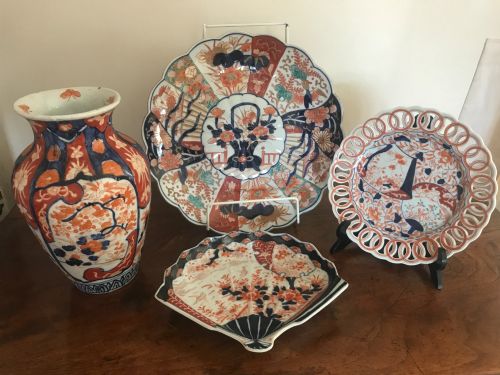
Oriental Porcelain Charger Dish
An oriental porcelain charger dish brings substantial presence to a room, offering broad painted surfaces shaped in Qing dynasties or Japanese Meiji periods.
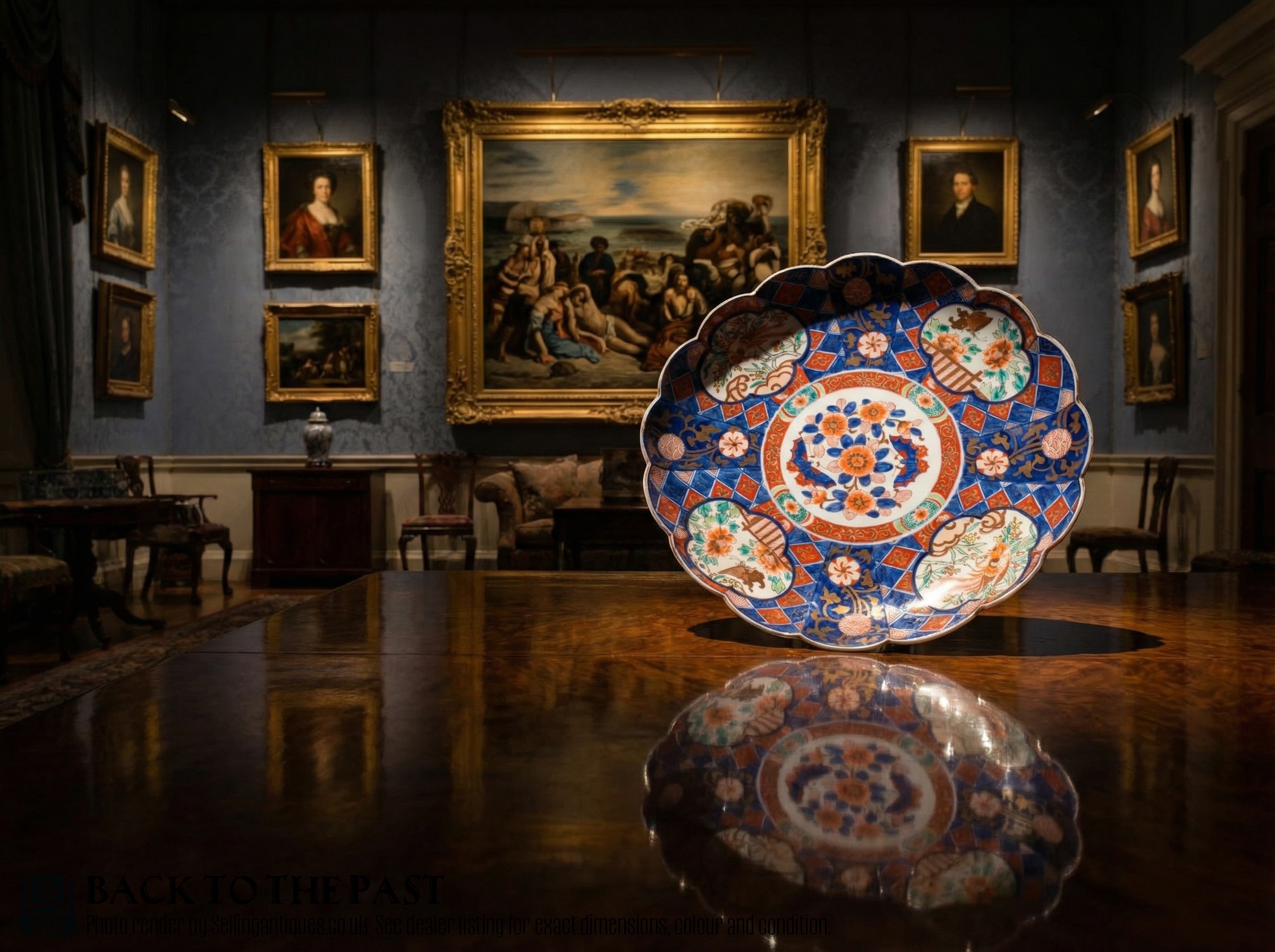
Oriental Porcelain Charger Dish
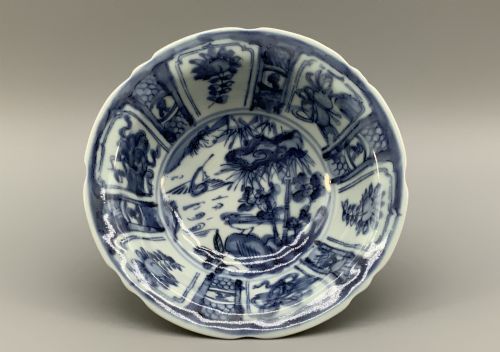
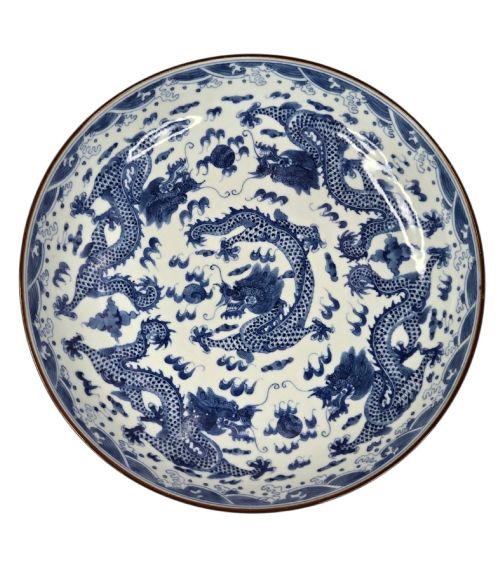
An oriental porcelain charger dish is a large decorative plate or charger made for display, originating from workshops in China and Japan across several centuries. These pieces encompass forms ranging from Kangxi period blue and white porcelain bowls to large Meiji period Imari chargers.
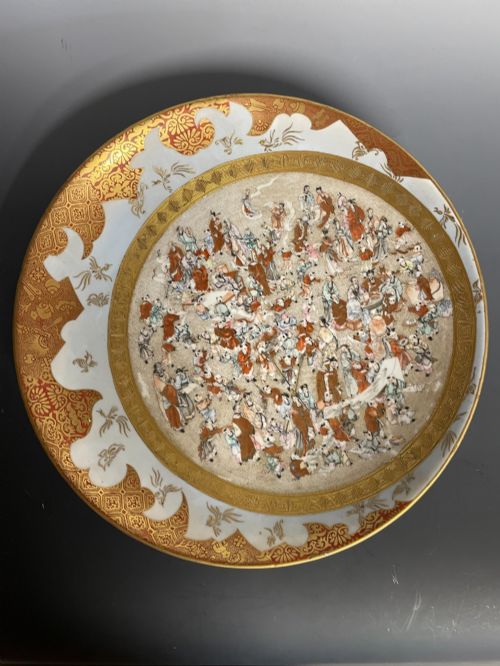
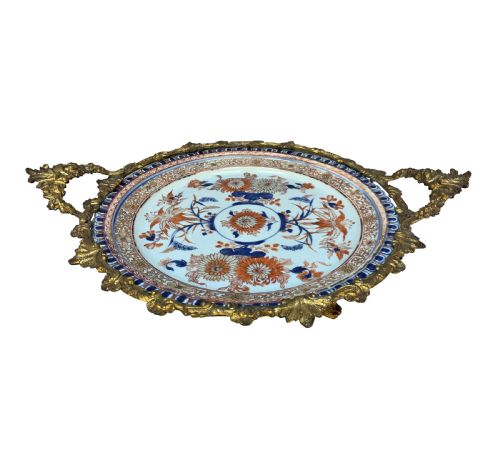
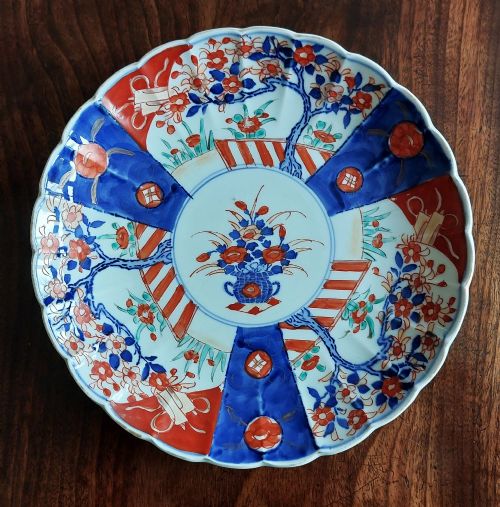
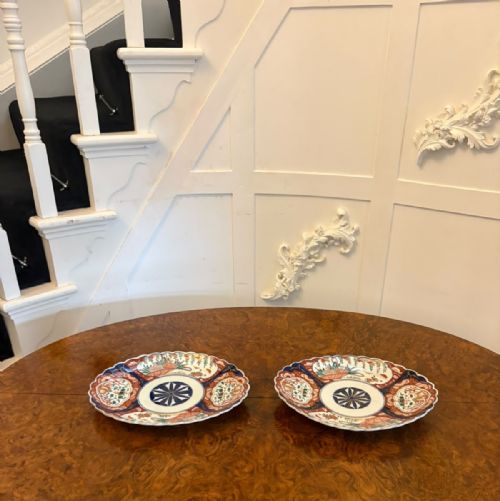
Buyers encountering this search phrase will most frequently meet Japanese Imari chargers and plates dating from the nineteenth and early twentieth centuries. These pieces often display scalloped edges, hexagonal or square shapes, and intricate hand-painted floral, bird, or landscape designs.
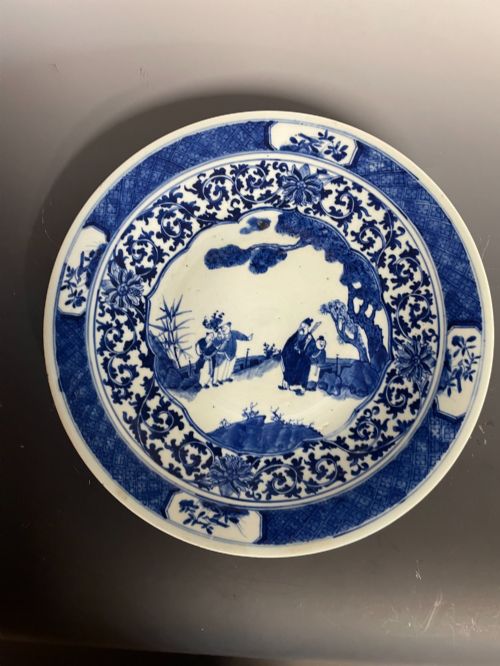
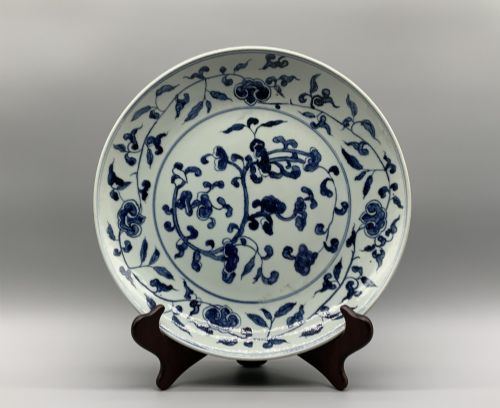
Earlier examples span Chinese export porcelain, Qing dynasty dragon chargers, and Swatow ware dishes from the seventeenth century. The selection balances robust blue and white wares with vibrantly coloured palette designs mounted in ormolu or left in their original state.
How they were made
Potters shaped fine clay into heavy circular, lobed, or oval bodies, applying cobalt underglaze pigments before firing to create deep blue motifs. Artisans layered enamel colours, gold leaf, and gilding over the glaze in subsequent low-temperature firings, adding rich metallic details to birds, flowers, and geometric borders.
Techniques varied between the precise cobalt painting of Chinese imperial kilns and the bustling hand-painted output of Japanese export workshops. Artisans employed moriage relief work on Satsuma wares, building up raised enamel designs that gave tactile depth to peonies and peacocks.
Listings span centuries of production, including eighteenth-century Chinese export wares and nineteenth-century Japanese Imari plates.
What varies in quality
Quality rests upon the crispness of the hand-painted brushwork, the depth and clarity of the cobalt underglaze, and the richness of the applied gilding. Pieces displaying meticulous control in complex avian or floral compositions stand apart from simpler commercial output.
The weight, stability, and symmetry of the porcelain body also dictate worth, alongside the preservation of delicate enamel colours and gold leaf. Superior examples demonstrate a confident harmony between the clay form and the painted surface decoration.
Koshida
The Oriental Porcelain Charger Dish Glossary
- Charger
- A large decorative plate or dish intended for display rather than table service. These wide vessels provide an expansive canvas for detailed painterly scenes.
- Imari
- A style of Japanese export porcelain characterised by a palette of underglaze blue, iron red, and supplementary gold. The style originated in Arita and became immensely popular in European interiors.
- Cobalt Underglaze
- A mineral pigment painted directly onto the unglazed porcelain body before a clear glaze is applied. This technique protects the blue pigment beneath a glassy surface during high-temperature kiln firings.
- Moriage
- A Japanese ceramic technique where slip or enamel is piped onto the surface in raised dots or lines. This creates a textured, three-dimensional effect across floral and avian motifs.
Oriental Porcelain Charger Dish: Frequently Asked Questions
How were these large dishes displayed historically?
These large plates and chargers were often mounted on walls, placed on sideboard furniture, or set into specialised metal or ormolu stands for prominent interior display.
Their substantial scale made them focal points in formal dining rooms and parlours across European and Asian households.
How do I distinguish Chinese from Japanese pieces?
Chinese examples frequently utilise deep cobalt underglaze blue and famille rose enamels on porcelain bodies dating back to the Ming and Qing dynasties.
Japanese wares, particularly from the Meiji period, often combine iron red and cobalt blue with dense gilt highlights in distinct Imari or Satsuma styles.
Can I use these dishes for serving food?
These pieces are predominantly decorative works of art designed for visual appreciation rather than daily culinary use.
Historic glazes, delicate enamel work, and applied gold leaf are best preserved through careful dry dusting and secure display.