


Oriental Nested Tables
Oriental nested tables offer a clever space-saving design, bringing graduated surfaces of hardwood and lacquer together for versatile everyday living.
Oriental Nested Tables
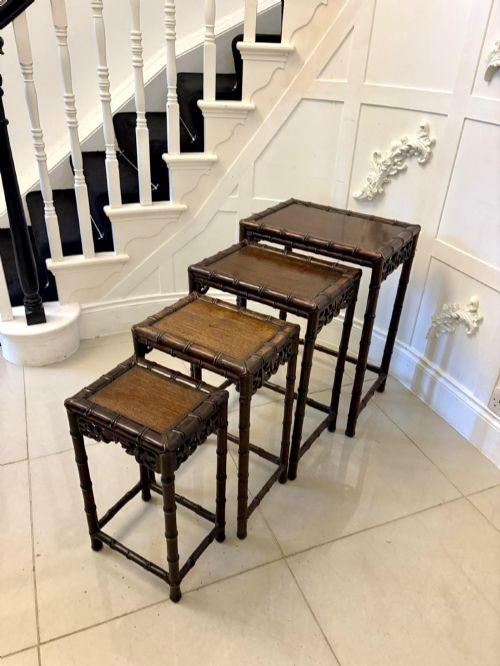
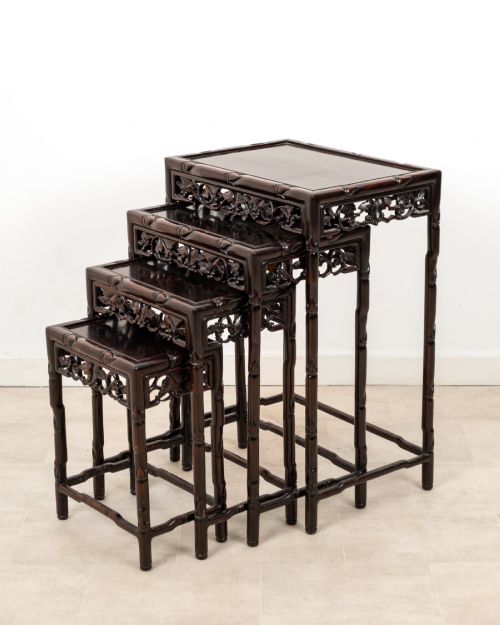
Oriental nested tables comprise sets of three or four graduated tables designed to slide neatly beneath one another when not in use. These pieces primarily emerge from nineteenth-century production alongside early twentieth-century examples spanning Edwardian and Art Deco periods.
Originating as practical occasional furniture, these sets function equally well as side tables or coffee tables in modern interiors. The graduated sizing allows individual tables to scatter around a room for serving before returning to a single compact stack.
Materials and Construction
Cabinetmakers utilised dense timbers including rosewood, teak, huanghuali and hongmu to construct durable frames capable of supporting daily use. These heavy tropical hardwoods often display distinctive natural grain patterns and deep red-brown colouration.
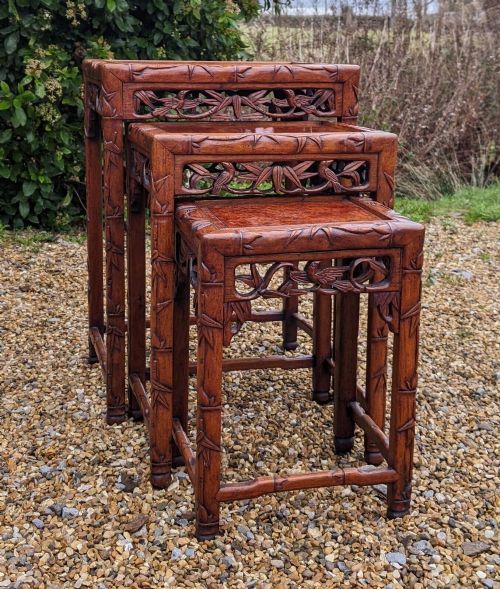
Surface decoration frequently involves black lacquer applied in multiple layers, sometimes embellished with gold leaf or intricate hand-painted Chinoiserie motifs. Carved detailing incorporates floral patterns, bamboo motifs or figurative scenes executed directly into the solid wood.
Listings feature woods such as rosewood, teak, huanghuali, hongmu and burrwood alongside black lacquer finishes.
Distinctions in Craftsmanship
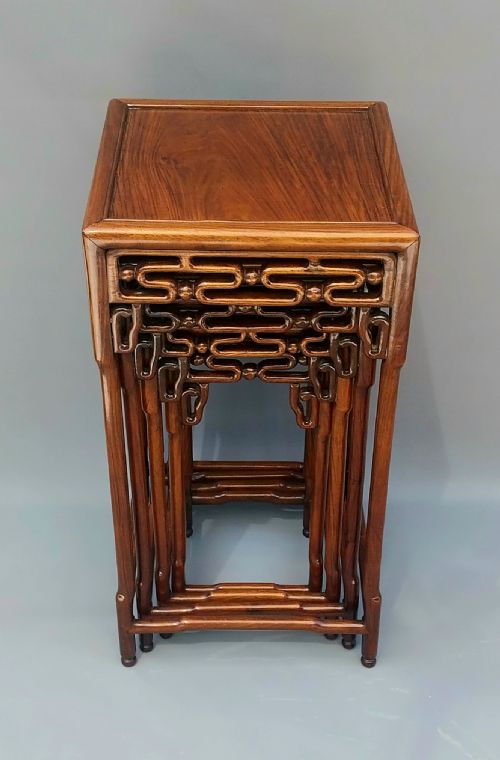
Superior examples demonstrate precise joinery where each smaller table slides smoothly into the frame of the one above without binding or excessive clearance. The integrity of the timber selection dictates longevity, with dense hongmu and figured rosewood representing the upper tier of production.
The refinement of surface embellishment separates standard utility pieces from exceptional decorative work. Hand-carved relief work and finely preserved lacquer with intact gold leaf application denote superior workshop standards.
The Oriental Nested Tables Glossary
- Hongmu
- A dense, dark tropical hardwood favoured in Chinese furniture manufacturing. It translates literally as red wood and yields heavy, durable pieces with a fine natural polish.
- Chinoiserie
- European theatrical interpretation of Chinese artistic traditions. This decorative style employs painted lacquer scenes, figures and landscapes, popular during various revival periods.
- Quartetto
- A traditional term for a set of four small occasional tables designed to nest together. The word derives from Italian musical terminology denoting a group of four.
- Graduated
- Describing tables built in decreasing sizes so each smaller unit fits neatly beneath the preceding one. This proportioning ensures the entire stack occupies the footprint of the largest single table.
Oriental Nested Tables: Frequently Asked Questions
How do you arrange nested tables?
The tables stack vertically in order of size to occupy minimal floor space when not in use. Simply slide them out individually and place them around a room as needed for drinks or books.
Grouping them together creates a tiered display surface for lamps or ornaments. They offer flexible utility without demanding permanent room layout changes.
What is the difference between hardwood and lacquer sets?
Hardwood sets showcase the natural grain of timbers like rosewood, huanghuali or teak through polished surfaces. These emphasise structural carving and timber figure.
Lacquer sets feature painted wooden bases coated in resin finishes, often highlighting Chinoiserie artwork or gold leaf details. Both types follow the same graduated nesting format.
Can these tables be used as coffee tables?
Many sets function effectively as coffee tables by pulling the individual pieces apart around a central seating area. Their lower heights suit placement before sofas and armchairs.
When joined together, the stack serves as a compact surface that adapts to changing space requirements. This versatility made them popular throughout the nineteenth and twentieth centuries.
How do I identify the period of a set?
Nineteenth-century examples often display traditional Chinese joinery and dense rosewood or hongmu construction. Pieces from the early twentieth century frequently incorporate Edwardian or Art Deco stylistic influences alongside British interpretations like Queen Anne legs.
Examination of the timber weight, lacquer ageing and carving style helps distinguish nineteenth-century production from later revivals. Cabinetmaking techniques evolved subtly across these decades.