

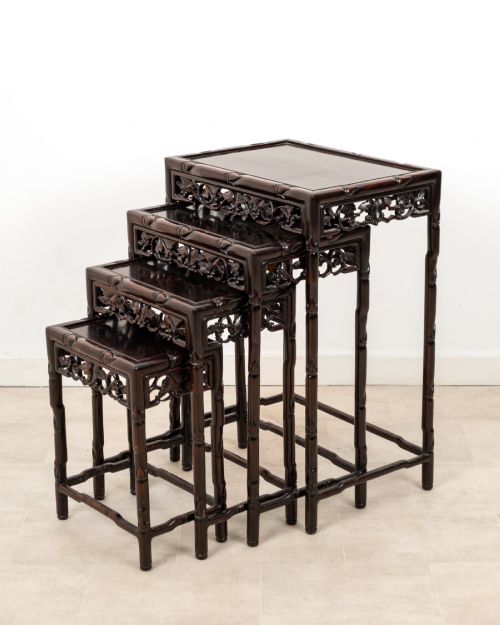
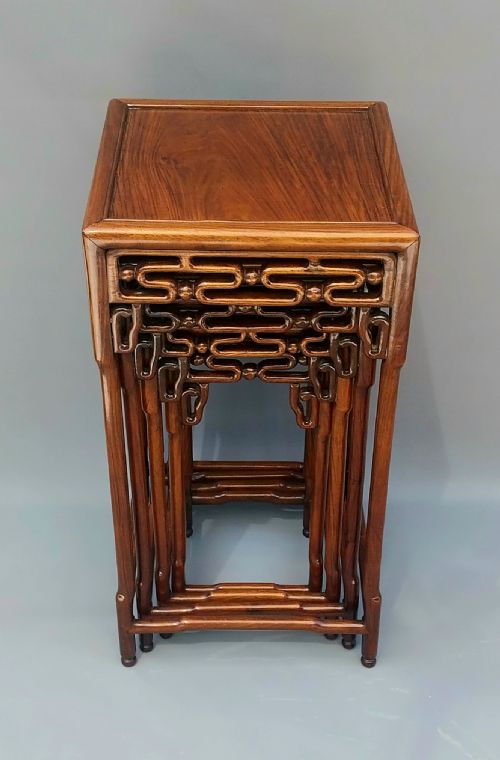


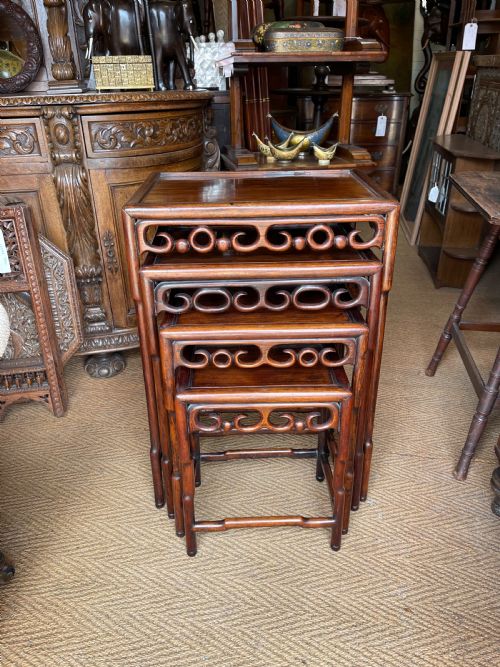

Oriental Nest of Four
An oriental nest of four provides four graduated tables that slide neatly beneath one another, offering versatile surface space with minimal footprint.
Oriental Nest of Four
An oriental nest of four comprises a graduated set of four tables designed to slide neatly beneath one another for compact storage. These sets primarily appear as side tables, occasional tables, or coffee tables, alongside occasional variations such as sets of decorative boxes.
The pieces on this page span the nineteenth century, the Edwardian period, and the early twentieth century up to the 1930s. Styles range from Qing dynasty and Chinese export to Chinoiserie and Chinese traditional designs.
How they were made
Construction relies on dense timbers including hardwood, rosewood, teak, and hongmu, often shaped with carved details. Workshops utilised these robust woods to ensure the tables could withstand frequent sliding and daily use.
Surface decoration incorporates red lacquer, black lacquer, gold leaf, and gilt paint, particularly on Chinoiserie and export pieces. Brass elements occasionally appear for structural or decorative reinforcement.
Some sets slide together so snugly they trap a tiny puff of nineteenth-century air every time you stack them.
What varies in quality
Quality depends upon the density and selection of the timber, distinguishing heavy rosewood and hongmu frames from lighter secondary woods. Superior examples display crisp, deep carving that retains clean lines across all four graduated tiers.
The preservation of the lacquer and gilt surface work dictates the visual distinction of the piece. Intact gold leaf and stable lacquer without extensive flaking separate standard items from finer works.
The Oriental Nest of Four Glossary
- Graduated
- Describing a set of objects where each piece decreases in scale to fit inside the next larger one. This sizing allows the four tables to stack into the footprint of the single largest table.
- Hongmu
- A traditional Chinese term for dense hardwoods, frequently translated as rosewood. It provides a heavy, durable structure with a dark reddish-brown grain.
- Chinoiserie
- European artistic style reflecting Chinese motifs and decorative techniques. It appears on lacquered and painted furniture produced for Western export markets.
- Qing Dynasty
- The final imperial dynasty of China, spanning from the seventeenth to the early twentieth century. Pieces from this era often inform the traditional carving styles found on these tables.
- Quartetto
- An older term for a set of four stackable tables. These sets were popular in the nineteenth and early twentieth centuries for serving tea in parlours.
Oriental Nest of Four: Frequently Asked Questions
How were these tables used originally?
These sets served primarily in reception rooms and parlours for holding tea, books, or decorative items. Servants or hosts would pull out the smaller tables as needed and stack them away when not in use.
This nesting design allowed households to maximise floor space without sacrificing surface area during gatherings.
How do I fit them into a modern room?
A nest of four works well beside a sofa or armchair where you can separate the tables to hold drinks or lamps. They also function independently as bedside surfaces or plant stands when unstacked.
Keeping them stacked creates a compact focal point with rich timber or lacquered texture in a corner or hallway.
Are all these tables Chinese in origin?
Many pieces originate from China or are made for the export market using traditional hardwoods and motifs. Other pieces reflect Chinoiserie styles produced in Europe during the nineteenth and early twentieth centuries.
Both categories utilise similar graduated designs and stacking formats.
How do I tell a Victorian set from a 1920s set?
Victorian and nineteenth-century examples often feature heavier Chinese hardwoods like hongmu and rosewood with deep, traditional carving. Later sets from the Edwardian period and the 1920s frequently incorporate Chinoiserie lacquerwork and gilt paint.
Examining the wear patterns on the feet and the density of the timber helps distinguish the earlier items from later twentieth-century productions.