




Oriental Lacquered Occasional Table
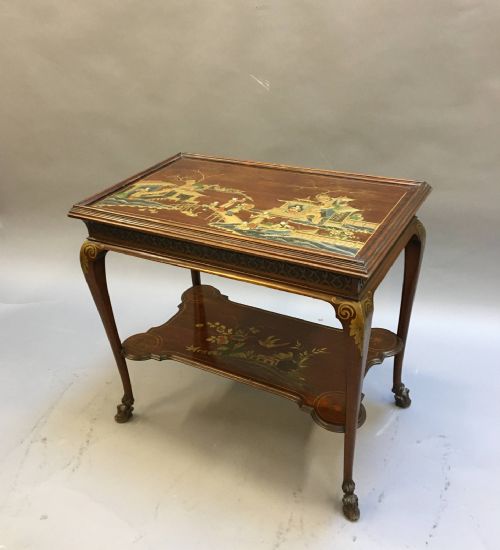
These oriental lacquered occasional table pieces bring rich hand-painted detail and polished surfaces to a room.

Oriental Lacquered Occasional Table
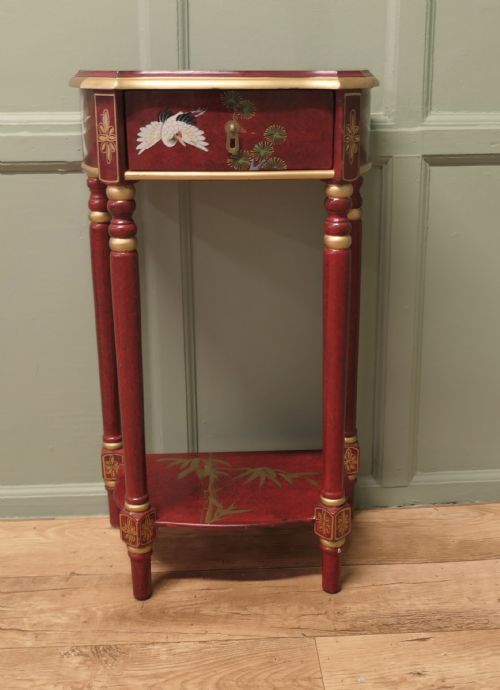
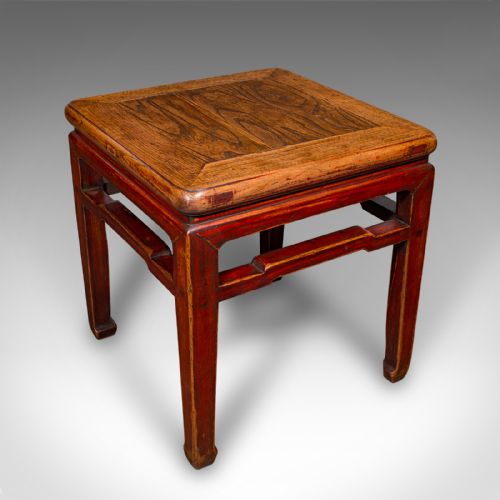
When you search for an oriental lacquered occasional table, you encounter compact furniture forms designed for display and convenience across various interior settings. The selection includes side tables, nests of tables, wine tables, and sewing tables originating from the eighteenth century through to the interwar decades.
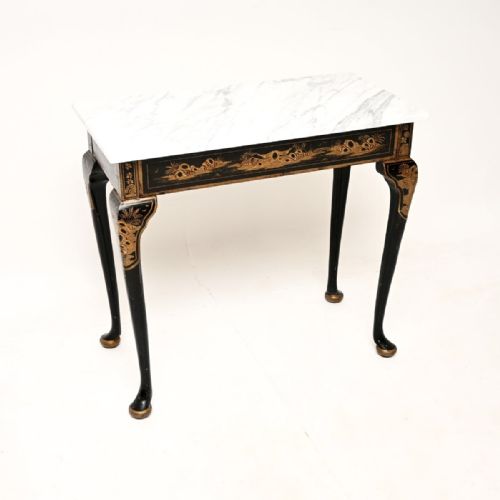
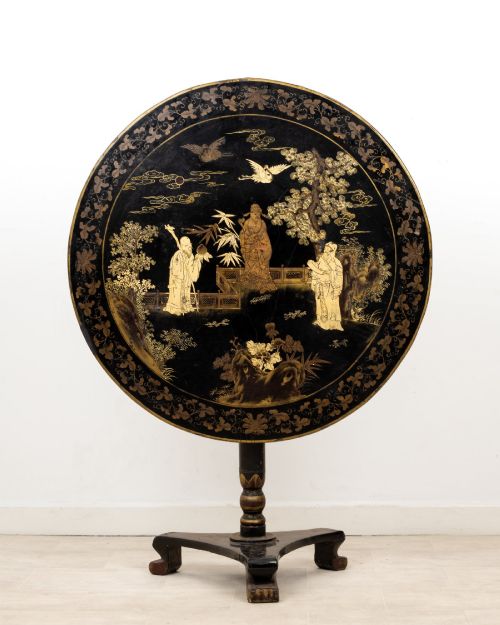
You are most likely to meet nineteenth century and early twentieth century examples finished in black or red lacquer, often decorated with Chinoiserie motifs. These pieces range from simple single-tier lamp tables to sets of four nested tables and multi-tiered bamboo stands.
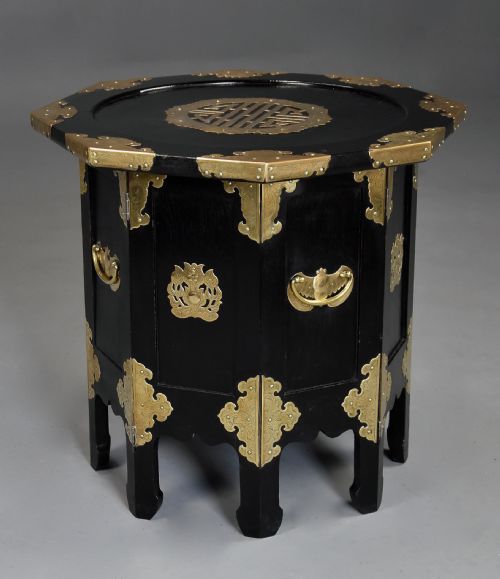
The styles span traditional Chinese export work, Japanese Meiji pieces, Anglo-Burmese items, and Queen Anne or Victorian interpretations of Eastern design. This variety reflects how British and continental makers adapted foreign aesthetics for domestic parlours over successive generations.
How they were made
The construction relies on timber frames built from hardwoods, pine, or bamboo, serving as the foundation for multiple coats of lacquer. Artisans applied resin-based finishes that were polished to a hard, glossy sheen before receiving painted or gilded ornament.
Surface decoration frequently incorporates gold leaf, raised paste work, and intricate hand-painted scenes depicting figures, pagodas, and botanical subjects. Certain items integrate specialist elements such as marble inserts, quartz tops, or brass inlay work into the wooden structure.
Listings span the eighteenth, nineteenth, and early twentieth centuries, incorporating materials such as bamboo, cinnabar, brass, and gold leaf.
What varies in quality
The standard of execution in the painted decoration dictates the distinction between ordinary production and superior craftsmanship. Finer pieces display crisp, detailed brushwork and secure application of gold leaf, whereas lesser examples show flat, mechanical rendering.
Structural integrity and the preservation of the original lacquer surface determine the desirability of a piece. Original patination, intact joints, and complete nested sets command greater respect than heavily restored surfaces or composite assemblies.
The Oriental Lacquered Occasional Table Glossary
- Chinoiserie
- European theatrical interpretation of Chinese and East Asian artistic traditions, prominent in furniture decoration. This style utilises motifs like pagodas, landscapes, and figures rendered in gold and colour upon dark lacquer.
- Lacquer
- A durable finish applied to wood surfaces using natural resins, built up in layers and polished. It provides a smooth, water-resistant surface suitable for intricate painting and gilding.
- Nest of tables
- A graduated set of smaller tables designed to fit neatly beneath one another when not in use. They became popular in the nineteenth century for serving tea or holding lamps in limited spaces.
- Japanese export
- Goods manufactured in Japan specifically for Western markets during the late nineteenth and early twentieth centuries. These objects often combine traditional craft techniques with forms suited to European interiors.
- Ebonised wood
- Timber treated with chemical stains or dark paint to imitate costly ebony. This process was widely utilised during the Victorian and Aesthetic Movement periods to create high-contrast surfaces.
Oriental Lacquered Occasional Table: Frequently Asked Questions
What is an oriental lacquered occasional table used for?
These pieces served as moveable surfaces for holding lamps, sewing equipment, tea, or decorative objects within Victorian and Edwardian reception rooms.
Their compact scale allowed them to be repositioned easily around a parlour or drawing room as social needs shifted.
Are bamboo tables considered lacquerware?
Many nineteenth-century bamboo items incorporate lacquered panels or shelves fitted into the natural cane framework.
This hybrid construction combined the lightweight appeal of bamboo with the decorative surface finishes popular during the Aesthetic Movement.
How should I care for a lacquered table?
Lacquered surfaces require gentle dusting with a soft, dry cloth and protection from direct sunlight and excessive heat.
Avoiding moisture and chemical polishes preserves the fragile painted decoration and prevents the underlying wood from expanding.
What dates are common for these tables?
The majority of pieces date from the nineteenth century, particularly the Victorian and Edwardian eras, alongside early twentieth-century examples.
Earlier items from the eighteenth century appear less frequently and usually feature heavier red or black lacquer construction.