
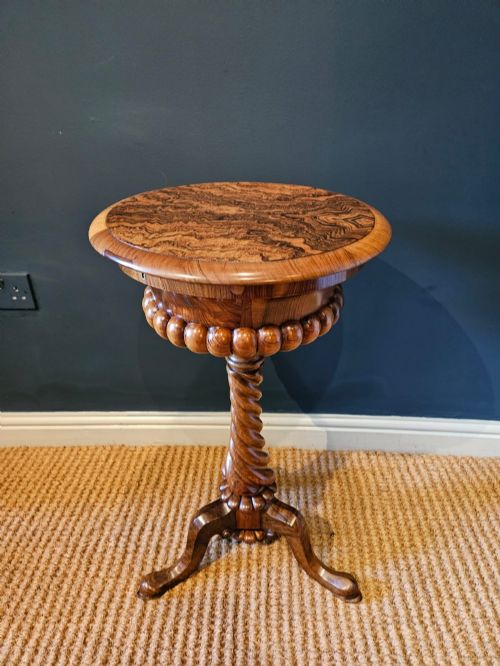
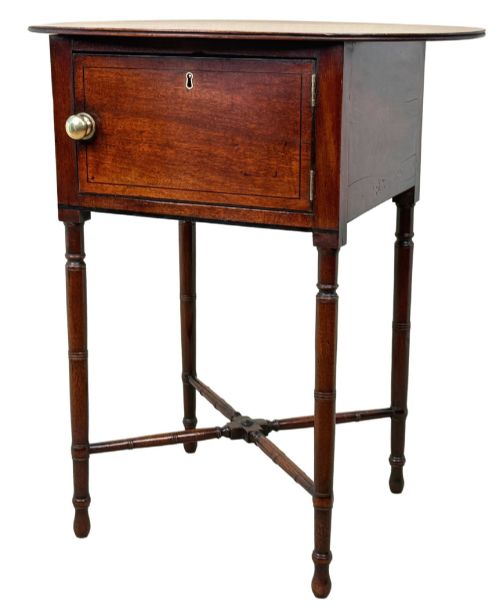
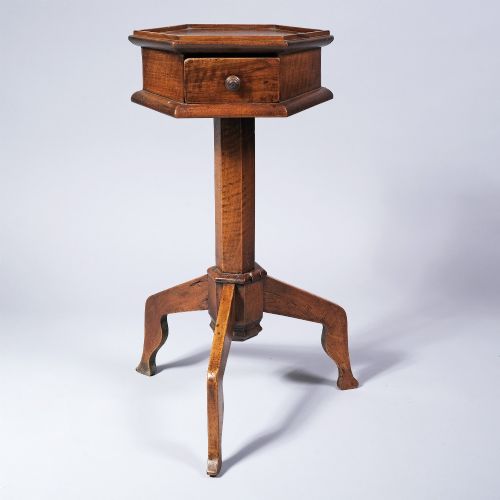
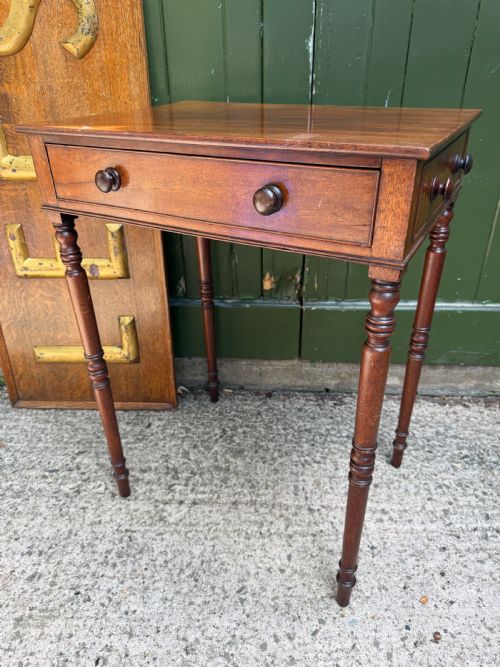


Early 19th Century Work Table
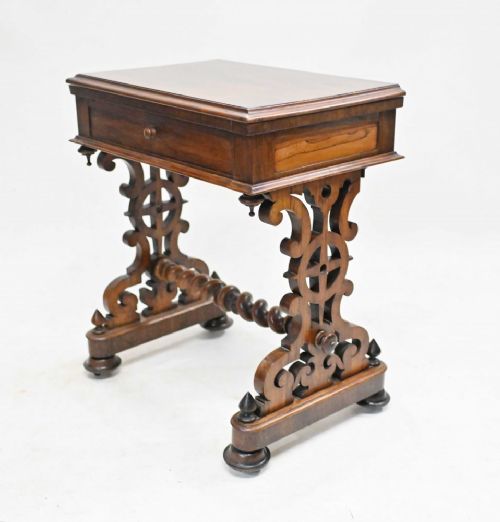
An early 19th century work table combines neat proportions with clever interior fittings designed for sewing, writing and small domestic tasks.

Early 19th Century Work Table
When you search for an early 19th century work table, you encounter compact furnishings designed primarily for needlework, letter writing and light domestic tasks. These pieces frequently appear under related historical categories such as sewing tables, games tables and occasional side tables from the Georgian, Regency and Victorian eras.
The specimens recorded here span multiple regional styles, incorporating British, French, American and Chinese Export influences. While many examples operate as dedicated sewing stations complete with fabric bags and compartmentalised drawers, others double as writing desks or removable chess boards.
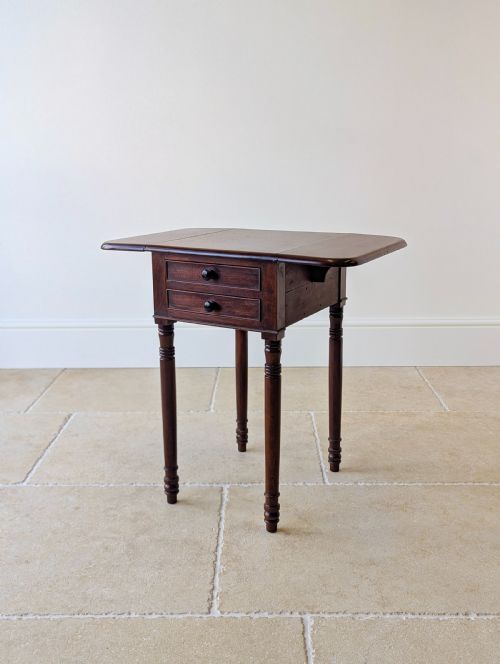
Makers of the period utilised various secondary forms, including Pembroke drops, pillar supports and single-drawer configurations. The surviving record demonstrates a strong prevalence of freestanding rectangular and oval formats designed to sit comfortably beside a chair or sofa.
Materials and Construction
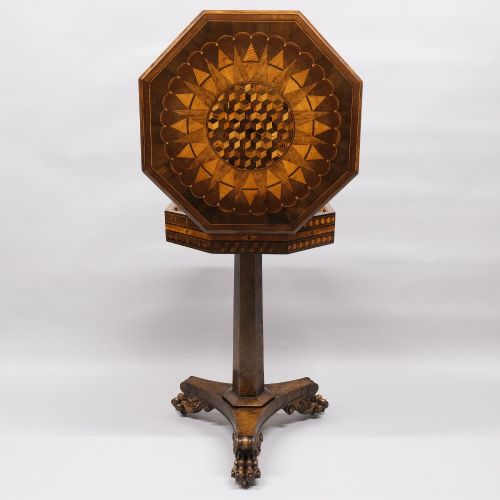
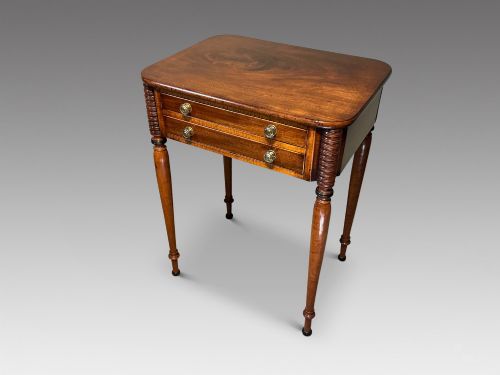
Cabinetmakers constructed these tables from dense cabinet timbers such as mahogany, rosewood and satinwood, frequently augmenting the primary wood with contrasting stringing, parquetry or specimen wood veneers. Workshops also employed secondary domestic timbers like pine, fruitwood and sycamore for internal framing and structural elements.
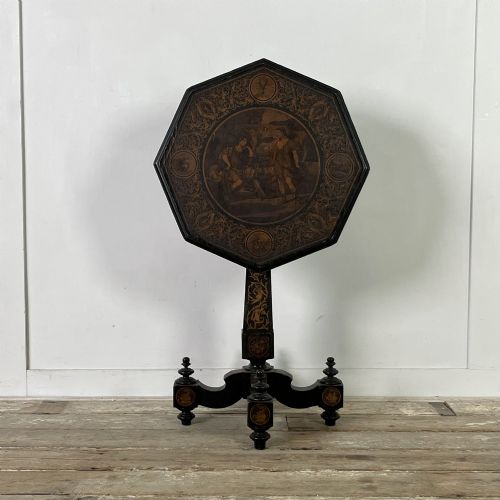
Surface decoration relied heavily on figural grain patterns, brass inlay, Japanning and gesso relief work rather than deep structural carving. Drop-leaf actions, sliding compartments and tilt-top mechanisms demanded precise joinery to ensure stability within a compact footprint.
Listings feature woods including mahogany, rosewood, satinwood, sycamore, walnut and fruitwood, alongside decorative brass and fabric elements.
Assessing Quality
The distinction between standard domestic output and high workshop production rests upon the crispness of the timber selection and the precision of the internal fittings. Superior examples display carefully matched grain patterns across the top surface alongside fully intact compartmentalised interiors and original hardware.
Construction integrity in the legs and pillar supports separates robust pieces from those weakened by poor past repairs or clumsy alterations. The presence of documented workshop attribution or sophisticated secondary functions such as combined chess and backgammon boards elevates the standing of an individual table.
Ralph Turnbull·Gillows of Lancaster
The Early 19th Century Work Table Glossary
- Work table
- A small freestanding table equipped with drawers, compartments or a suspended fabric bag to hold sewing equipment and writing materials. These compact items gained widespread popularity during the Georgian and Regency periods.
- Pembroke table
- A small occasional table featuring hinged drop leaves on two opposing sides. This design allowed the surface area to expand or contract depending on space requirements.
- Parquetry
- A geometric mosaic of wood pieces used for decorative surface inlay on tabletops and cabinet fronts. Makers selected contrasting timbers to create sharp visual patterns.
- Japanning
- A European imitation of East Asian lacquerwork applied to furniture surfaces. Craftsmen built up layers of varnish and paint, frequently finishing the decoration with metallic powder.
- Tilt top
- A mechanism allowing the tabletop to pivot to a vertical position when not in use. This clever engineering saved floor space in smaller period rooms.
Early 19th Century Work Table: Frequently Asked Questions
What is an early 19th century work table?
These pieces are compact domestic furnishings created to hold sewing equipment, writing materials and small accessories. They typically feature a set of drawers or a suspended fabric bag beneath the main surface.
Craftsmen built them in various woods including mahogany, rosewood and satinwood, often incorporating drop leaves or clever compartment layouts to maximise utility in a small footprint.
How were sewing tables used in period homes?
Owners placed these tables beside seating areas in drawing rooms or parlours to keep needlework, threads and letters close at hand. The enclosed compartments and drawers kept loose items tidy when guests visited.
Many examples included integrated writing slides or removable chess and backgammon boards, allowing the furniture to serve multiple domestic purposes throughout the day.
How do I tell Regency work tables from Victorian ones?
Regency pieces often display cleaner classical lines, brass inlay, satinwood banding and lighter mahogany or rosewood framing inspired by ancient Greek and Roman forms. Proportions tend to remain restrained and precise.
Victorian examples frequently shift towards heavier pedestal bases, darker burr walnut veneers and more ornate carving or heavier turning. The internal fittings also tend to reflect later 19th century manufacturing techniques.
Where should I place a work table today?
These compact tables fit naturally beside a sofa, armchair or bed as an elegant surface for a lamp or small decorative objects. Their small scale makes them versatile additions to hallways and compact reception rooms.
The enclosed drawers and compartments provide practical hidden storage for modern items like notebooks, charging cables or stationery.