


Gold Lacquered Side Table
A gold lacquered side table brings rich surface pattern and dark polished depth into a room, offering both a decorative surface and a practical resting place.
Gold Lacquered Side Table
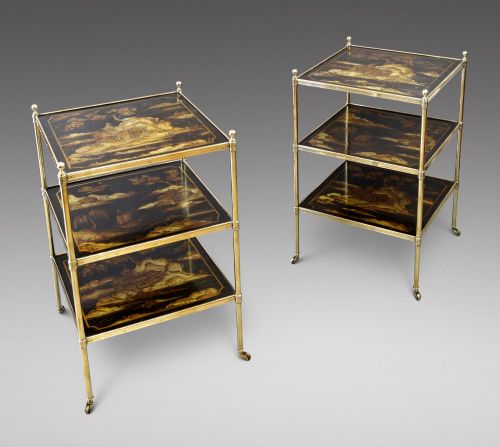
A gold lacquered side table encompasses a range of occasional furniture designed with painted and gilded surfaces, drawing upon Chinoiserie, Regency, and Victorian traditions. These pieces appear in forms such as occasional tables, nest of tables, tray tables, and work tables.
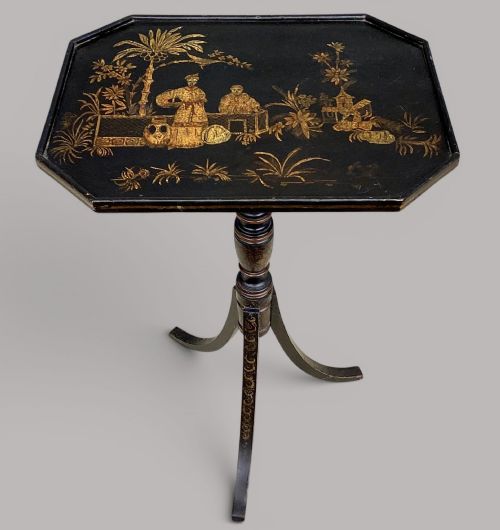
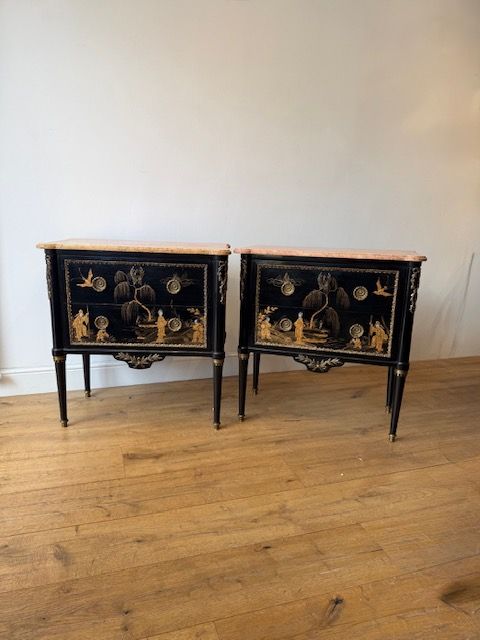
The version most commonly met on this page is the Chinoiserie decorated occasional table or nest of tables, typically rendered in black lacquer with gilt detailing. Dating stretches across the nineteenth century into the early twentieth century, including Regency and Victorian periods.
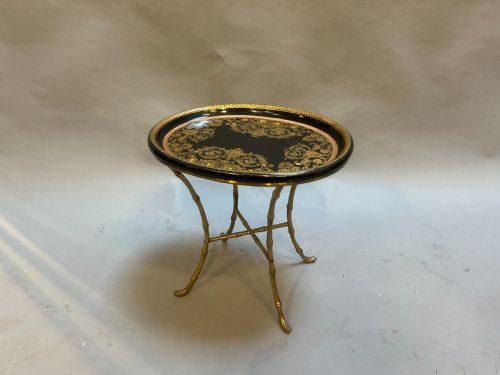
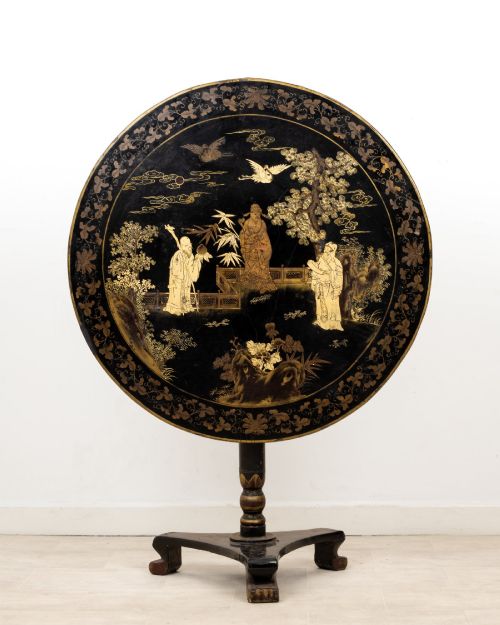
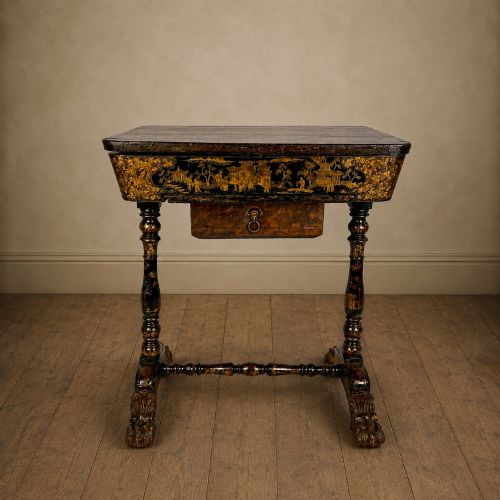
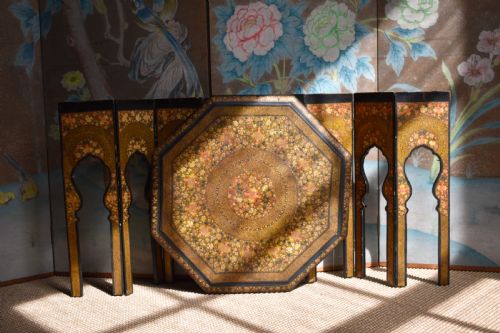
Beyond standard side tables, the selection includes tilt-top tables, sewing tables, and tray tables on stands, reflecting diverse domestic uses from the nineteenth century onward.
How they were made
Makers utilised wood, papier-mache, and ebonised wood as foundational materials, applying layered lacquer finishes to build smooth, durable surfaces. Gold leaf and gilt work were then applied by hand to create intricate decorative motifs.
Many examples incorporate brass fittings, such as handles or stands, while others pair lacquer trays with later or custom stands. Surface decoration frequently relies on hand-painted Chinoiserie scenes and detailed penwork.
Several tables fold away into neat nests, proving that nineteenth-century artisans understood the modern obsession with tiny apartments.
What varies in quality
Quality rests in the precision of the hand-painted decoration and the depth of the lacquer finish. Pieces featuring crisp, detailed gilt work and well-preserved painted scenes stand apart from simpler or more worn examples.
The underlying construction also dictates quality, distinguishing solid wood frames and stable nests of tables from pieces with compromised joints or heavily worn surfaces.
The Gold Lacquered Side Table Glossary
- Chinoiserie
- European decorative style inspired by Chinese artistic traditions, featuring figures, landscapes, and motifs in gold and colour on dark lacquer.
- Papier-mache
- Material formed from paper pulp mixed with adhesive and pressed, providing a smooth surface for lacquer and gilt decoration on nineteenth-century tables.
- Tilt top
- Table mechanism allowing the top to pivot to a vertical position when not in use, common on nineteenth-century occasional and tea tables.
- Penwork
- Decorative technique using fine ink lines, often combined with wash and gold, to create intricate geometric or pictorial designs on wood surfaces.
- Etagere
- Set of open shelves or small tiers used for displaying objects, appearing alongside standard side and occasional tables.
Gold Lacquered Side Table: Frequently Asked Questions
How do I use a gold lacquered side table?
These tables function well beside seating as lamp tables or occasional surfaces for holding small items. Their decorative surfaces allow them to stand alone as focal points in a room.
Smaller formats, such as nests of tables, can be separated when entertaining and stacked away to save space.
Are these tables sturdy enough for daily use?
Most occasional and side tables are built for light domestic tasks rather than heavy loads. Placing lamps or decorative objects on them poses no issue.
Care should be taken with tilt-top mechanisms and nesting sets to ensure smooth handling during daily movement.
How do I care for antique lacquer?
Lacquer surfaces require gentle dusting with a soft, dry cloth to prevent scratching the polished finish. Avoid placing them in direct sunlight or near heat sources.
Moisture and harsh cleaning agents can damage the gold leaf and varnish over time, so keep the surface dry.
How do I tell nineteenth century pieces apart?
Nineteenth-century pieces often display hand-painted Chinoiserie or penwork on wood or papier-mache foundations. Regency and Victorian examples show distinct stylistic cues in their turned legs and support structures.
Later twentieth-century iterations tend to simplify these decorative traditions while retaining the black and gold lacquer palette.