


Oriental Jewellery Box
An oriental jewellery box gathers small treasures in wood and lacquer, offering intricate craftsmanship from distant workshops.
Oriental Jewellery Box
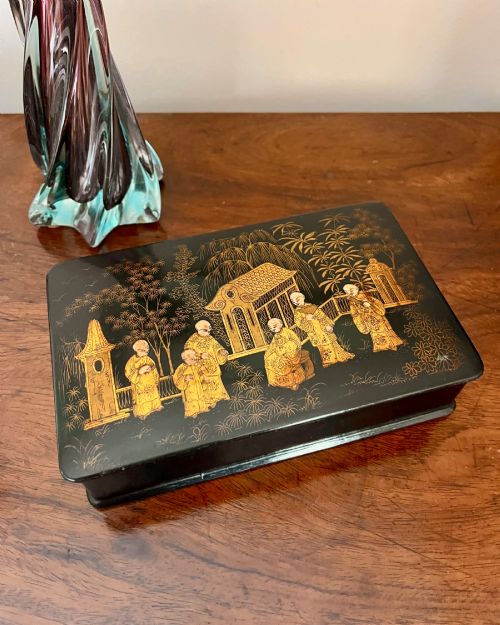
An oriental jewellery box encompasses diverse forms from table cabinets and keepsake cases to travelling caskets and small chests. These pieces emerge from periods spanning the nineteenth century through the nineteen-thirties, with Victorian examples appearing frequently alongside Japanese Meiji items and Chinese export works.
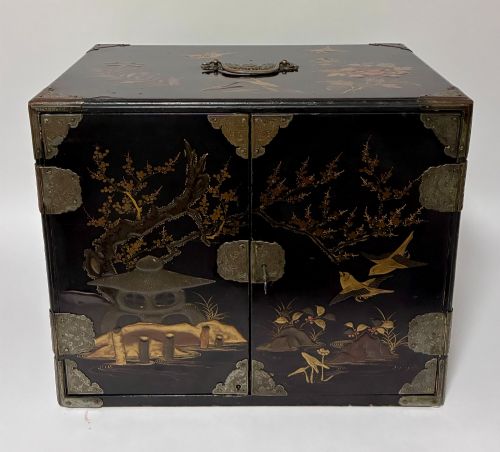
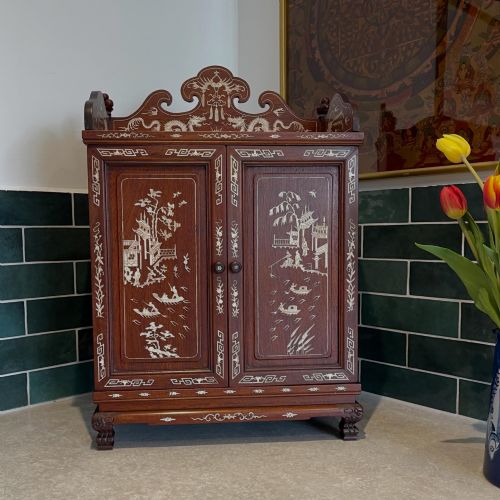
Makers shaped these items across distinct cultural traditions, ranging from Japanese black lacquer kodansu cabinets to Chinese hardwood and mother of pearl inlaid boxes. Anglo-Indian, Ottoman, and Burmese interpretations also populate the selection, providing varied regional aesthetics for collectors.
The assortment includes specialised forms like cleric swing out cases, campaign travelling boxes, and sharing boxes designed for functional storage. Tabletop cabinets offer multiple drawers behind doors, while smaller caskets suit dressing tables and desks.
Materials and Construction
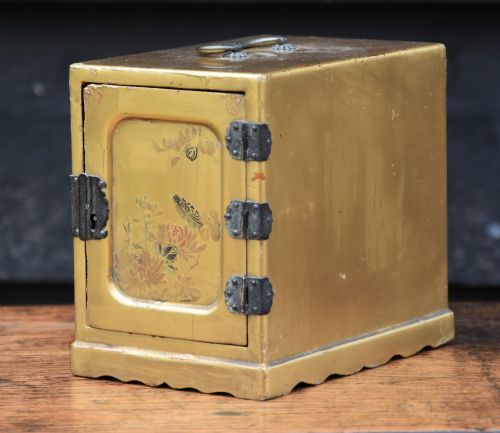
Workshops utilised sturdy hardwoods including rosewood, elm, teak, and hongmu as structural foundations for these boxes. Artisans then applied layers of black or gilt lacquer to surfaces, creating smooth finishes ready for detailed ornamentation.
Decoration relied heavily on contrasting elements such as inlaid mother of pearl, gold leaf, and brass mountings. Carved wooden panels and silver dragon motifs further enhance the tactile and visual depth of these objects.
Distinctions in Quality
The refinement of the decorative surface distinguishes finer examples, where gold leaf application and lacquer work show exceptional precision and depth. Detail in carved panels and the crispness of brass or silver mounts indicate superior artisan skill.
Internal engineering marks another level of distinction, particularly in complex table cabinets and swing out cases featuring multiple fitted compartments. The selection of dense hardwoods and well-preserved mother of pearl inlay elevates the overall standard of the piece.
Wang Hing And Company
The Oriental Jewellery Box Glossary
- Kodansu
- A small Japanese tabletop cabinet featuring multiple drawers and doors, traditionally used for storing documents or personal valuables. These pieces often display intricate lacquer and metal fittings.
- Lacquer
- A durable finish applied to wooden objects in successive coats and polished to a smooth gloss. This technique protects the timber while providing a canvas for gilt and painted decoration.
- Chinoiserie
- European artistic interpretation of Chinese and East Asian decorative styles, popular in various periods. This aesthetic manifests in painted motifs and lacquer work on boxes and furniture.
- Casket
- A decorative box designed for holding jewels or small keepsakes, often featuring secure closures and lined interiors. These vessels range from simple travel cases to elaborately carved chests.
Oriental Jewellery Box: Frequently Asked Questions
What is an oriental jewellery box?
An oriental jewellery box is a decorative storage container originating from Asian workshops, utilising materials such as lacquer, hardwood, and brass. These items range from small tabletop cabinets to travelling caskets designed to secure precious items.
Craftsmen incorporated traditional techniques including mother of pearl inlay and gold leaf decoration to embellish the exterior surfaces.
How were these boxes used?
Owners used these boxes to store personal trinkets, documents, and jewellery while at home or travelling. Specialised compartments and swing out drawers accommodated various personal effects.
Larger table cabinets served as stationary desktop storage for valuables, while compact caskets suited dressing tables.
How do I date an antique box?
Dating relies on identifying material characteristics, construction methods, and stylistic markers associated with periods like the Victorian era or the Meiji period. Examination of the hardware, lacquer condition, and wood type helps narrow the production era.
Makers marks or specific export signatures, when present, provide more precise chronological context.
How do I care for lacquered wood?
Lacquered wood requires stable environmental conditions away from direct sunlight and extreme humidity fluctuations to prevent cracking. Dusting with a soft, dry cloth maintains the surface without abrasive cleaners.
Avoiding excessive moisture preservation preserves the integrity of the underlying timber and delicate finishes.