
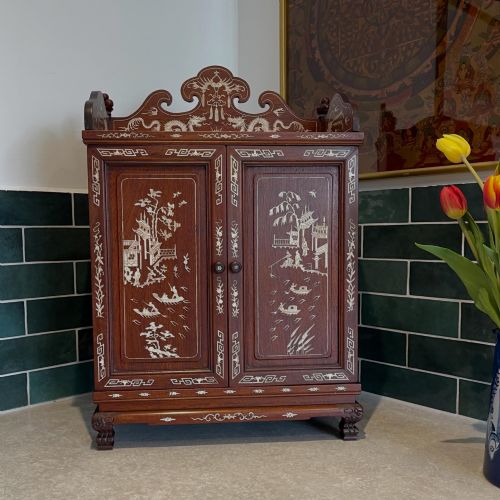


Oriental Table Chest
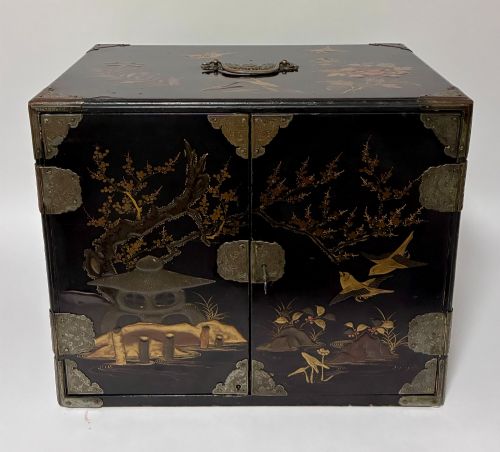
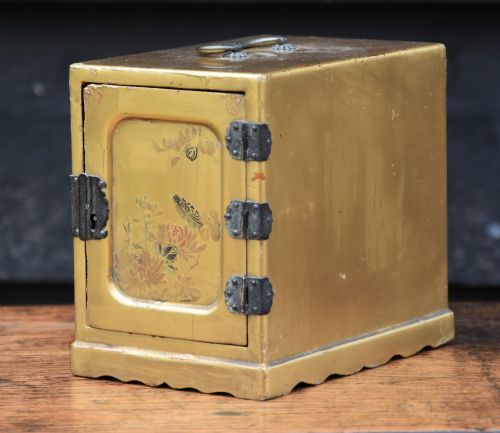
An oriental table chest brings compact storage and intricate surface art to a surface, offering neat compartments for keepsakes.
Oriental Table Chest
When you search for an oriental table chest, you encounter compact cabinetry designed for tabletops and side surfaces, originating from various Asian and European decorative traditions. These pieces function as small storage cabinets, jewellery boxes, and tabletop cabinets featuring multiple internal drawers or compartments.
The selections span the nineteenth century, the Victorian era, and the early twentieth century, including the Meiji period and Qing dynasty. You regularly encounter Japanese lacquer table cabinets alongside Chinese elm and camphorwood examples.
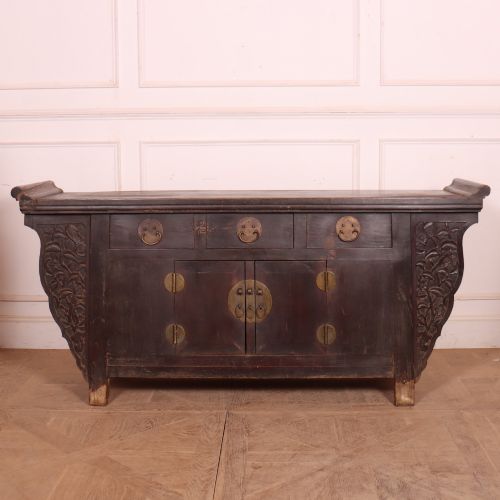
Beyond standard tabletop cabinets, the forms extend to lacquered chests, sideboards, and miniature trunks. These smaller proportions allow you to place them on desks, side tables, or larger cabinets while maintaining distinct visual character.
How they were made
Cabinetmakers utilised woods such as elm, hardwood, walnut, and camphorwood to construct the primary structures of these chests. These timbers provided stable frames capable of supporting heavy decorative applications.
Surfaces frequently received layers of black or coloured lacquer finished with gold leaf or gilded decoration. Metal elements, including brass hinges and bronze animal decoration, added structural reinforcement and visual contrast to the lacquer and wood.
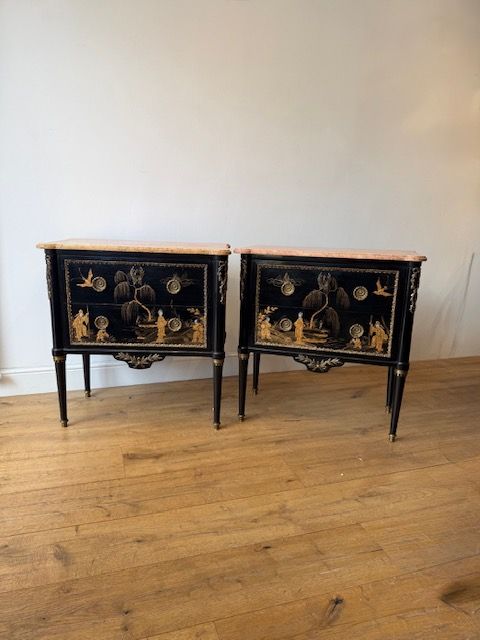
Penwork and painted motifs defined the Chinoiserie and export styles seen across many examples. Artisans applied these detailed surface treatments by hand to create intricate pictorial scenes.
Some miniature trunks double as coffee tables, proving that even a tiny chest appreciates a promotion.
What varies in quality
The refinement of the surface decoration sets finer examples apart from simpler utilitarian boxes. Crisp gilding, deeply carved bronze or brass mounts, and well-preserved lacquer layers indicate superior craftsmanship.
The choice of timber and the precision of the joinery influence the overall standard of a piece. Solid hardwoods and carefully fitted internal drawers demonstrate greater maker skill than softer woods and loose construction.
The complexity of the form also dictates the tier of the piece. Elaborate configurations such as multi-tiered kodansu cabinets or detailed penwork collectors pieces demand higher levels of artisan labour.
The Oriental Table Chest Glossary
- Kodansu
- A small Japanese tabletop cabinet with multiple internal drawers, traditionally used for storing documents, seals, or personal valuables. These pieces often feature fine lacquer and metal mountings.
- Chinoiserie
- European decorative style reflecting Chinese artistic influences, popular across various periods including the Regency and Edwardian eras. This style employs painted motifs and lacquered surfaces.
- Lacquer
- A durable resin finish applied in multiple layers to wood surfaces, providing a smooth gloss and protection against wear. It serves as the base for gilt and painted ornamentation.
- Elm
- A resilient hardwood frequently utilised in Chinese furniture construction for its tough grain and structural stability. It takes dark stains and lacquer finishes effectively.
- Penwork
- A detailed decorative technique involving inked line drawings on wood surfaces, often finished with varnish to create intricate cabinet facades.
Oriental Table Chest: Frequently Asked Questions
What is an oriental table chest used for?
These compact cabinets serve primarily for storing jewellery, letters, and small personal valuables on a desk or tabletop.
They also function as decorative objects that introduce distinct period materials and detailed surface art into a room.
How do I date a table cabinet?
Dating relies on examining the construction timber, the style of the metal mounts, and the characteristics of the lacquer work. Nineteenth-century pieces often display hand-forged hardware and traditional joinery.
Later examples from the early twentieth century incorporate transitional styles influenced by both Eastern workshops and European demand.
Where should I place a table chest?
A table chest sits comfortably on top of a sideboard, desk, or chest of drawers where its detailed facade remains visible at eye level.
Ensure the surface is stable and kept away from direct heat sources to protect delicate lacquer and wood.
What is the difference between Chinese and Japanese pieces?
Chinese pieces frequently highlight the natural grain of elm and camphorwood, sometimes featuring brass corner brackets and simple structural forms. Japanese examples, such as kodansu cabinets, often emphasise deep black lacquer and intricate gold leaf decoration.
Export pieces from both regions blend traditional motifs with European cabinet forms to suit Western interiors.