


Edwardian Decorative Casket
These edwardian decorative casket selections are practical tabletop boxes built to hold letters, trinkets or gloves with period charm.
Edwardian Decorative Casket
An edwardian decorative casket sits on a desk or dressing table, offering a neat compartment for everyday keepsakes and stationery. You will encounter various forms here, ranging from small keepsake cases to fitted glove boxes and desktop storage.
The selection spans several periods alongside the Edwardian era, including Victorian examples, pieces dated around 1890 or 1900, and early twentieth century creations. Makers drew on diverse cultural traditions, incorporating Anglo-Indian, Chinese Export and Qing Dynasty influences into the domestic British market.
How they were made
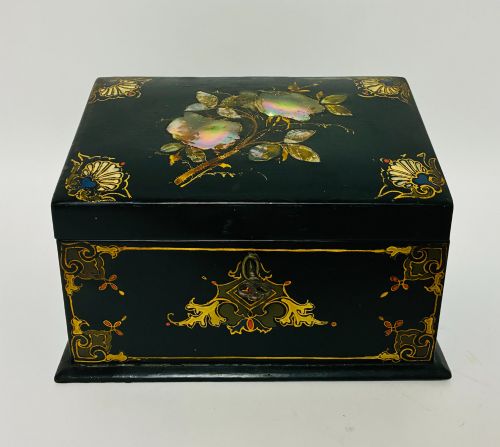
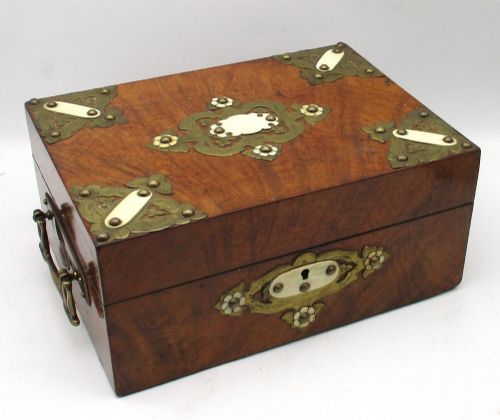
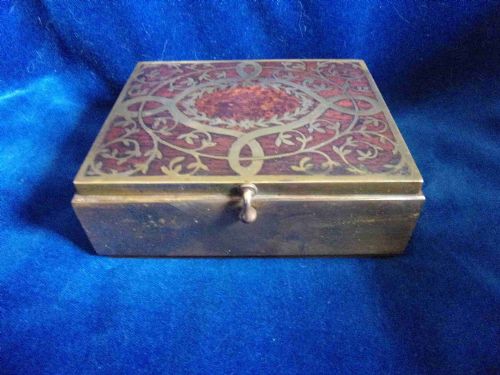
Craftsmen built these caskets using a variety of hardwoods such as walnut, oak, laburnum and burr yew, often enhancing the timber with intricate grain patterns like oyster veneers. Decoration relied heavily on contrasting materials, embedding mother of pearl, bone and brass inlay directly into the wooden surfaces.
Alternative finishes include papier-mache with lacquered coatings and specialised quill work, exemplified by porcupine quill boxes. Jugendstil, Arts and Crafts and Art Nouveau aesthetics guided the painted motifs and metal mounts applied to these items.
Materials across these listings include brass, mother of pearl, walnut, hardwood, papier-mache, lacquer, bone and rosewood.
What varies in quality
The distinction between standard containers and finer work lies in the precision of the surface decoration and the complexity of the materials used. Pieces featuring meticulous inlay, well-matched wood veneers or specialised techniques such as lacquer and painted domed panels command greater attention.
Structural harmony also defines better examples, where integrated elements like fitted clocks or specialised interior compartments complement the exterior design without feeling cluttered.
ERHARD AND SOHNE
The Edwardian Decorative Casket Glossary
- Oyster veneer
- Slices cut transversely from small branches to create circular or oval patterns. This technique displays the natural growth rings of woods like laburnum to great visual effect.
- Papier-mache
- A composite material made from paper pulp or reinforced sheets mixed with binding adhesive. Once dried and lacquered, it provided a smooth surface for painting and inlay.
- Jugendstil
- The continental European manifestation of Art Nouveau, originating around 1900. It emphasises flowing, organic lines and stylized natural motifs on metal mounts and wood.
- Porcupine quill
- A decorative technique utilising quills applied in geometric or banded patterns. It creates a textured, contrasting surface popular on nineteenth-century boxes.
- Burr yew
- Timber taken from the growth excrescences on yew trees, yielding dense and swirling grain patterns. It was frequently selected for high-status desktop boxes.
Edwardian Decorative Casket: Frequently Asked Questions
What were decorative caskets used for?
These boxes served domestic purposes to store stationery, gloves, jewellery and small keepsakes. They kept valuable or private items tidy on desks and dressing tables.
Larger versions accommodated writing equipment or letters, while smaller caskets held trinkets and rings safely out of sight.
How do I care for a wooden box?
Keep wooden and inlaid caskets away from direct sunlight and strong temperature fluctuations to prevent the timber from warping or veneers from lifting. Gentle dusting with a dry cloth maintains the surface.
Avoid using harsh chemical polishes, particularly on lacquered, painted or papier-mache surfaces, which require a soft, dry touch to preserve their finish.
How can I tell the period?
Dating relies on observing the combination of materials, construction methods and stylistic cues such as Art Nouveau or Arts and Crafts motifs. References to specific design movements help narrow down the decade of production.
Examination of the interior fittings, hinges and secondary timbers also provides clear clues regarding whether a piece originates from the Victorian era or the early twentieth century.
Are these boxes suitable for daily use?
Many of these pieces remain sturdy enough to hold modern trinkets, keys or everyday stationery on a hall table or desk. Their solid hardwood construction stands up well to light handling.
However, delicate finishes involving porcupine quills or fine lacquered papier-mache benefit from gentler placement to protect the historic decorative surfaces.