


Qing Dynasty Mother Pearl
These qing dynasty mother pearl pieces bring iridescent shell shimmer into dense hardwood forms.
Qing Dynasty Mother Pearl
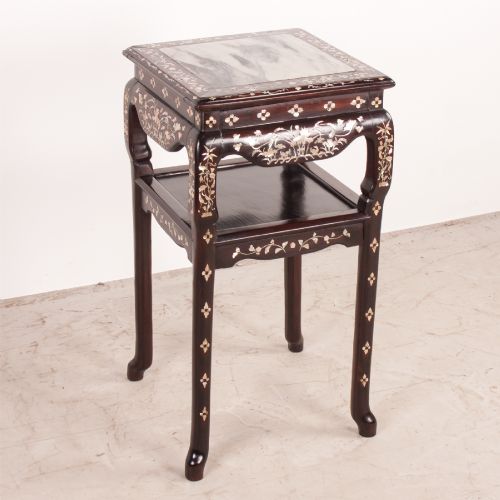
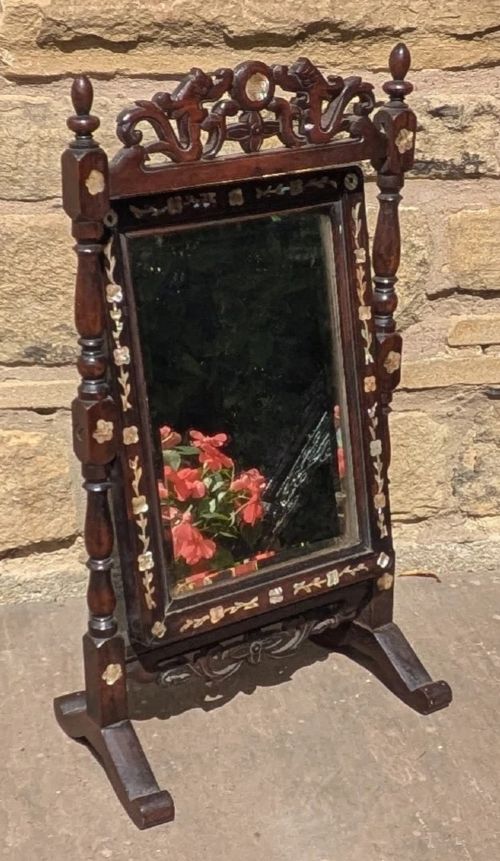
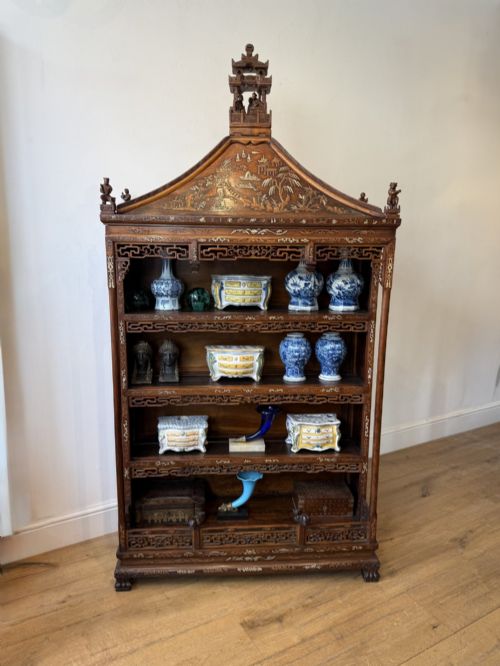
Buyers seeking qing dynasty mother pearl encounter an array of ornate furniture and decorative objects originating from China. The selection on this page centres on occasional tables, plant stands, display cabinets, and mirrors alongside smaller boxes and trays.
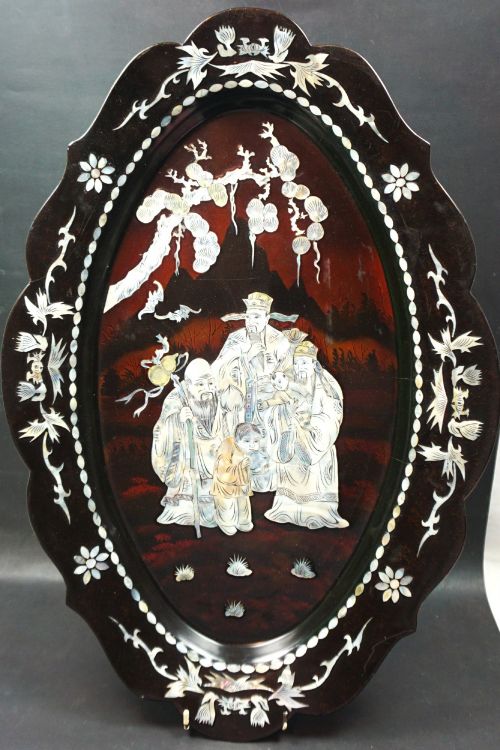
Most examples date from the nineteenth century, including late Qing Dynasty and Edwardian periods, reflecting traditional Chinese export craftsmanship. Forms range from heavy hongmu and rosewood seating suites to intricate table screens and lacquer platters.
Materials and construction methods
Artisans built these items using dense Asian timbers such as hongmu, rosewood, and general hardwood, often paired with marble inserts. The timber provides a heavy, dark foundation designed to contrast with pale, reflective shell inlay.
Mother-of-pearl and gold lip shell are meticulously cut and set into recessed channels within the wood surface. Additional details incorporate glass, lacquer, and jade elements to complete the decorative scheme.
Some shell inlays utilise gold lip shell, adding a warm metallic flash to the usual silvery shimmer.
Evaluating craftsmanship and detail
Quality depends on the precision of the shell inlay work and the depth of the wood carving. Finer pieces display tightly fitted mosaic sections that form elaborate floral or geometric motifs without gaps or heavy adhesive filling.
The choice of timber underpins the overall standard, with dense hardwoods like hongmu and rosewood holding sharper carved edges than softer lacquered substitutes. The integration of secondary materials such as marble tops or jade accents also distinguishes standard items from exceptional ones.
The Qing Dynasty Mother Pearl Glossary
- Hongmu
- A dense, dark tropical hardwood traditionally utilised in fine Chinese furniture construction. It provides a heavy and durable structure for intricate carving.
- Mother-of-pearl
- An iridescent inner layer of mollusc shells used for decorative inlay. Artisans slice it thinly to create luminous geometric and pictorial patterns.
- Chinoiserie
- A Western stylistic interpretation of traditional Chinese artistic motifs. It appears across various decorative objects and furniture forms.
- Table Screen
- A traditional decorative panel mounted on a stand for display on a desk or table. These pieces often feature detailed inlay or carved stone panels.
Qing Dynasty Mother Pearl: Frequently Asked Questions
How do I care for inlaid wood?
Keep these items away from direct sunlight and dramatic humidity changes to protect the delicate shell and timber.
Dust gently with a dry cloth and avoid harsh chemical polishes that can loosen the adhesive holding the mother-of-pearl.
Are these pieces strictly from the Qing Dynasty?
The selection spans the nineteenth century, late Qing period, and early twentieth-century Edwardian eras.
Many items reflect Chinese export traditions created for Western markets during the late Qing Dynasty.
What woods were commonly used?
Artisans predominantly utilised dark, dense timbers including hongmu, rosewood, and general hardwoods.
These heavy woods provided a stable base for contrasting pale mother-of-pearl inlay and marble inserts.
How are plant stands and tables used today?
These items function practically as side tables, display surfaces, or plant stands within contemporary interiors.
Smaller pieces like keepsake boxes and trays serve as decorative tabletop storage or display accents.