
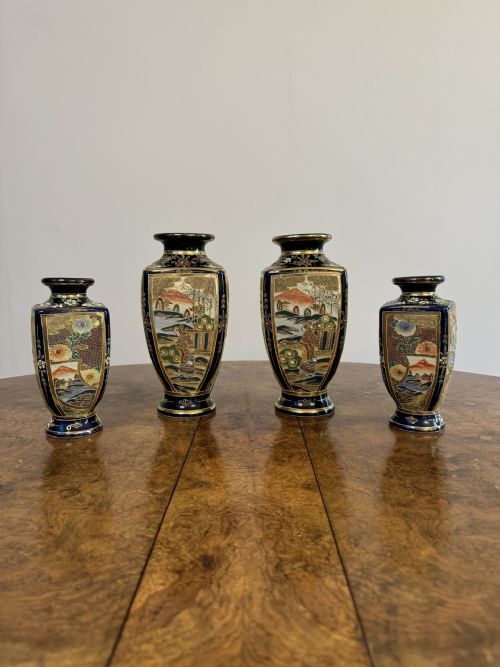
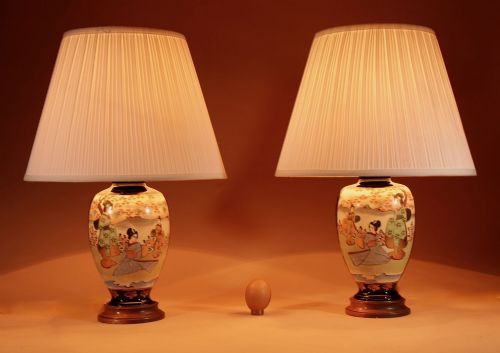
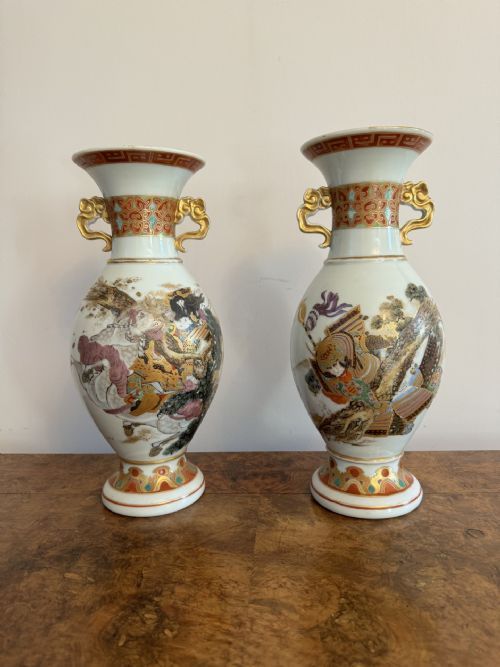
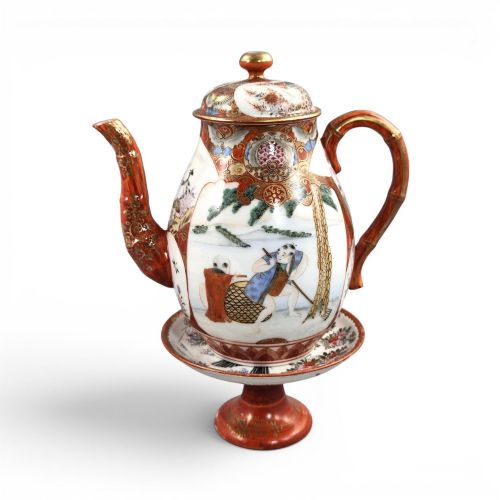


Oriental Gilded Vase
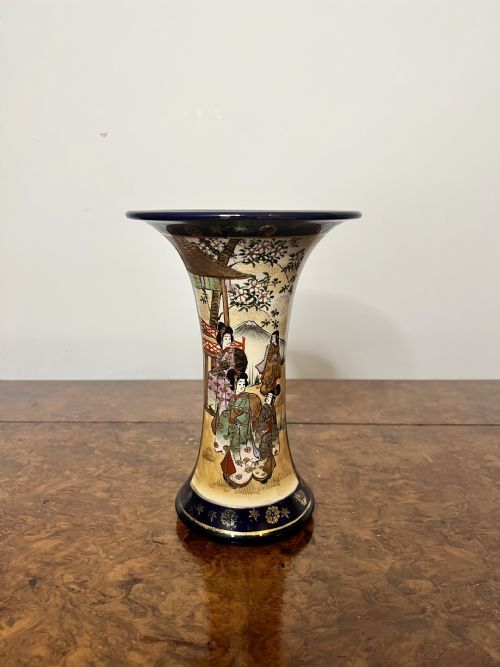
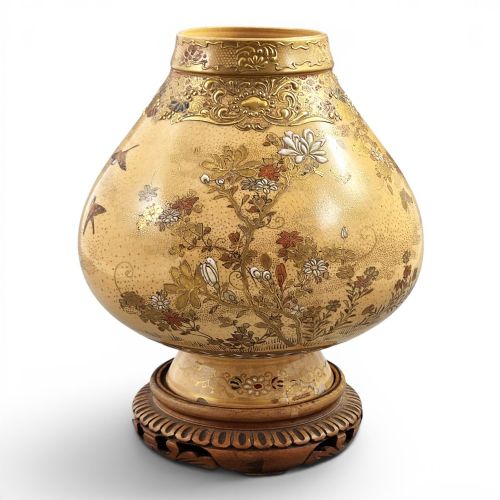
These oriental gilded vase selections bring together intricate ceramic forms and metallic lustre from the nineteenth and early twentieth centuries.
Oriental Gilded Vase
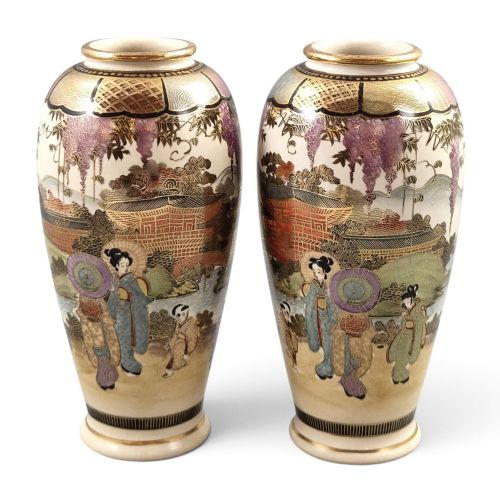
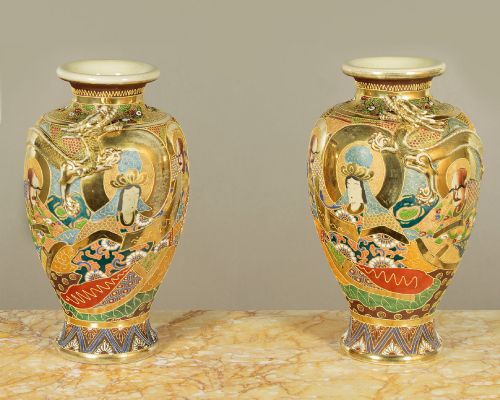
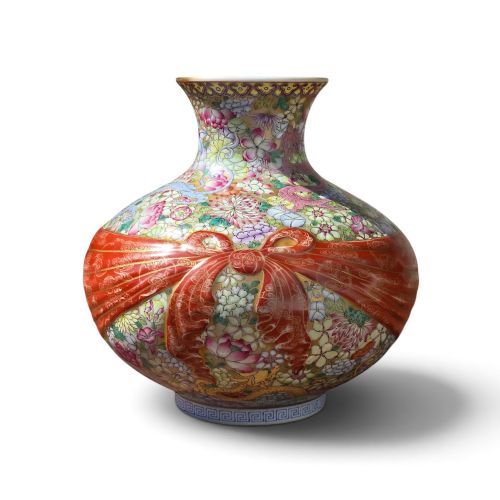
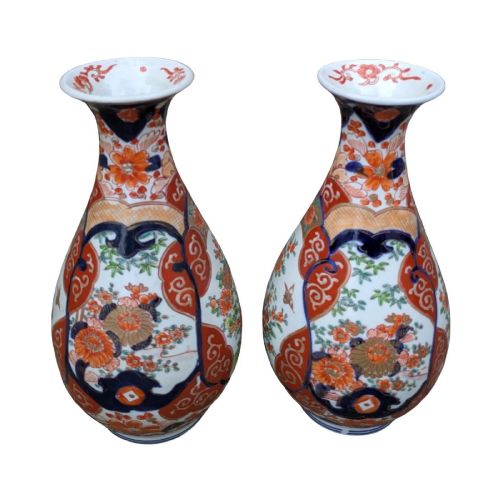
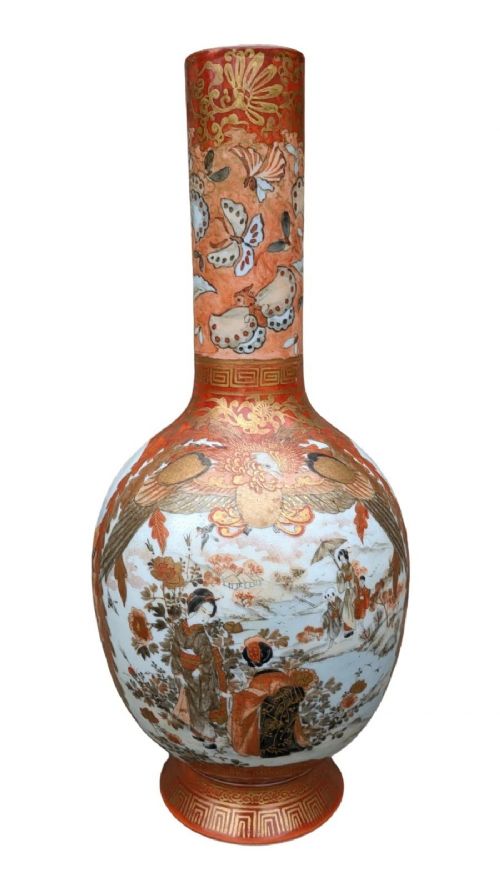
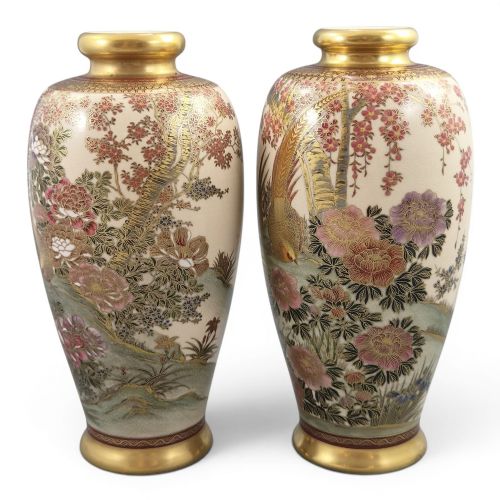
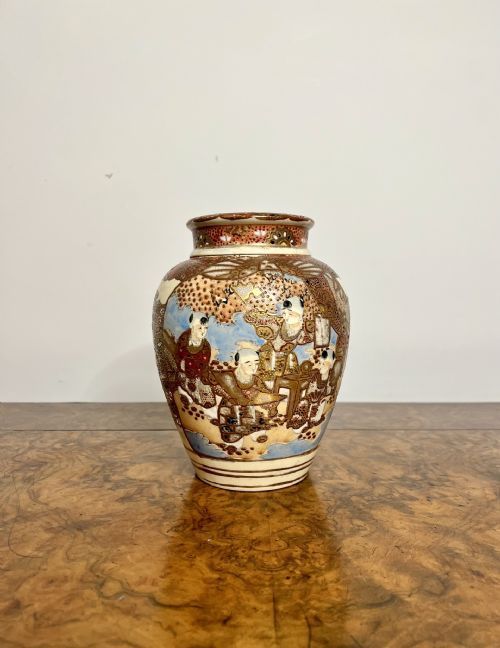
Forms span from small cabinet pieces and ginger jars to monumental floor-standing items, garnitures, and occasionally converted table lamps. Makers applied rich enamel palettes alongside gilt highlights, creating decorative surfaces populated by figures, dragons, and floral motifs.
Materials and techniques
Potters shaped fine clay bodies into earthenware and porcelain bases, which were then painted with cobalt, iron-red, and polychrome enamels. Artisans applied gold leaf and gilt decoration by hand to accentuate borders, motifs, and dimensional moriage relief work.
Kiln firing set the underlying glazes before overglaze enamels and gilding were fixed in lower-temperature firings. Workshops in Kyoto, Satsuma, and Kutani utilised distinct local clays and glazing traditions to achieve their characteristic finishes.
Listings span the 19th Century, 1870, 1880, 1890, 1900, 1910, 1920, and 1930 periods, incorporating materials such as porcelain, earthenware, and gold leaf.
Distinctions in quality
The standard of painting determines much of the distinction, separating neatly rendered figural scenes and precise brushwork from looser, more hurried factory output. Finer examples display meticulous control over the gilt detailing and harmonious integration of enamel colours across the ceramic body.
The crispness of the moulded relief and the preservation of the original gold leaf without excessive rubbing also signal superior craftsmanship. Pieces bearing signatures from recognised Meiji period workshops or master potters generally command closer attention from collectors.
Shozan·Manpei·Kinkōzan·Kinzan·Hotoda·Chosei·Kato Sanhei
The Oriental Gilded Vase Glossary
- Satsuma
- A type of Japanese earthenware featuring a crackled pale ivory glaze painted with polychrome enamels and extensive gilt highlights. It became particularly popular for export during the Meiji period.
- Imari
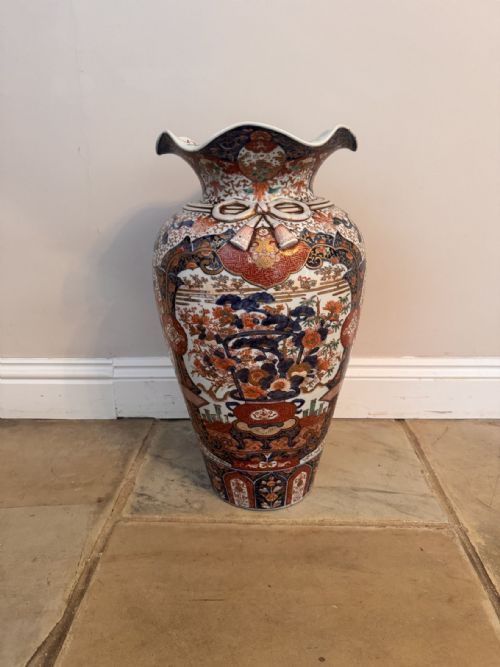
- A traditional style of Japanese porcelain characterised by a palette of underglaze blue, iron red, and applied gold on a white ground. These pieces often display dense panelled floral and geometric designs.
- Kutani
- Japanese porcelain or pottery identified by vibrant overglaze enamel work, frequently employing strong greens, reds, yellows, and purples alongside gold detailing. Wares often depict natural scenes or historical figures.
- Moriage
- A decorative ceramic technique using piped slip to build up raised designs in relief before glazing and gilding. This creates a tactile, three-dimensional surface texture on the vessel.
- Garniture
- A set of matching vases or jars designed to be displayed together on a mantelpiece or sideboard. They typically consist of three or five graduated or matching pieces.
Oriental Gilded Vase: Frequently Asked Questions
How do I clean an antique gilded ceramic?
Dust the surface gently with a soft, dry brush to prevent abrasive particles from scratching the delicate overglaze enamels and gold leaf.
Avoid using water, chemical cleaners, or damp cloths, as moisture can lift fragile gilding or seep into older unglazed ceramic bases.
Were these pieces made for export?
Many of these decorated vessels were produced specifically for Western export markets during the late nineteenth and early twentieth centuries following international trade openings.
Craftsmen tailored the scale, themes, and ornamentation to satisfy European and American tastes for elaborate oriental craftsmanship.
What is the difference between Satsuma and Imari?
Satsuma ware is typically an earthenware body covered with a characteristic network of fine crackles in the ivory glaze, heavily painted with figures and gold.
Imari ware is a hard-paste porcelain utilising a distinct palette dominated by cobalt blue, rust red, and gilding arranged in bold geometric and floral patterns.
How can I tell the age of a base mark?
Signatures and artist stamps painted or impressed on the underside often correspond to specific kiln periods, imperial eras, or individual studio output.
Comparing these characters against historical records helps narrow down the decade of production, particularly across the Meiji and late Qing periods.