


Oriental Enamel Display Plate
An oriental enamel display plate brings vibrant decorative art into a room, capturing meticulous traditional craftsmanship from Asian export periods.
Oriental Enamel Display Plate
When you search for an oriental enamel display plate, you encounter decorative chargers and shallow bowls originating primarily from Japanese Meiji workshops and Chinese export periods. These substantial vessels were created purely for display rather than dining, showcasing intricate pictorial designs across wide surfaces.
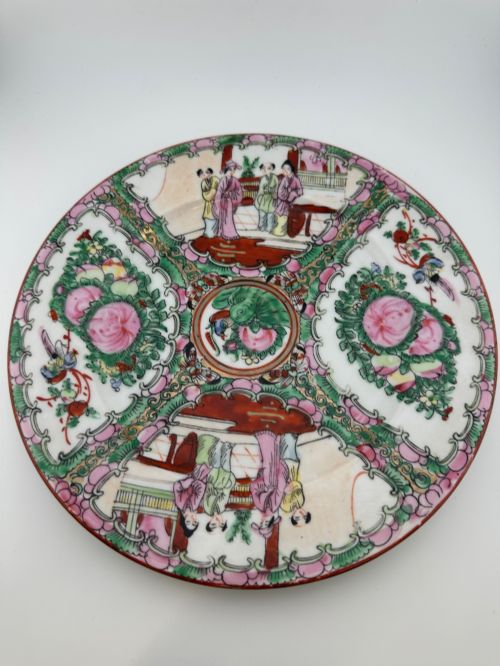
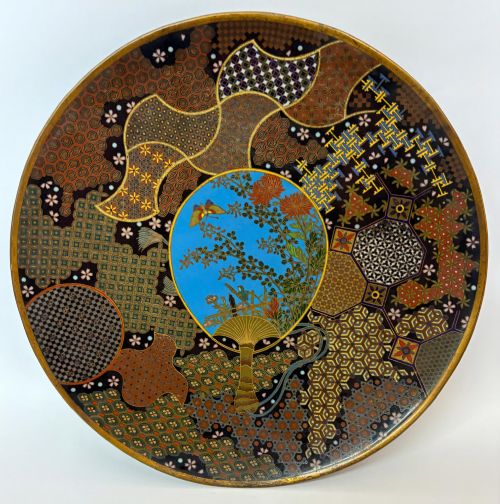
The pieces on this page span the nineteenth and early twentieth centuries, featuring distinct cultural motifs such as leaping koi, dragons, phoenixes, and botanical scenes. Japanese cloisonne pieces from the Meiji period appear frequently alongside Chinese famille rose and imari porcelain plates.
Materials and Techniques
Makers constructed metal vessels using copper, brass, or bronze as a foundation, applying thin copper wires to outline complex pictorial designs for cloisonne work. Artisans then filled the resulting cells with coloured enamel pastes before firing the piece in a kiln and polishing the surface to a smooth finish.
Porcelain alternatives rely on high-fired ceramic bases painted by hand with mineral pigments, sometimes incorporating gilt details. The combination of metallic bodywork and vitreous enamel or hand-painted porcelain produces the durable, lustrous finish characteristic of these antique items.
Decorative chargers dominate the forms available, accompanied by shallow bowls and trays featuring Japanese and Chinese export aesthetics.
Judging Quality and Execution
Quality rests upon the precision of the wirework and the control of the enamel firing, where finer pieces display microscopic cell partitions and an absence of pitting or surface cracking. The ambition of the pictorial subject matter also dictates the tier of the work, moving from simple floral repeats to complex multi-figure scenes or naturalistic wildlife.
The clarity of the palette and the finesse of the hand painting separate standard production from masterwork pieces. Signed works and items demonstrating advanced technical scale, such as very large dimensions or unusual base materials like totai shippo, occupy the upper echelon.
Meizan mark
The Oriental Enamel Display Plate Glossary
- Cloisonne Enamel
- A decorative metalwork technique where thin wires are soldered to a body to form compartments filled with enamel paste. This method creates detailed pictorial surfaces after multiple firings and polishings.
- Charger
- A large decorative plate or dish utilised for presentation rather than service at a table. These substantial vessels provide a wide canvas for intricate artistic motifs.
- Famille Rose
- A palette of Chinese ceramic glazes introduced in the eighteenth century, dominated by opaque pink or rose enamel. This style allows for subtle tonal gradations in painted floral and figure subjects.
- Totai Shippo
- A Japanese technique involving translucent enamel applied over a woven wire or organic base rather than a solid metal body. This method produces translucent plaque effects resembling porcelain.
Oriental Enamel Display Plate: Frequently Asked Questions
How do I care for antique enamel plates?
Display these pieces away from direct sunlight to protect the stability of the coloured enamels and prevent any gradual fading of painted pigments.
Dust them gently with a dry, soft cloth, avoiding water or chemical cleaning agents that might compromise the metallic edges or the ceramic body.
How do I distinguish Meiji period cloisonne?
Meiji period cloisonne is typically characterised by exceptionally fine wirework and naturalistic depictions of birds, fish, and flora against dark or coloured enamel grounds.
Many pieces from this era also feature maker signatures on base plates or applied plaques, reflecting the pride of individual Japanese workshops.
What is the difference between porcelain and cloisonne?
Porcelain plates rely on a fired ceramic body decorated with hand-painted mineral pigments under or over a clear glaze, following traditional Chinese and Japanese ceramic methods.
Cloisonne pieces utilise a metal foundation of copper or brass with raised wire partitions holding coloured glass pastes, creating a tactile, vitreous surface.