
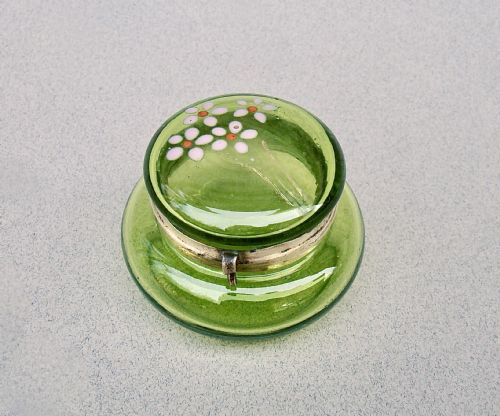
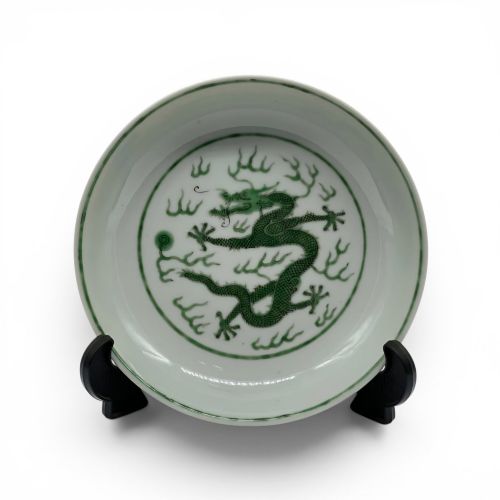


19th Century Enamel Dish
When you search for a 19th century enamel dish, you enter a world of vibrant metallic colours and intricate hand-painted designs.
19th Century Enamel Dish
A 19th century enamel dish encompasses a diverse selection of decorative items, ranging from Japanese cloisonne chargers to Chinese porcelain bowls and French gilt bronze pieces.
The objects frequently encountered on this page include decorative dishes, chargers, centrepieces, and trinket boxes originating from periods such as the Victorian era, Meiji period, and Qing dynasty.
Makers from various regions utilised distinct techniques, producing works that served both ornamental purposes and practical functions in domestic interiors.
How they were made
Many items combine metalwork bases of copper, brass, or gilt bronze with fused glass pastes to create intricate cloisonne and champleve surface designs.
Porcelain variants incorporate detailed hand-painted overglaze decoration, often supplemented by gold leaf and gilding to enhance specific motifs.
Several nineteenth-century chargers feature remarkably detailed depictions of leaping koi and curious birds peering out from floral tendrils.
What varies in quality
The standard of an item rests upon the precision of the metal wirework and the depth of the enamel layers fused into the metal body.
Artistic execution in the hand-painted details, particularly on porcelain and cloisonne panels, distinguishes standard production from exceptional examples.
The 19th Century Enamel Dish Glossary
- Cloisonne Enamel
- A technique where metal wire is soldered to a metal base to form compartments filled with enamel paste. This method creates defined patterns of coloured glass across the surface of a dish.
- Champleve Enamel
- A process involving troughs or cells carved directly into a metal surface to hold enamel before firing. It results in bold colour blocks surrounded by exposed metal borders.
- Famille Rose
- A palette of Chinese ceramic glazes dominated by opaque pink or rose enamel introduced in the eighteenth century and continued into the nineteenth. The style often depicts floral and figural scenes.
- Gilt Bronze
- An alloy of copper and zinc coated with a thin layer of gold, commonly used for mounts and decorative frames. This material provides a durable, lustrous finish that complements enamel panels.
- Charger
- A large ornamental plate or dish intended for display rather than dining use. These pieces often feature complex pictorial subjects across a broad surface area.
19th Century Enamel Dish: Frequently Asked Questions
What is a cloisonne enamel dish?
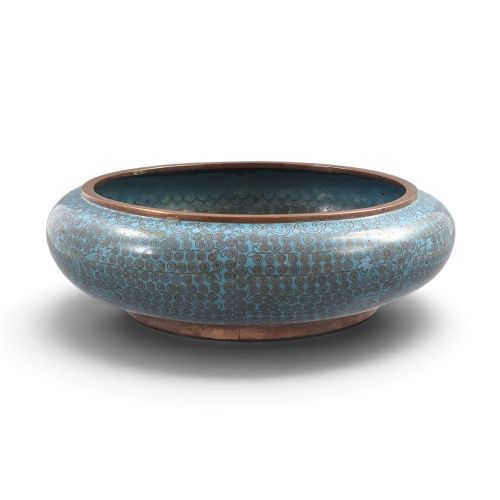
A cloisonne enamel dish is a decorative vessel featuring metal wires soldered onto a base to create cells filled with coloured glass paste. These pieces are fired at high temperatures to achieve a smooth, vitreous surface.
Such items were produced extensively in nineteenth-century Japan and China, serving primarily as ornamental chargers or table centerpieces.
How do I identify Chinese export porcelain?
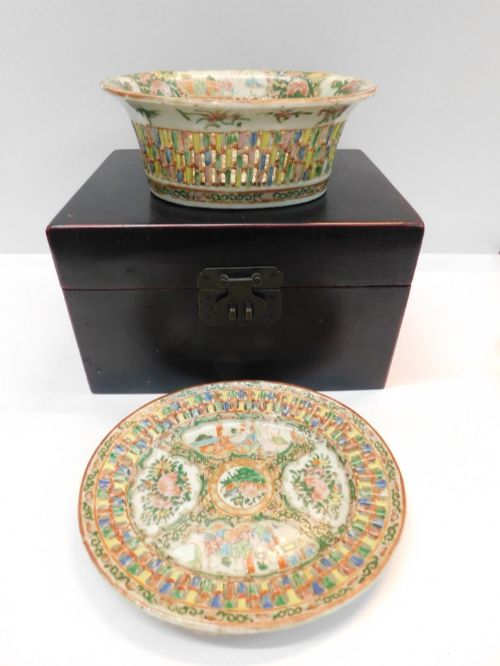
Chinese export porcelain from the nineteenth century often displays characteristic palettes such as famille rose or famille verte. These pieces typically exhibit hand-painted motifs including floral arrangements and traditional figures.
Many of these items were manufactured specifically for Western markets, blending traditional Eastern techniques with European decorative preferences.
Where were champleve enamel pieces made?
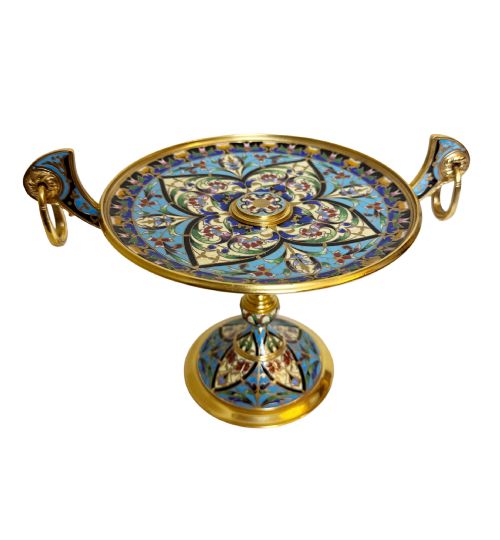
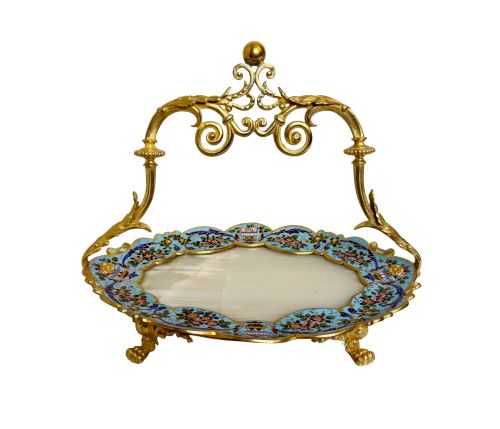
Champleve enamel items on this page are predominantly of nineteenth-century French manufacture, often incorporating gilt bronze mounts. These decorative pieces include tazzas, trays, and trinket boxes.
French workshops frequently drew inspiration from earlier decorative styles, resulting in ornate revival designs intended for affluent drawing rooms.
Can I use these dishes for serving food?
Nineteenth-century enamel and porcelain dishes are intended for decorative display rather than daily culinary use. The delicate nature of the enamel work and the presence of gilt bronze or gold leaf require careful handling.
Displaying these objects on stands or within cabinets helps preserve their historical surfaces and fragile decorative elements.