



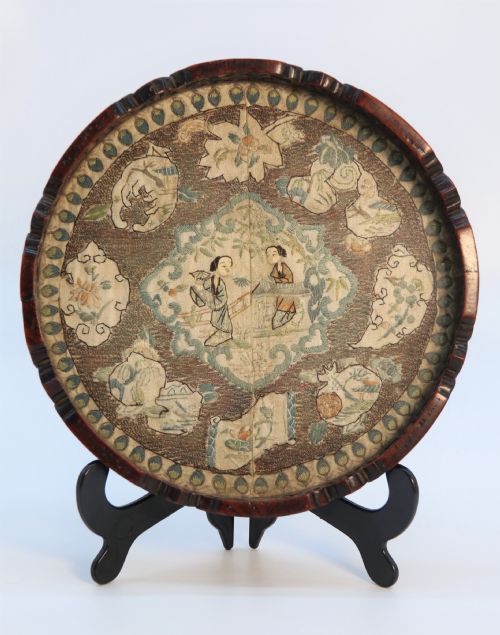


Oriental Embroidered Panel
An oriental embroidered panel brings rich colour and needlework to a room, spanning Qing dynasty silks, Uzbek suzanis and Ottoman fragments.
Oriental Embroidered Panel
An oriental embroidered panel gathers textiles from diverse origins, including Chinese silks, Uzbek suzanis and Ottoman fragments. You meet these pieces as framed works, wall hangings, folding screens and table screens.
The selection ranges from the nineteenth century into the early twentieth century, taking in Qing dynasty works, Central Asian tribal designs and Qajar dynasty pieces.
Materials and construction
Maker's hands worked silk thread, cotton grounds and metallic thread together, sometimes applying felt appliqué work over hardwood frames or glass protection.
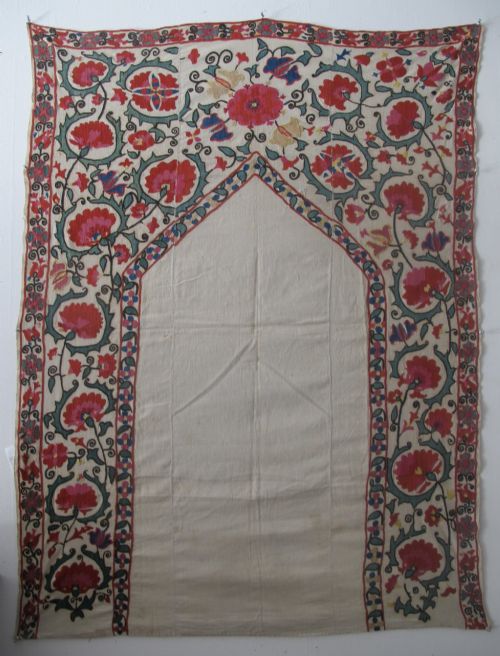
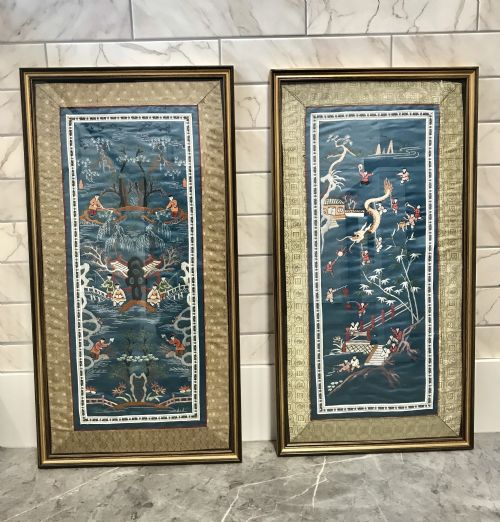
Needlework techniques range from hand sewn figures and dragons to architectural designs and prayer formats executed on cotton or silk.
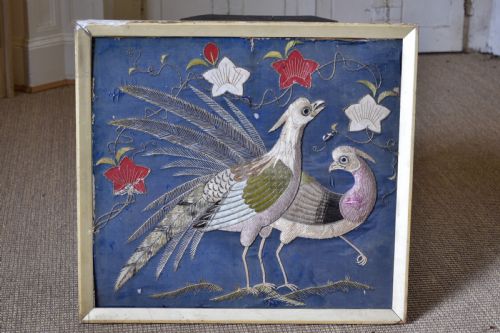
Geese in flight and fierce dragons share the needlework canvas with quiet floral trees.
Distinctions in quality
Execution of the needlework separates the standard production from the exceptional, visible in the precision of figures, dragons and floral motifs.
The integrity of the ground fabric and the survival of metallic thread or silk appliques dictate the overall standard of the surviving textile.
Iida Takashimaya Company
The Oriental Embroidered Panel Glossary
- Suzani
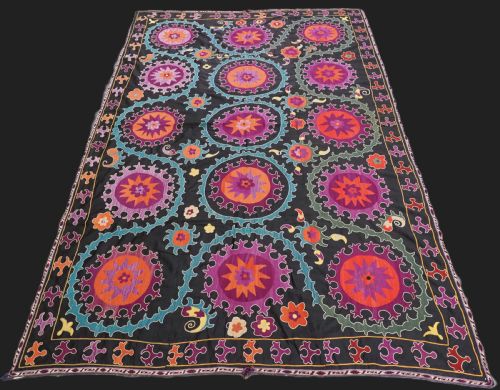
- An embroidered tribal hanging from Central Asia, typically worked in silk thread on a cotton ground. These textiles often display large floral or architectural patterns.
- Appliqué
- A needlework technique where pieces of fabric, such as felt or silk, are sewn onto a larger background ground to build up a design. This method adds textural depth to the surface.
- Qing Dynasty
- The final imperial dynasty of China, lasting from the mid seventeenth to the early twentieth century. Pieces from this era frequently incorporate dragons, trees and flowers.
- Cicim
- A flatwoven textile technique involving supplementary weft threads that create embroidered patterns across the surface. Pairs of these panels often serve as wall hangings.
Oriental Embroidered Panel: Frequently Asked Questions
How do I hang a textile panel?
Wall hangings require careful weight distribution to protect the antique fabric from undue stress.
Professional mounting behind glass or using a padded sleeve supports the textile safely.
What is a suzani used for?
Uzbek suzanis served primarily as decorative wall panels or furnishings within Central Asian homes.
Today they function as striking wall art or focal points in modern interiors.
How do I date a Chinese silk panel?
Dating relies on stylistic motifs such as Qing dynasty dragons, material composition and framing techniques.
Comparing the hand sewn needlework against documented nineteenth century examples helps clarify the period.
Are folding screens practical for rooms?
Folding screens provide architectural division and display intricate Japanese or Chinese silk panels.
They stand independently as room dividers or photographic props while protecting the textile work within.