






Oriental Earthenware Urns
Oriental earthenware urns bring intricate Japanese ceramic artistry into your home, combining detailed hand-painted figures with rich gilding from the Meiji and Edwardian periods.
Oriental Earthenware Urns
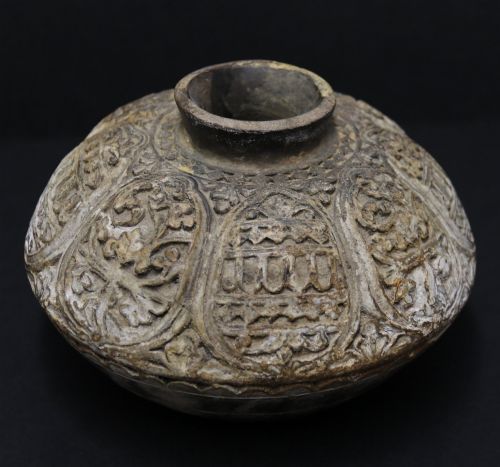
Oriental earthenware urns encompass decorative vessels, jars, and baluster vases originating predominantly from Japan during the late 19th and early 20th centuries. The selections found on this page consist largely of Satsuma earthenware alongside related Japanese ceramic forms spanning the Meiji, Taisho, and Showa periods.
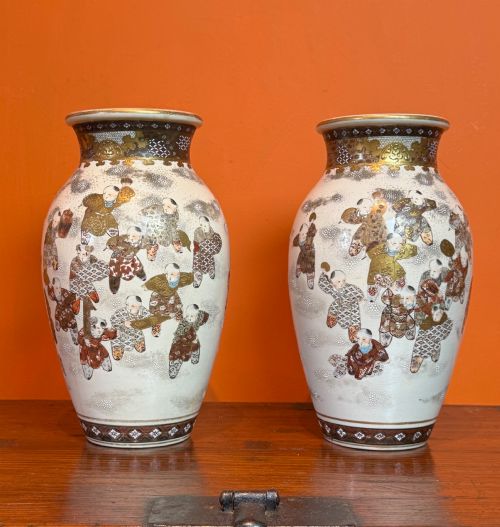
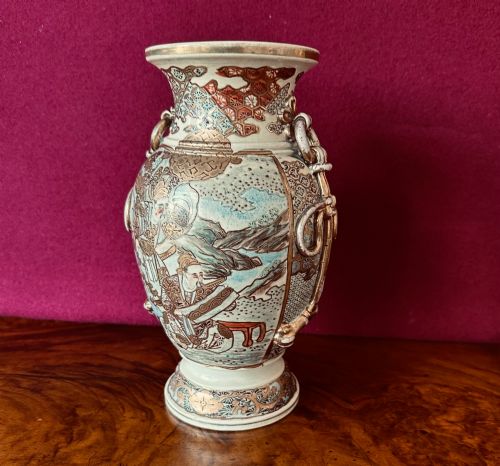
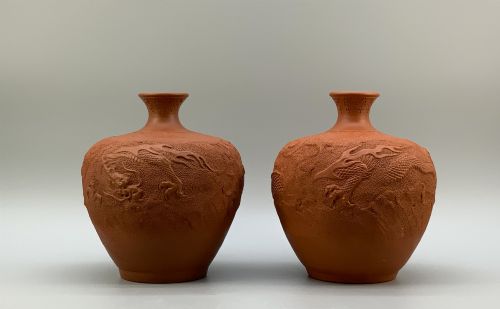
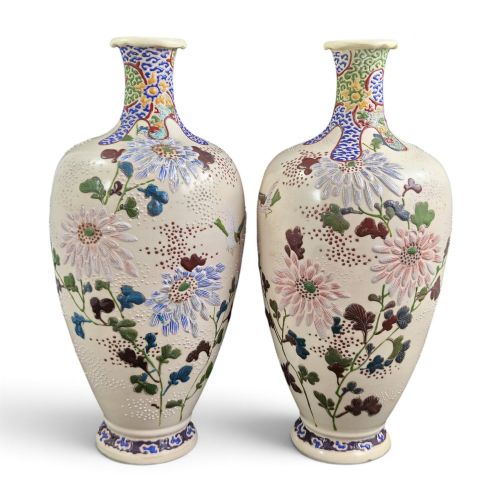
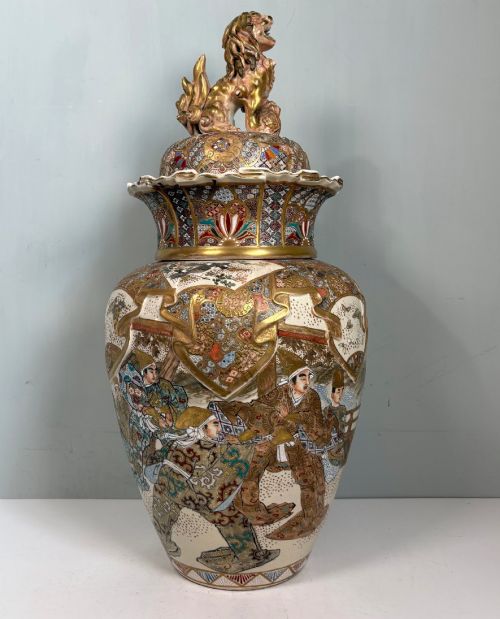
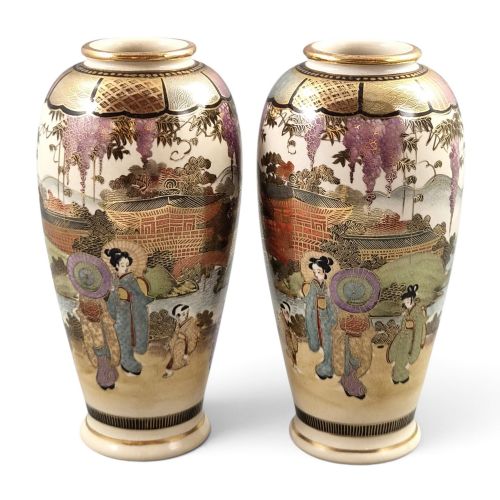
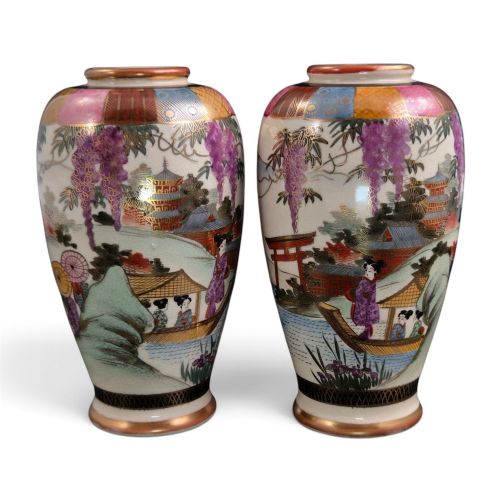
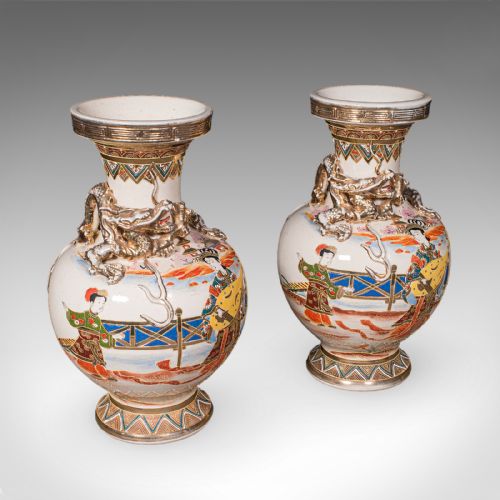
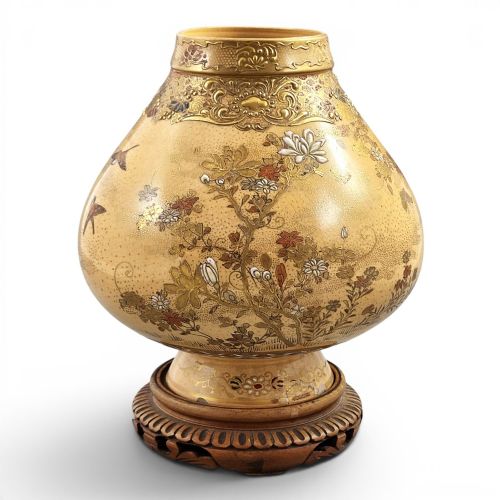
Buyers encounter numerous forms ranging from miniature vessels to monumental vases and lidded ginger jars. These items frequently display traditional Japanese motifs including court figures, arhats, dragons, and floral landscapes set against cobalt or cream grounds.
How oriental earthenware urns were made
Potters shaped these vessels from regional clays such as red Tokoname clay or porous Satsuma earthenware bodies before applying specialised glazes. Stoneware bodies also appear alongside traditional earthenware within the selection.
Artisans decorated the surfaces using detailed enamel painting, heavy gold leaf, gilt, and raised moriage relief work. Many pieces bear signature marks from notable workshops and individual artists active in Kyoto.
Oriental Earthenware Urns Retail Price Guide 2026
Typical asking prices for oriental earthenware urns among the pieces listed under this phrase on Sellingantiques today, from the lower quarter to the upper quarter. They describe what is for sale here now, not the wider market.
One miniature vase packs an entire gilt figural procession onto a body scarcely larger than an acorn.
What varies in quality
The degree of artistic execution in the painted figural scenes and landscape panels separates standard production from exhibition-quality pieces. Finer examples display meticulous brushwork, dense moriage relief, and extensive use of gold leaf across every surface.
Workshop attribution significantly influences the standing of a piece, with creations originating from established Kyoto houses like Kinkozan or bearing signatures of recognised makers commanding attention for their superior finishing.
Kinkōzan Workshop·Hotoda·Chosei·Maruni Kobe·Shozan·Makuzu Kozan II
The Oriental Earthenware Urns Glossary
- Satsuma
- A type of Japanese earthenware featuring an ivory-coloured, crackled glaze that provides a canvas for elaborate enamel and gilt decoration.
- Moriage
- A decorative technique using slip trailing to build up raised patterns and textures on the ceramic surface before painting and gilding.
- Baluster
- A vase form characterised by a rounded body that tapers toward the base and swells outward before rising to a narrow neck.
- Jardinieres
- Large ornamental ceramic pots or planters designed to hold growing plants rather than cut flowers.
- Meiji Period
- The era of Japanese history lasting from 1868 to 1912, noted for a surge in artistic production and international export ceramics.
Oriental Earthenware Urns: Frequently Asked Questions
How do I identify Satsuma ware?
Satsuma ware is recognised by its characteristic fine crackle glaze over a cream-coloured earthenware body, heavily decorated with enamel and gold. Most pieces feature detailed Japanese motifs such as figures, deities, and landscapes.
The undersides often bear painted or impressed maker marks corresponding to specific Kyoto workshops and artists from the late 19th and early 20th centuries.
What is moriage decoration?
Moriage is a specialised ceramic technique where clay slip is piped onto the vessel before firing to create raised, three-dimensional designs. Artisans then gild and enamel these textured areas to add tactile depth to robes, foliage, and borders.
Heavy, precise moriage work generally indicates higher craftsmanship and is frequently seen on exhibition-quality pieces.
How should I display them?
Because of their intricate gilt surfaces and delicate enamel work, these vessels benefit from placement away from direct sunlight and heavy moisture. They function well as standalone statement pieces on stable surfaces where their detailed panels can be viewed closely.
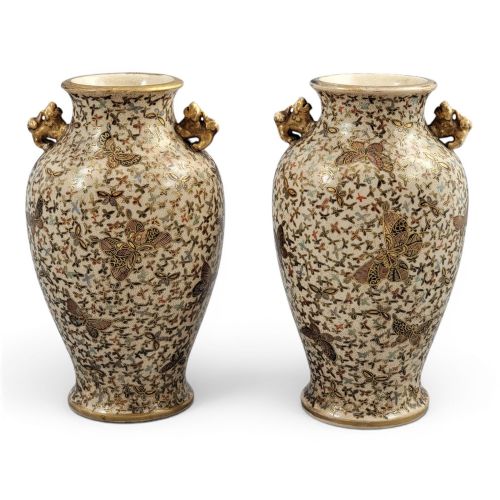
Pairing matching vases on either side of a mantel or sideboard follows traditional decorative arrangements.