



Meiji Ceramic Mantel Vases
These meiji ceramic mantel vases bring intricate Japanese artistry to British mantelpieces, offering collectors finely painted porcelain and earthenware from the Meiji period.
Meiji Ceramic Mantel Vases
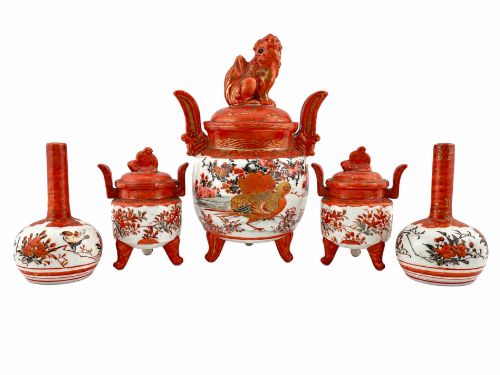
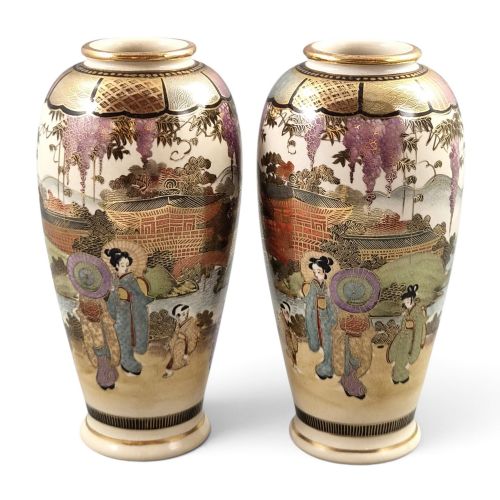
When buyers search for meiji ceramic mantel vases, they encounter decorative vessels originating from Japan during the late nineteenth and early twentieth centuries. These pieces encompass distinct traditional Japanese styles including Satsuma, Imari, and Kutani ware.
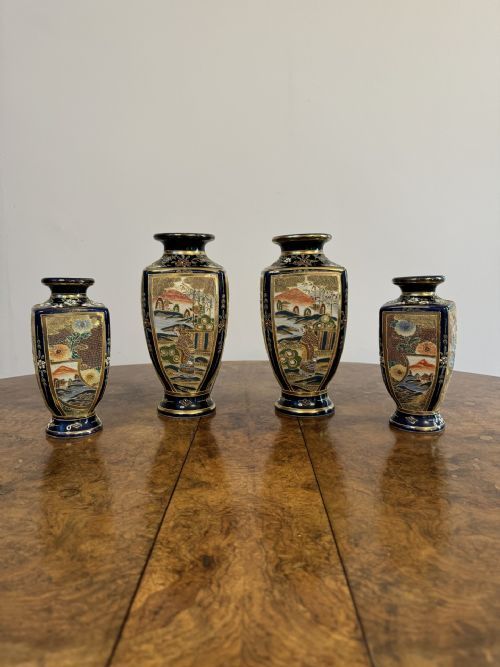
Forms vary from standard decorative vases to shaped polygon designs and multi-piece garnitures. Buyers most frequently meet Satsuma earthenware and Imari porcelain pieces within this category.
Materials and construction
Maker workshops utilised earthenware and porcelain as foundational ceramic bodies, shaping them into vases and garnitures by hand. These surfaces then received detailed hand-painted decoration using enamel pigments.
Gilding and gold leaf application highlight specific design elements on Satsuma and Imari pieces. Cobalt blue glaze often forms the structural base for traditional Japanese Imari patterns beneath the surface finish.
Meiji Ceramic Mantel Vases Retail Price Guide 2026
Typical asking prices for meiji ceramic mantel vases among the pieces listed under this phrase on Sellingantiques today, from the lower quarter to the upper quarter. They describe what is for sale here now, not the wider market.
Even the most stern Victorian mantelpiece cheered up considerably once a pair of busy Japanese deities moved in.
Evaluating quality
Distinctions in quality rest upon the precision of the hand-painted brushwork and the complexity of the figural or floral scenes. Exhibition quality pieces display superior detail in the rendering of subjects such as women and children alongside the Shimazu mon.
The application of gold leaf and the richness of the enamel palette separate standard decorative objects from finer workshop productions. Maker signatures and attribution to specific makers like Shozan or Hododa elevate the standing of a pair.
Shozan·Hododa
The Meiji Ceramic Mantel Vases Glossary
- Satsuma
- A type of Japanese earthenware featuring a ivory-crackled glaze decorated with polychrome enamels and gold leaf. These pieces often depict traditional figures and landscapes.
- Imari
- A traditional style of Japanese porcelain characterised by a palette of cobalt blue and iron red, frequently accented with gold. This ware was widely exported to Europe during the nineteenth century.
- Kutani
- Japanese porcelain known for its vibrant colour schemes and detailed pictorial designs. Kutani vases often incorporate fine geometric borders alongside natural motifs.
- Garniture
- A set of three or more matching vases designed to be displayed together on a mantelpiece or sideboard. These matched groups form a cohesive decorative scheme.
- Mon
- A Japanese heraldic badge or crest used to identify families or clans. The Shimazu mon appears frequently on Satsuma wares produced for exhibition and export.
Meiji Ceramic Mantel Vases: Frequently Asked Questions
What are meiji ceramic mantel vases?
These items are decorative Japanese vessels produced during the Meiji period for export and domestic display. They comprise earthenware and porcelain bodies decorated with hand-painted scenes.
Collectors find them in pairs and larger garniture sets intended for placement on mantelpieces. The grouping spans styles such as Satsuma, Imari, and Kutani.
How were these vases used?
Victorian and Edwardian households placed these vessels on mantelpieces and tables as ornamental focal points. They served purely decorative functions rather than practical utility.
Matching pairs and multi-piece garnitures created symmetrical displays within period interiors. Their vibrant enamel and gold leaf designs contrasted with dark wood furniture.
How do I identify Satsuma ware?
Satsuma pieces utilise an earthenware body covered in a distinctive cream-coloured glaze with fine crackles. Artists applied polychrome enamels and gold leaf directly over this glazed surface.
Subjects typically include detailed human figures, nature scenes, and familial crests. The tactile texture of the raised enamel work distinguishes it from porcelain.
What defines Imari porcelain?
Imari ware is identified by its distinct palette of underglaze cobalt blue and iron red, usually enriched with gilding. The designs combine floral patterns with geometric borders.
Unlike earthenware Satsuma, Imari pieces possess a hard porcelain body fired at higher temperatures. This technique created durable decorative items popular in nineteenth-century Britain.