





Oriental Earthenware Dish
When seeking an oriental earthenware dish, you are looking at vibrant Satsuma wares alongside English blue and white transfer-printed pottery.
Oriental Earthenware Dish
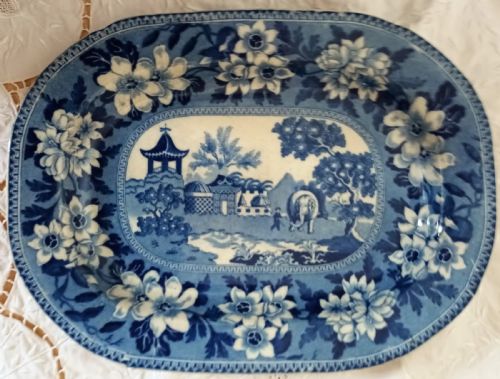
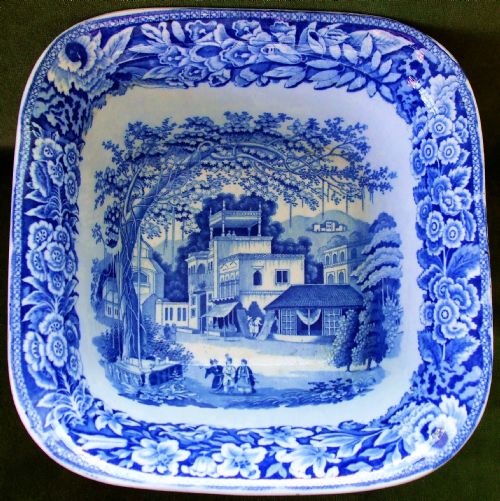
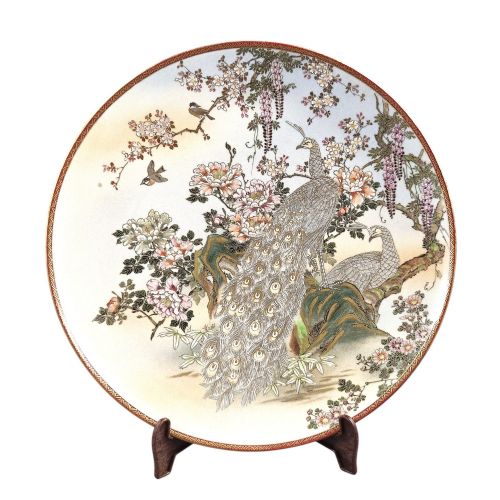
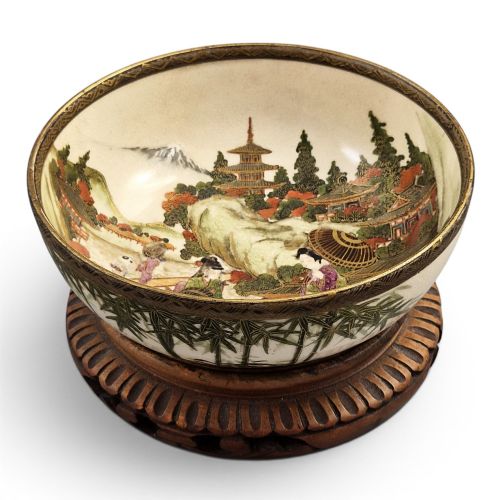
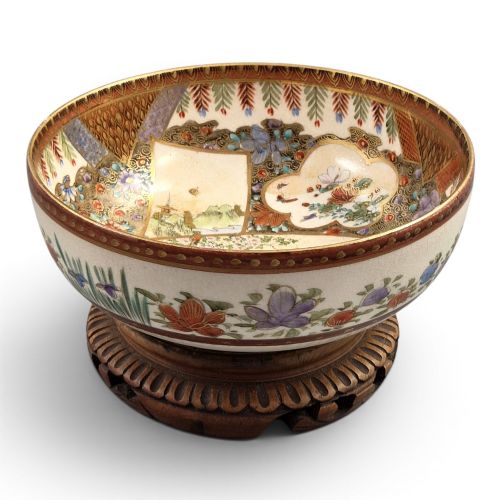
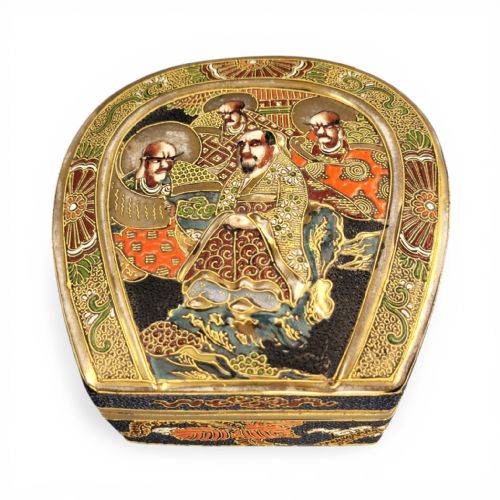
Buyers will frequently encounter Japanese pieces adorned with intricate enamel and gold leaf, depicting figures, flowers, birds, and landscapes. English interpretations of oriental themes, such as elephant, zebra, and temple patterns, also form a significant part of the available selection.
How they were made
Potters utilised earthenware bodies, applying ceramic glaze as a base for subsequent decoration. Japanese Satsuma pieces typically received detailed enamel painting and gold leaf work, while English pieces relied on blue and white transfer printing techniques.
Firing processes locked in the pigments and glazes, creating durable surfaces suitable for decorative display. Artisans added gilt highlights by hand, bringing depth and definition to the intricate patterns.
Several plates depict elaborate exotic scenes featuring elephants and temples that Georgian potters imagined long before they ever visited the East.
What varies in quality
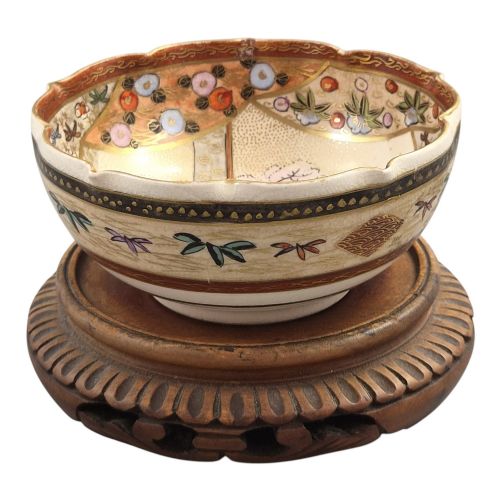
The precision of the painting and the complexity of the design separate standard items from finer examples. Hand-painted Satsuma bowls with dense thousand-flower motifs or finely rendered figures demand a higher level of skill than simpler mass-produced patterns.
The clarity of the transfer print on English pottery and the richness of the enamel and gold leaf on Japanese wares dictate the overall standard. Signed pieces from recognised Meiji period workshops demonstrate a superior level of artistic execution.
Koshida·John Rogers & Son·J. & R. Riley·Toshozan·Hododa
The Oriental Earthenware Dish Glossary
- Satsuma
- A type of Japanese earthenware originating from Satsuma Province, traditionally characterised by a crackled ivory glaze and elaborate polychrome and gilt decoration.
- Transferware
- Pottery decorated by applying a printed design from an engraved copper plate onto the ceramic surface via tissue paper, common in English production.
- Charger
- A large decorative plate intended for display on a wall or sideboard rather than for practical dining use.
- Moriage
- A Japanese ceramic technique using piped clay to create raised, textured decorative patterns over the glaze.
- Gilt
- Covered or highlighted with a thin layer of gold leaf or gold paint to add decorative emphasis.
Oriental Earthenware Dish: Frequently Asked Questions
What is Satsuma ware?
Satsuma ware is a distinct style of Japanese pottery featuring an ivory-coloured, crackled earthenware body that is heavily decorated with enamel and gold leaf.
These pieces were produced in great quantities during the Meiji period and are celebrated for their detailed depictions of figures, birds, and flowers.
How do I date a transferware dish?
English transferware can be dated by examining the ceramic body, the mark on the underside, and the specific style of the blue and white pattern.
Georgian and Victorian pieces often display maker names or specific pattern titles that correspond to documented production periods.
Can I use these dishes for food?
Most antique earthenware dishes, particularly older Satsuma pieces and historic transferware, are intended primarily for display and decorative collection.
The delicate enamels, gold leaf, and porous nature of the earthenware mean they are best kept away from regular culinary use and harsh washing.
What is the Meiji period?
The Meiji period spans the late nineteenth and early twentieth centuries in Japan, marking an era of significant artistic output and international trade.
Pieces from this time often bear artist signatures or workshop marks from notable centres like Kyoto and Yokohama.