



Oriental Display Shelves
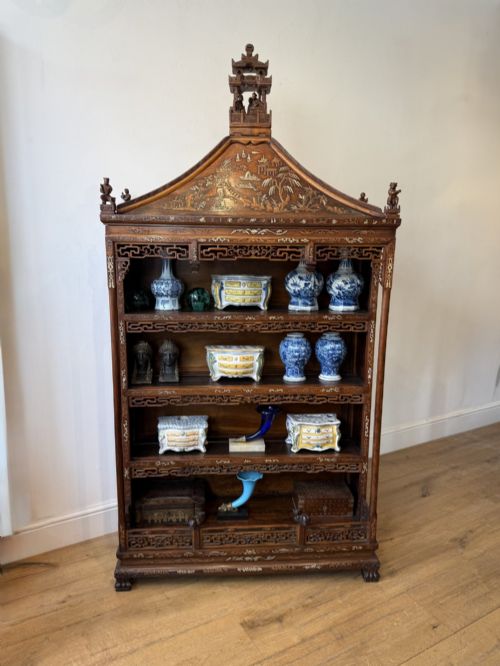
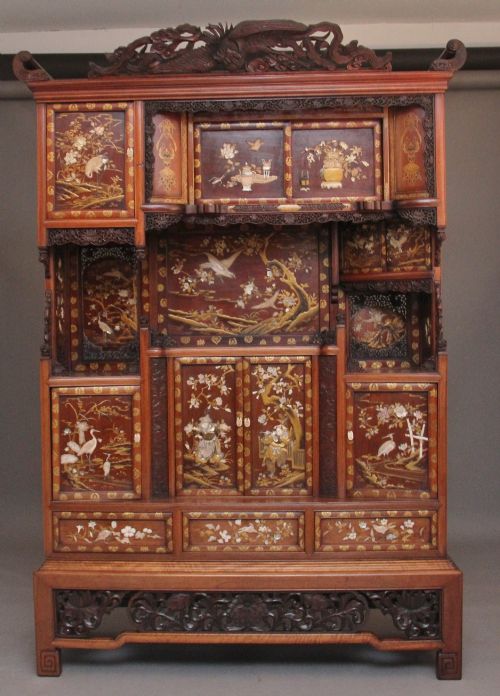
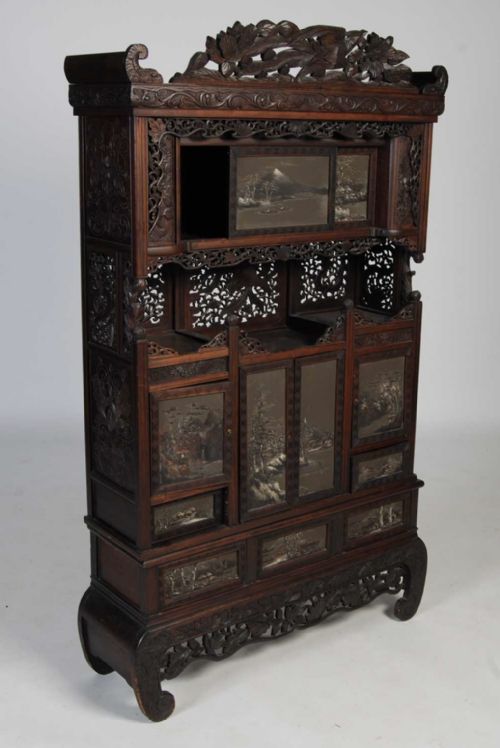
These oriental display shelves bring intricate craftsmanship and asymmetric tiers into a room, offering the ideal stage for prized ceramics and curios.
Oriental Display Shelves
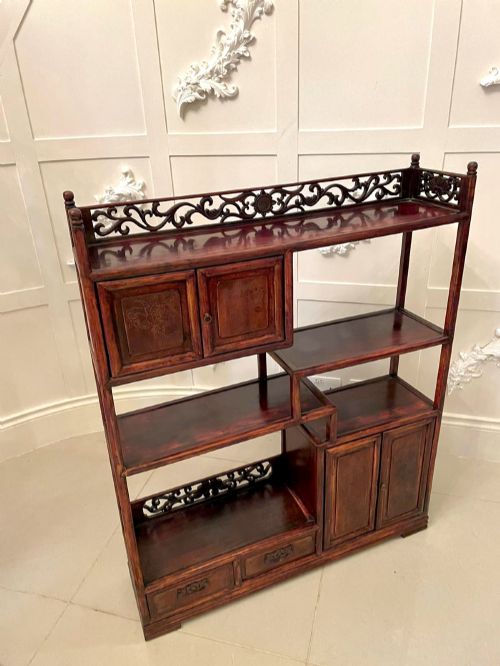
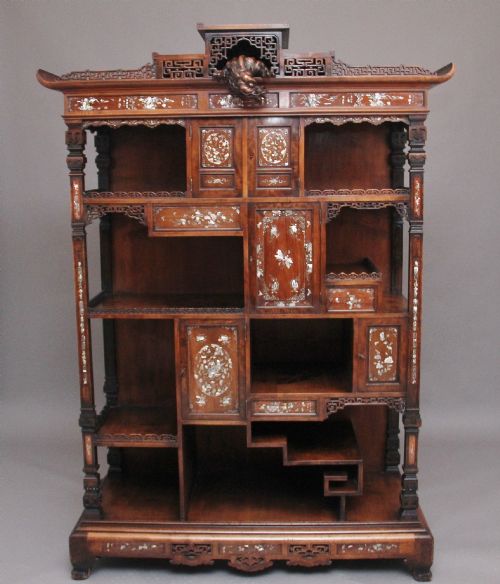
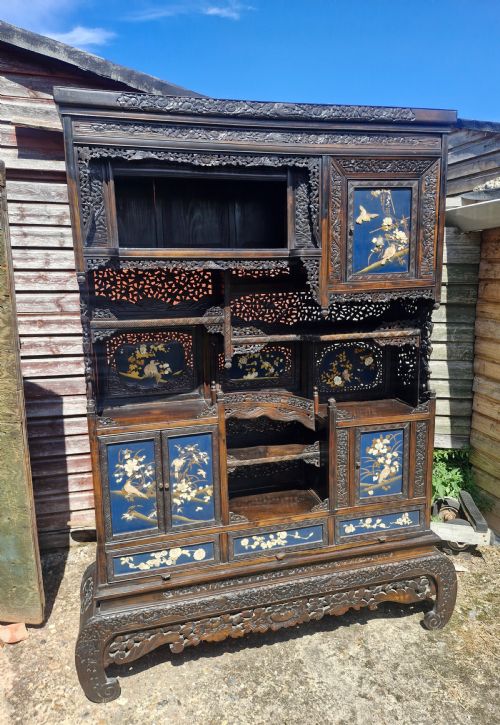
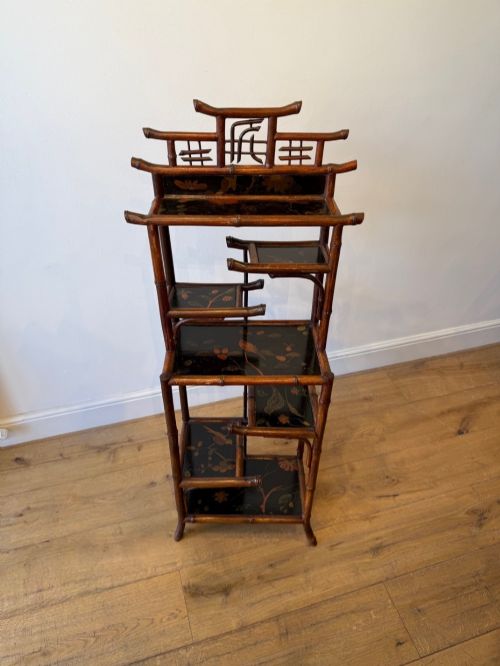
Oriental display shelves span diverse forms from the nineteenth and early twentieth centuries, including Chinese hardwood cabinets, Japanese shodana cabinets, and bamboo whatnots. Buyers encountering these pieces will find elaborate open tiers designed to hold ornaments alongside enclosed cupboards.
The selection ranges from Chinese Qing Dynasty and Hongmu open cabinets to French Japanese shodona examples and Victorian Chinoiserie interpretations. Most pieces on this page originate from the nineteenth century or the Meiji period, reflecting both Asian workshops and European Japonisme influences.
Materials and construction methods
Craftsmen utilised dense timbers such as hardwood, rosewood, Hongmu, and teak to build sturdy frames capable of supporting layered compartments. These dark woods often received deep carvings depicting natural motifs or architectural pagodas.
Surface decoration frequently incorporated red lacquer, glass panels, brass fittings, and intricate mother-of-pearl inlay. Bamboo also appears in lighter aesthetic period designs, combined with lacquer panels to create contrasting textures.
Some nineteenth-century makers packed so many secret compartments into a single shodana that owners still lose small treasures inside them today.
Assessing craftsmanship and design
Quality rests upon the depth and precision of the carving, particularly on profusely-carved hardwood and rosewood surfaces where relief work defines the visual weight. Superior examples demonstrate rigorous joinery that keeps multi-tiered shelves rigid over decades of use.
The fineness of the materials further separates standard production from exceptional work, seen in the iridescence of mother-of-pearl inlay and the smoothness of lacquered finishes. Pieces retaining original brass mounts and undamaged glass panels command greater appreciation among collectors.
Gabriel Viardot
The Oriental Display Shelves Glossary
- Shodana
- A Japanese cabinet or display shelf featuring staggered shelves and small cupboards. These pieces exemplify traditional woodworking and often date to the Meiji period.
- Hongmu
- A dense, dark red-brown hardwood used extensively in traditional Chinese furniture. It supports intricate carving without losing structural integrity.
- Japonisme
- A nineteenth-century European artistic movement influenced by Japanese art and design. This aesthetic shaped domestic furniture like French shodona cabinets.
- Whatnot
- An open piece of furniture with multiple tiers used for displaying ornaments. These items appear in both bamboo and heavier hardwood configurations.
- Chinoiserie
- The European interpretation of Chinese and East Asian artistic traditions. It manifests in decorative cabinets and stands from the Victorian era.
Oriental Display Shelves: Frequently Asked Questions
What are oriental display shelves used for?
These pieces serve as multi-tiered furniture designed to hold ceramics, bronzes, and decorative objects. The varied compartments allow for both open presentation and concealed storage.
Historically, they occupied principal reception rooms where hosts displayed their finest collections to visitors. Today, they continue to function as focal points for curated displays.
How do I date an antique cabinet?
Dating relies on examining the timber species, construction joints, and decorative motifs such as Qing Dynasty carvings or Meiji period lacquerwork. Stylistic crossover with European Japonisme also points toward the late nineteenth century.
Packaging labels, historical hardware, and wear patterns on the feet provide further clues to a piece's age. Consulting the specific period attribution in the listing helps confirm the era of manufacture.
Where should I place a shodana in my home?
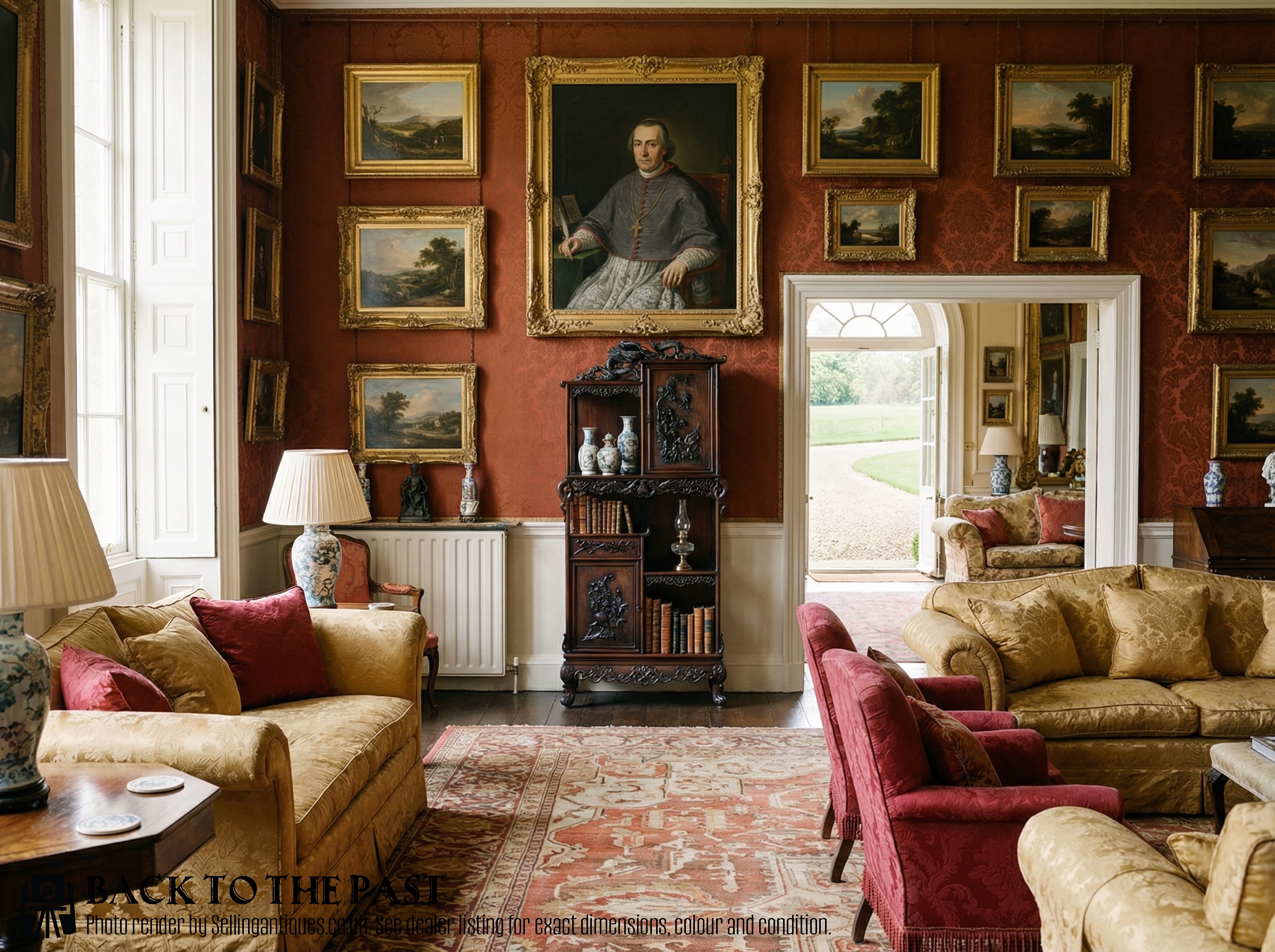
A shodana suits living rooms or studies where its asymmetric tiers can be appreciated at eye level. Placing it against a neutral wall allows the intricate woodwork and displayed objects to stand out.
Avoid positioning these delicate hardwood and lacquer pieces in direct sunlight or near heat sources. Stable indoor humidity prevents timber movement and protects mother-of-pearl inlay.
How do Chinese and Japanese cabinets differ?
Chinese cabinets often utilise heavy hardwoods like Hongmu and rosewood with deep, symmetrical carvings and architectural motifs like pagodas. Japanese shodana cabinets frequently feature lighter construction with stepped, asymmetrical shelving and detailed lacquerwork.
Both traditions intersect in nineteenth-century European adaptations, where makers combined Asian forms with Western furniture types. Examining the specific joinery and decorative motifs clarifies the regional origin.